NEW ORLEANS — A federal appeals court on Tuesday removed more than six decades of judicial supervision of the Concordia Parish School Board, ending a desegregation mandate tied to a 1965 lawsuit that sought to open formerly all-white schools to Black students.
Court ends long-standing federal oversight
The 5th U.S. Circuit Court of Appeals lifted the desegregation order that had governed Concordia Parish schools since the mid-1960s. The move marks a legal victory for the federal administration that has pushed to wrap up Civil Rights–era school cases it considers outdated, and it was welcomed by state officials who argue the district no longer needs court supervision.
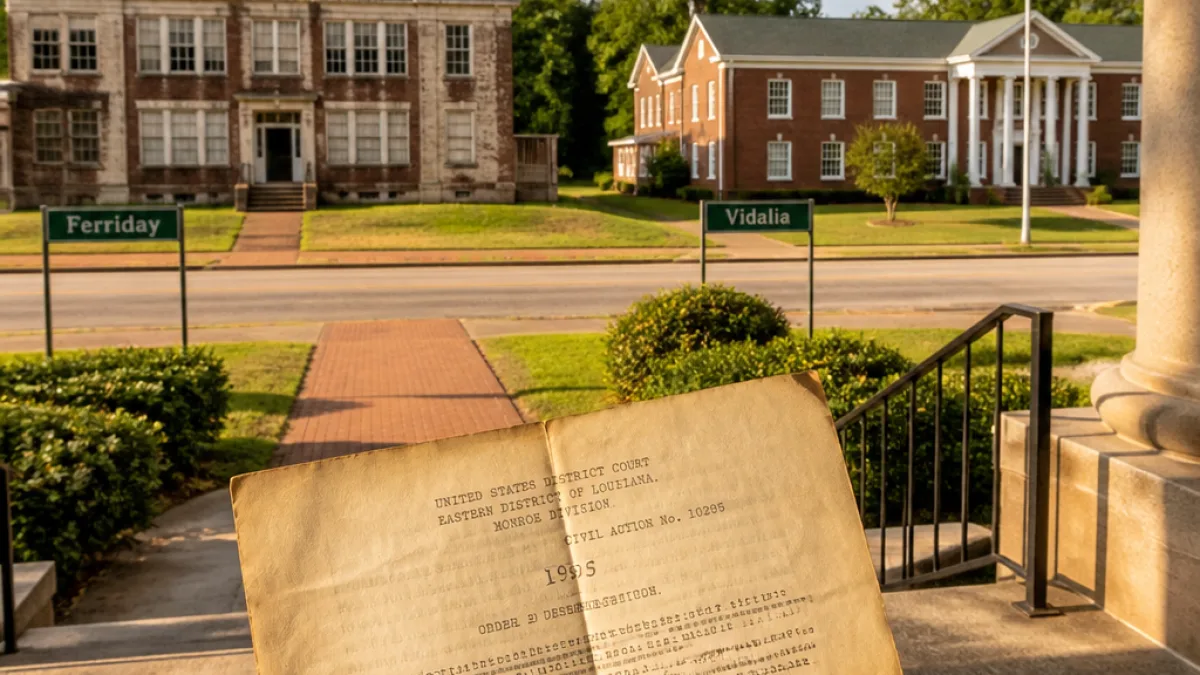
Concordia’s desegregation history stems from a period when Ferriday and surrounding communities were segregated and violent groups including Ku Klux Klan offshoots were active. Black families sued in 1965 to gain access to all-white schools; the federal government stepped in and the district was placed under judicial oversight as it worked to integrate.
“The good people of Concordia Parish elected their school board to govern their schools — not unelected federal judges,” Louisiana Attorney General Liz Murrill said in announcing the ruling. “Today’s decision puts that authority back where it belongs.”
Local demographics and long-term patterns
Advocates and local observers note that integration led to demographic shifts in the decades that followed: many white families left Ferriday, leaving a community that is today largely Black and low-income. Nearby Vidalia, by contrast, is majority white and benefits from tax revenue associated with a hydroelectric plant. Those population and revenue patterns have shaped school populations and resources for years.
- The case originates from a 1965 lawsuit filed by Black families in Ferriday.
- The school district has been under federal oversight for more than 60 years.
- State leaders framed the decision as restoring local control to elected officials.
Officials from the Concordia Parish School Board did not immediately respond to requests for comment on the appeals court action. Families who originally brought the suit are no longer involved in the litigation, according to court filings and reporting.
What the decision means going forward
Supporters of ending the oversight say it recognizes local elected officials’ authority to run schools without long-term federal court supervision. Critics — including civil rights groups in other contexts — have argued that some remedies tied to historical segregation remain necessary where disparities in student achievement, resource allocation and school composition persist. The appeals court order reflects a broader shift in federal posture toward closing longstanding desegregation cases deemed fully resolved.
| Item | Detail |
|---|---|
| Case origin | 1965 lawsuit by Black families in Ferriday |
| Federal oversight duration | More than 60 years |
| Authority restored to | Concordia Parish School Board (elected officials) |
For residents of Concordia Parish and observers statewide, the ruling will prompt questions about how local leaders will address lingering inequalities tied to property tax bases, enrollment patterns and school funding. The decision also underscores how national policy shifts can reshape the legal landscape for local school districts long after the upheaval of the Civil Rights era.
As the Concordia community digests the court’s move, officials and advocates will be watching to see whether the end of court supervision leads to changes in policy and practice inside schools — or whether longstanding challenges tied to demographics and local funding remain unchanged.
This report is based on Associated Press reporting and statements from state officials and court records related to the Concordia Parish desegregation case.