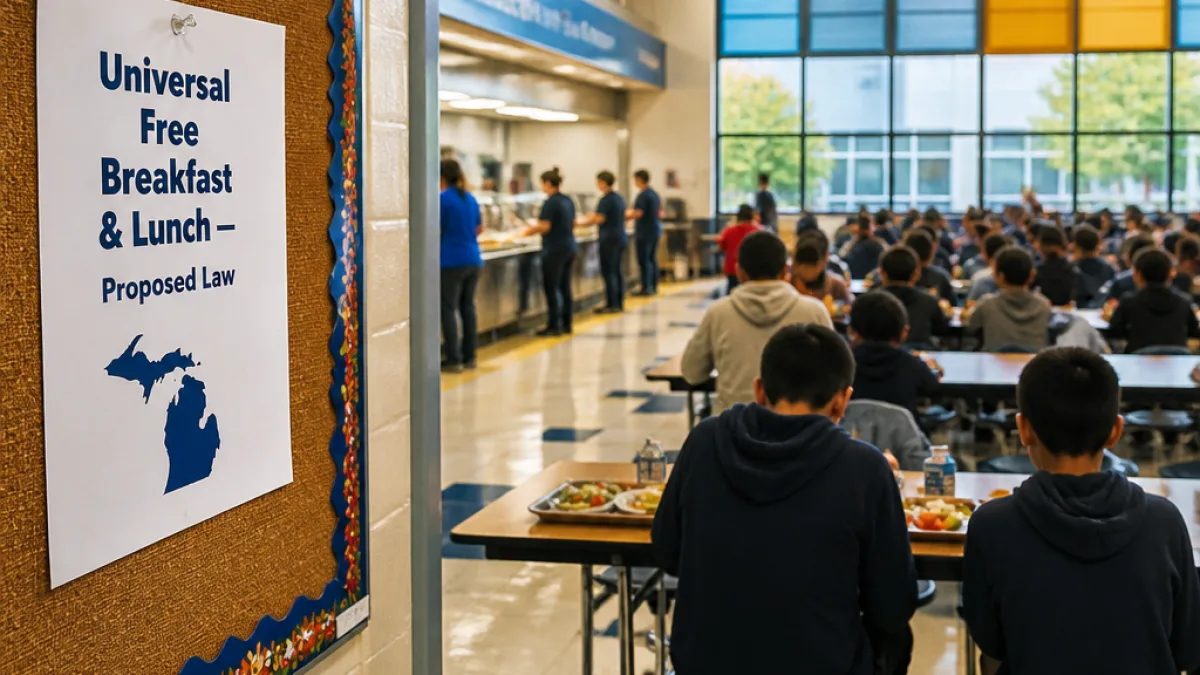
The Michigan Senate is weighing legislation that would make universal free school breakfasts and lunches permanent across the state’s public schools, a measure supporters say would reduce food insecurity for students and save families hundreds of dollars each year.
What the bill would do
The proposal, sponsored by Sen. Dayna Polehanki, D-Livonia, would end the need for annual budget approvals to continue universal free meals and allow every public school student to receive breakfast and lunch at no charge.
“Parents like it, too, because it’s one less thing to have to concern yourself with,”
Polehanki, a former high school teacher, told lawmakers she has seen children carry unpaid lunch tabs or be given reduced meals, and she framed permanence as both a practical and dignity-preserving step for families.
Supporters point to savings and reduced stigma
Backers of the bill say making the program permanent would deliver direct financial relief to families and help ensure students are not singled out for receiving free meals. Polehanki estimated the change could save families between $800 and $1,000 per child per year, a figure cited by supporters as evidence of the program’s immediate economic benefit.
- Family savings: Estimated at $800–$1,000 per child annually.
- State budget impact: Sponsors say the program would cost less than 1% of Michigan’s school aid budget.
- Equity goal: Reduce stigma for students who currently qualify for free or reduced-price meals.
Lawmakers raise questions about priorities
Not all lawmakers are convinced. Some colleagues have suggested the funds allocated to universal meals might be better spent on other education priorities, such as boosting classroom resources or targeted academic interventions to improve reading and math outcomes.
Polehanki and supporters counter that the program’s share of the school aid budget is relatively small and that alleviating hunger supports learning by ensuring students arrive at school ready to focus.
| Item | Detail |
|---|---|
| Estimated family savings | $800–$1,000 per child/year |
| Share of school aid budget | Under 1% (as cited by sponsors) |
| Current statewide status | Michigan is one of nine states now offering free school meals to all public school students |
Local context and next steps
The debate comes as Michigan lawmakers consider priorities for the coming school year and as advocates of universal meals point to broader efforts to reduce child hunger. If the Senate advances the measure, it would remove the program from the uncertainty of annual budget negotiations and potentially lock in statewide access to free breakfasts and lunches.
For parents and school leaders, the proposal could mean predictable relief in household food costs and streamlined cafeteria operations, while critics will continue to press for clearer trade-offs and evidence the investment boosts academic outcomes.
Lawmakers in Lansing will continue committee and floor discussions in the weeks ahead; supporters say they are pushing for approval to provide long-term stability for school nutrition services.
Malik Turner is the Michigan correspondent for News Block, covering education and state policy from Lansing and the suburbs.