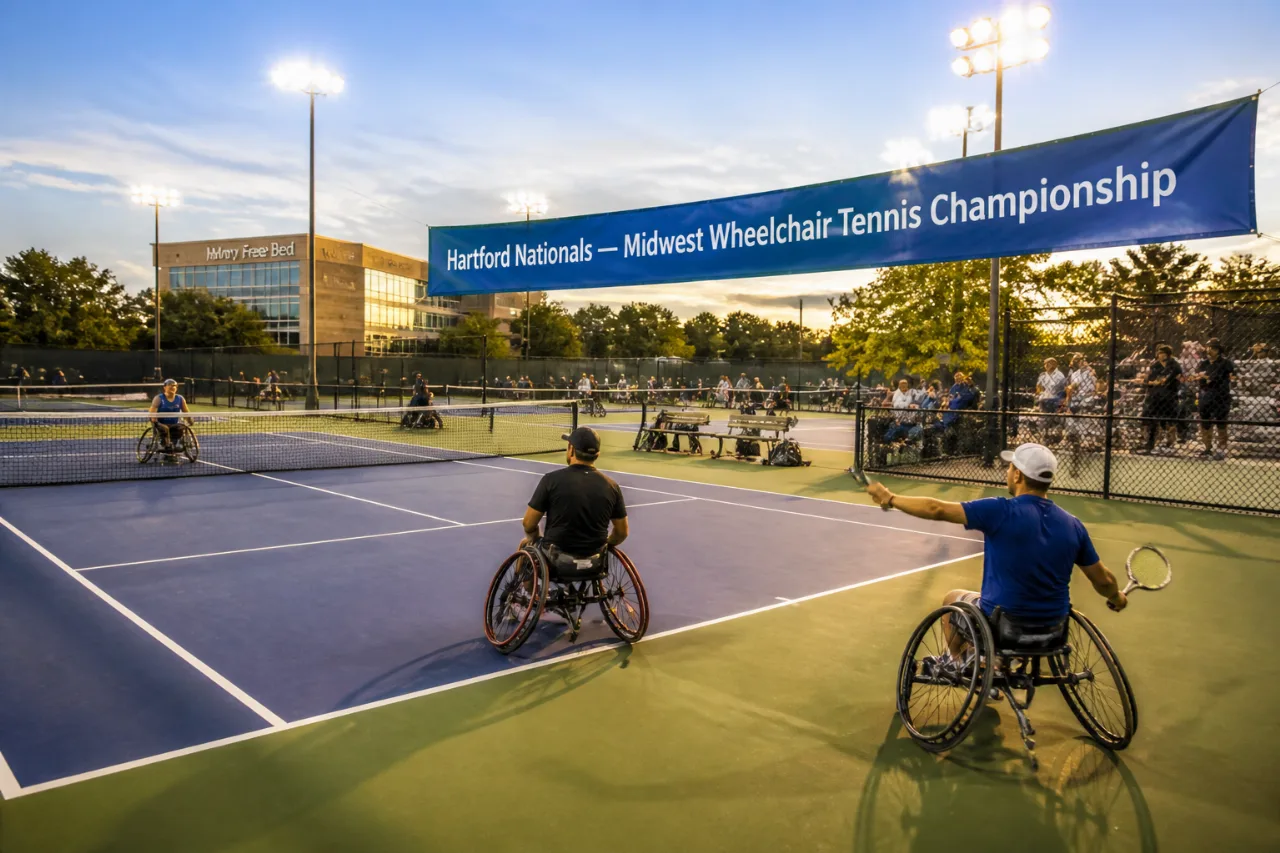
GRAND RAPIDS, Mich. — The Midwest Wheelchair Tennis Championship is underway in Grand Rapids this weekend, part of the Hartford Nationals — one of the nation’s longest-running adaptive-sports gatherings. The event has returned to the city with hundreds of athletes and coaches taking part in matches and community activities centered at Mary Free Bed Rehabilitation Center.
Historic event, local host
The Hartford Nationals traces its roots to 1957, when United Move (then part of a nationwide effort to expand sports for people with disabilities) first began organizing national competitions. The tournament has been a regular presence for nearly 70 years. Mary Free Bed has hosted the Midwest Wheelchair Tennis championships for more than 40 years, partnering with United Move to stage this regional segment of the nationals in Grand Rapids.
Scale and participation
Organizers say this year’s Hartford Nationals brought over 400 athletes and 156 coaches representing 38 states. Of those competitors, 35 are from Michigan and 10 come from the Western Michigan area. The turnout reflects both the tournament’s long history and the broader growth of adaptive sports in recent decades.
- Event: Midwest Wheelchair Tennis Championship (part of Hartford Nationals)
- Location: Mary Free Bed Rehabilitation Center, Grand Rapids
- Participation: 400+ athletes, 156 coaches, 38 states; 35 athletes from Michigan
Voices from organizers and athletes
United Move CEO Glenn Merry emphasized the role of sports in expanding equity for people with disabilities, noting the sizable portion of the American population that lives with a disability and the importance of competitive opportunities.
"The American population - a fifth of the population has a disability, and you don't really think about it, but there's a lack of equity when it comes to sport. Sport's a fantastic model for people with disabilities to be able to showcase, hey, we can do this," said Glenn Merry.
Tom Flynn, a wheelchair and adaptive sports coordinator at Mary Free Bed, described the local program’s long-running commitment: "It's really important that we provide that opportunity for people, so so that they can come play in a great competitive event." Flynn noted the camaraderie and consistent presence of many competitors who travel to multiple tournaments each season.
Athletes and personal stories
The field this weekend includes longtime wheelchair tennis competitors Kevin Green and Brett Wolff, who traveled from Wisconsin and Missouri, respectively. The athletes have lived with their conditions for their whole lives: Green has spina bifida, and Wolff has Type 3 Larsen syndrome. Both described tennis as a defining part of daily life and identity.
"It's an individual sport, you're being yourself, so yeah, I just love that part, and it's it just comes naturally," Wolff said.
Local impact
Beyond competition, the championship brings visitors and attention to Grand Rapids’ adaptive-sports resources, provides social and rehabilitation opportunities for participants, and highlights Mary Free Bed’s role in regional disability sports. For local organizations, volunteers and family members, the tournament is both a sporting event and an annual gathering that reinforces the city’s reputation as a hub for rehabilitative and adaptive athletics.
| Metric | Number |
|---|---|
| Athletes | 400+ |
| Coaches | 156 |
| States represented | 38 |
| Michigan athletes | 35 |
| Western Michigan athletes | 10 |
As the tournament continues through the weekend, organizers said they hope the matches and accompanying community activities leave a lasting impression on athletes and Grand Rapids residents alike — reinforcing adaptive sports as an essential part of the city’s recreational and rehabilitative landscape.