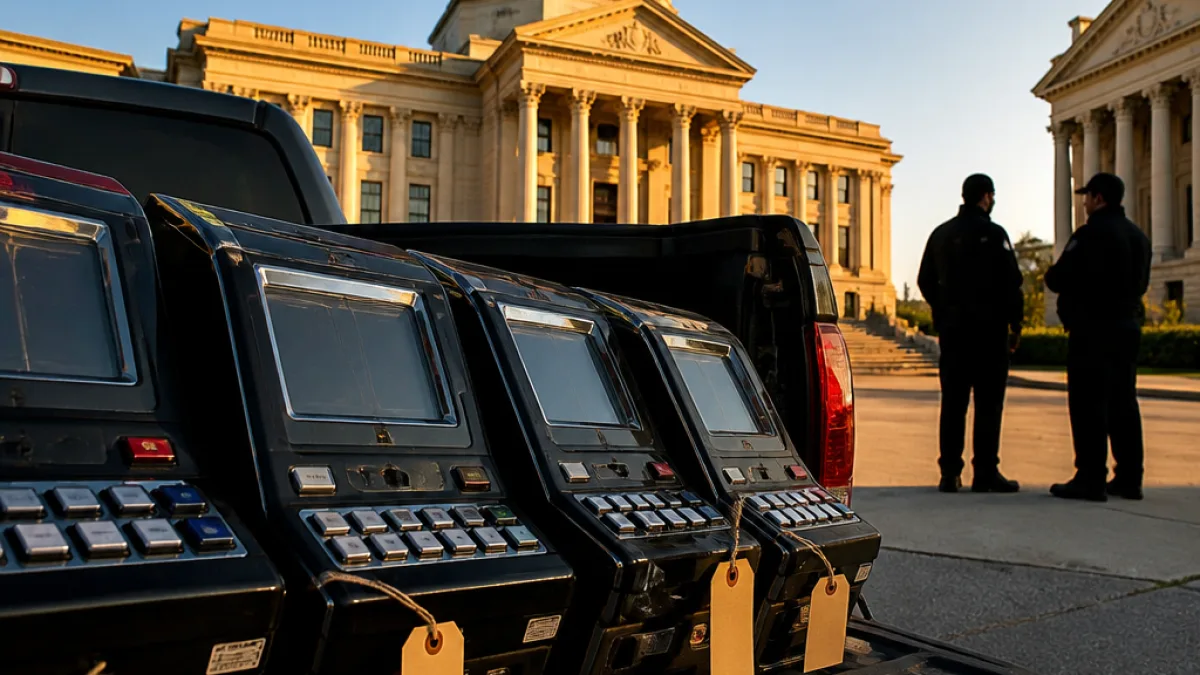
Missouri's long-running dispute over so-called “gray market” gaming machines has shifted from murky claims about legality to a courtroom battle over government procedure. In recent months, Attorney General Catherine Hanaway has intensified enforcement — bringing felony charges against convenience store owners, conducting a multi-county sting with seizures and sending demand letters to businesses still hosting the devices.
From barrooms to federal court
Operators of the machines, found in bars, VFW halls and convenience stores, have defended them as different from slot machines. Many devices marketed themselves as “no chance” games, sometimes allowing players to see the next prize before placing a wager — a feature their vendors said removed gambling from the equation.
"'no chance' machines operated by Wildwood-based Torch Electronics were gambling devices under Missouri law and illegal outside a licensed casino," U.S. District Judge John Ross wrote in a February ruling.
That 2026 federal ruling followed a 2019 review by the Missouri Gaming Commission, which concluded similar devices met the legal definition of gambling machines. What changed most recently was not the legal theory but the willingness of the attorney general's office to use prosecutorial power and public enforcement to shut down the operation of the devices statewide.
Legal challenges focus on process
Rather than leading with a defense that the machines are lawful, affected businesses and an industry group have filed suits aimed at limiting how the state acts. A St. Charles bar, Tuners, filed suit late last month. A broader challenge followed from MOLAG, an Osage Beach-based group formed last year that does not disclose its membership. Their central complaint: the state cannot declare an item illegal by press release and then threaten criminal or administrative penalties without first proving the illegality in court.
That procedural argument does not dispute the substance of the state's gambling theory; instead it challenges the method and scope of enforcement. Missouri officials counter that prior administrative and judicial findings — including the Gaming Commission's 2019 assessment and the February federal court decision — support treating the machines as illegal outside licensed casinos.
| Key milestones | Action |
|---|---|
| 2019 | Missouri Gaming Commission determined certain "no chance" devices fit gambling definition |
| February | U.S. District Judge John Ross ruled specific devices were gambling machines and illegal outside casinos |
| Recent months | Attorney General launched multi-county sting, seizures, felony charges and demand letters; businesses filed suits |
What this means for businesses and communities
For small businesses that hosted the machines, the consequences are tangible: criminal exposure, risks to liquor licenses and the loss of equipment that in some cases provided valuable revenue. For communities, the fight raises questions about how and when state officials should use the coercive power of criminal enforcement versus administrative remedies or court rulings.
- Businesses are arguing for due process — a judge-by-judge determination rather than enforcement announced by press release.
- State regulators point to prior administrative and federal rulings to justify immediate action.
- Consumers and local leaders face an uncertain short-term landscape for establishments that relied on the machines for income.
The dispute is likely to move through the courts in the coming months. Because the lawsuits focus on procedure, even if a judge were to side with business owners on how enforcement was carried out, that would not necessarily change prior findings that the devices function as illegal gambling machines under current Missouri law. Conversely, successful procedural challenges could constrain how aggressively the attorney general pursues device seizures and criminal charges going forward.
The broader debate ties into statewide concerns about gambling regulation and enforcement: who decides where gambling may occur, how quickly authorities can act, and what protections exist for small businesses caught in enforcement sweeps. As the legal fights unfold, businesses and local officials will be watching to see whether courts reaffirm the substance of prior rulings or limit the state's methods for implementing them.
This is a developing story with implications across Missouri's hospitality and retail sectors. Additional filings and court rulings will clarify whether the current flurry of enforcement actions represents the end of the gray market era or merely a new chapter in a dispute that has shadowed Missouri for years.