What makes Indianapolis unique
Indianapolis owes its character to two defining forces: a deliberate founding as a state capital in 1821 and a dramatic boundary reconfiguration enacted in 1970. Those decisions underpin civic patterns residents still feel today — from traffic and development to tourism and tax dollars.
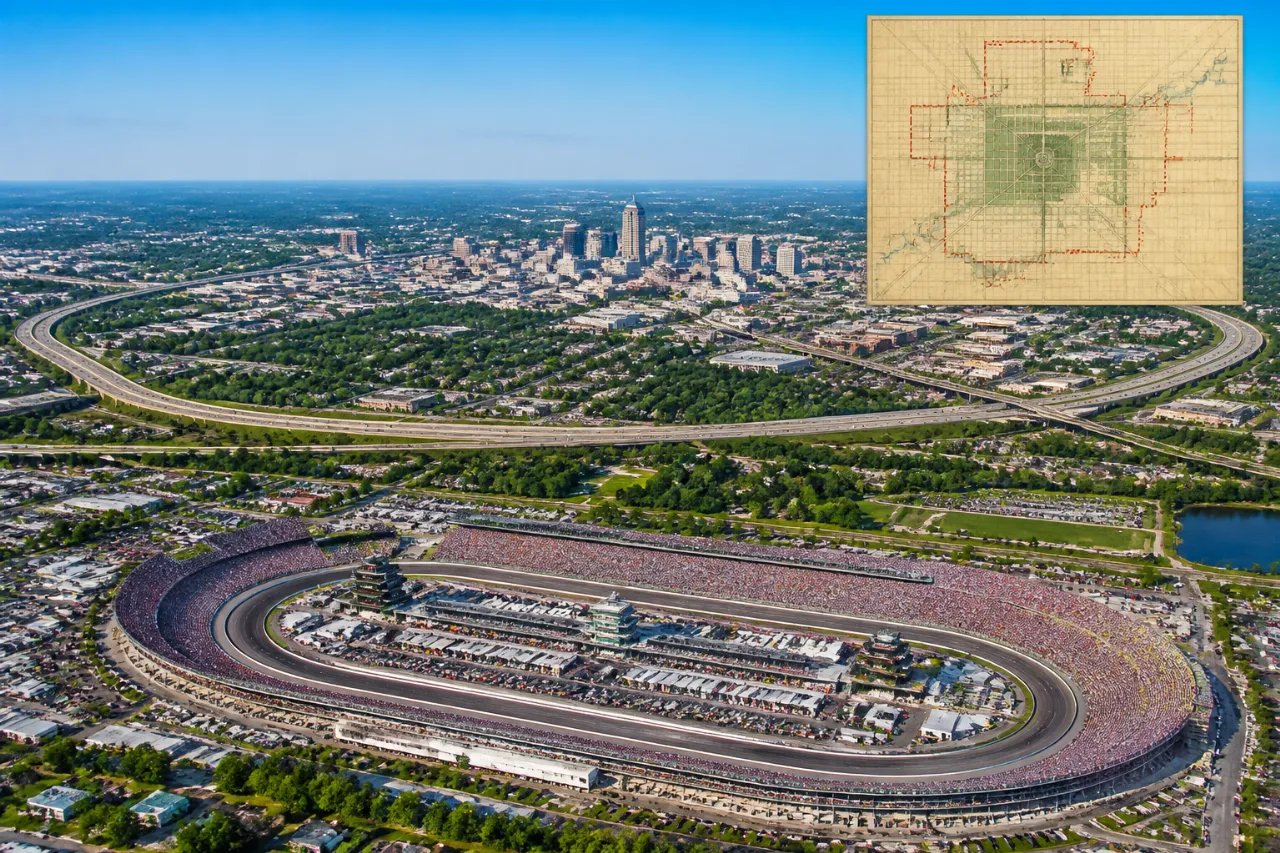
The city hosts one of the globe’s largest annual sporting events and is ringed by an unusual highway loop, features that produce outsized effects on local hotels, restaurants and transportation planning.
Racing that reshapes the local economy
The Indianapolis Motor Speedway and its signature race in May produce a scale few American cities see. Permanent seating at the track holds roughly 257,000 people; including the infield, total attendance approaches 350,000. The event draws crowds larger than many cities and injects substantial revenue into the local economy — the source estimates more than $400 million annually during race-related activity.
“That kind of volume fills downtown hotels and keeps restaurants busy for days,”
City planning and hospitality businesses must prepare for the surge every year: hotel occupancy spikes, restaurant reservations tighten, and some visitors book months in advance.
| Event/Facility | Approx. Capacity |
|---|---|
| Indianapolis Motor Speedway (permanent seating) | 257,000 |
| Indianapolis Motor Speedway (with infield) | ~350,000 |
| Kentucky Derby (for comparison) | ~150,000 |
| Sold‑out University of Michigan football game (comparison) | ~110,000 |
The I‑465 loop and travel patterns
Interstate 465 forms a complete 52.79‑mile loop around Indianapolis and is notable because the route number does not change around the circuit. That uniform identification simplifies local navigation — say “465” and most residents immediately know the corridor in question — and it shaped suburban growth and commuting patterns after its completion in the 1970s.
- Economic tradeoffs: Major events and highway design drive short‑term revenue and long‑term land use decisions.
- Infrastructure demands: Annual spikes in traffic and visitors require planning for transit, policing and emergency services.
- Civic identity: A planned capital and later boundary changes created administrative and development consequences still relevant to Marion County and surrounding communities.
Indianapolis is not just another Midwestern city. Its combination of a purpose‑built capital, one of the world’s largest single sporting gatherings and an uninterrupted beltway creates distinctive pressures and opportunities for local government, businesses and residents. How officials manage those realities — from road maintenance and crowd control to economic planning — will continue to shape Marion County and Indiana as a whole.