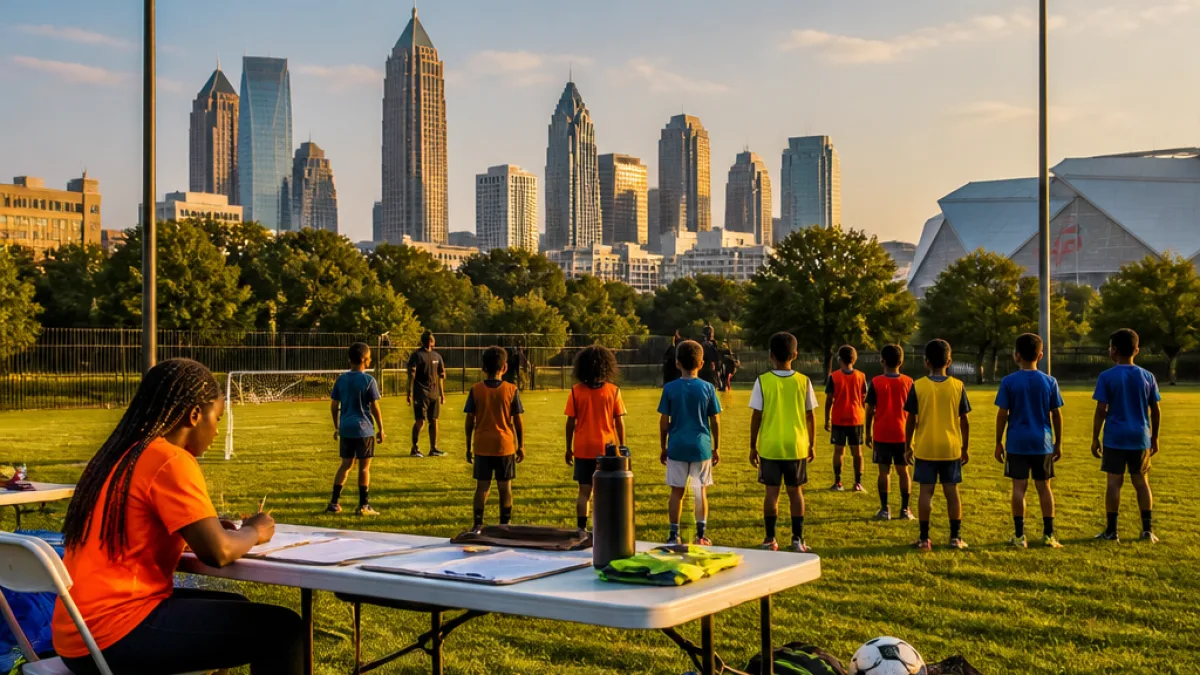
The World Cup brought global attention and a welcome boost to downtown Atlanta, filling hotels and packing restaurants and bars. But community leaders and local advocates say the tournament’s most meaningful legacy is likely to be found beyond the skyline — on neighborhood soccer fields and in youth programs across the city and the state.
From downtown crowds to neighborhood pitches
Atlanta hosted eight World Cup matches, including a semifinal, drawing international visitors and generating millions in regional economic activity. Still, organizations that work directly with children and neighborhoods argue the gains from the event will be measured over years, not weeks, in community trust, coaching and safe places to play.
The local office of the nonprofit LISC (Local Initiatives Support Corp.) — which directs community development resources in metro Atlanta — has highlighted efforts to invest in permanent recreational assets. Those investments aim to extend benefits from one-time visitor spending to long-term youth development.
“Pitches are permanent assets to serve residents long term.”
That observation, made by LISC Atlanta’s executive director, frames a wider conversation in neighborhoods from the Westside to other Atlanta communities and around Georgia: how to convert attention and short-term spending into enduring programs, mentorship and physical spaces where young people can play and learn.
How investment can change outcomes
Local advocates note several ways tournament-related interest can translate into long-term community gains:
- Improved facilities: refurbished or newly built fields create daily access for school teams, clubs and casual play.
- Youth programming: better coaching, after-school leagues and mentorship tie sports to education and opportunity.
- Community building: shared public spaces strengthen neighborhood ties and volunteer networks.
City planners and neighborhood groups say realizing those outcomes requires deliberate follow-through: maintenance budgets for fields, partnerships with schools and nonprofit operators, and programs that prioritize access for low-income families.
| Item | Detail |
|---|---|
| World Cup matches hosted | 8 (including a semifinal) |
| Immediate local effects | Increased hotel occupancy, busy restaurants and retail |
| Long-term focus | Neighborhood pitches, youth mentorship, community programs |
For Atlanta residents, the question now is less about the short-term economic windfall and more about stewardship: who will maintain new and improved fields, who will staff coaching and mentoring programs, and how local leaders will ensure equitable access so that children across the city and in nearby Georgia communities can benefit.
Conversations are already underway among civic groups, neighborhood organizations and funders to convert World Cup momentum into lasting assets. If those discussions lead to sustained investment in facilities and programs, the tournament’s most enduring legacy in Atlanta may be measured not by downtown hotel receipts but by children’s daily play on neighborhood pitches for years to come.