City, universities and community groups team up for West Savannah monitoring
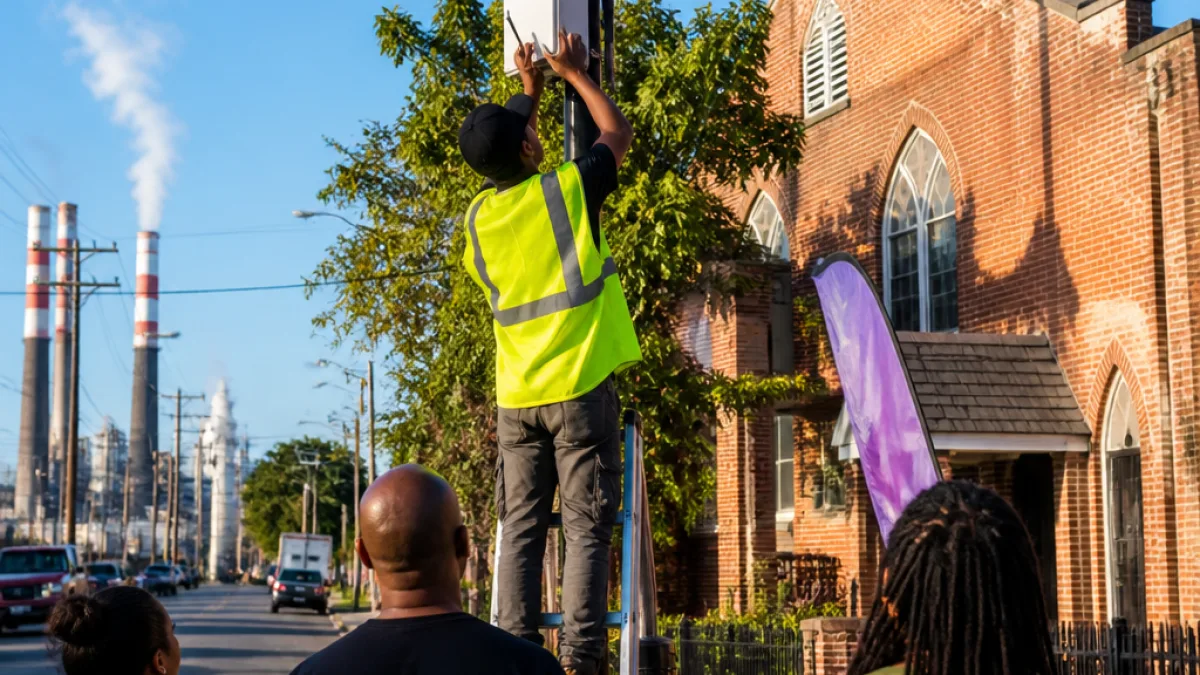
The City of Savannah is moving forward with a neighborhood-level air monitoring effort in portions of greater West Savannah, announcing a public presentation and the first sensor installation on Wednesday, Oct. 21. The outreach and installation will take place at Mount Bethel Missionary Baptist Church, 2924 Julia Law St., in the Ogeecheeton neighborhood, with the program scheduled to begin at 4:30 p.m.
Officials said the project pairs city staff with researchers from Georgia Tech and the Massachusetts Institute of Technology, along with community organization The Harambee House, Inc., to gather more detailed information on air quality in areas close to industrial facilities and heavy truck routes.
After the presentation, organizers will install a specialized sensor at the intersection of Julia Law and Dempsey streets. The device is designed to provide hyperlocal measurements — capturing pollution levels in a much smaller geographic footprint than traditional monitors operated by state or federal agencies.
- Who: City of Savannah, Georgia Tech, MIT, The Harambee House, Inc., local elected officials
- When: Wednesday, Oct. 21, presentation at 4:30 p.m., followed by installation
- Where: Mount Bethel Missionary Baptist Church, 2924 Julia Law St.; sensor at Julia Law & Dempsey
District 1 Alderwoman Bernetta Lanier is slated to participate in the discussion. City materials note Lanier has been an advocate for environmental issues on the west side, and this installation is framed as part of an effort to respond to residents who have long expressed concerns about pollution in their neighborhoods.
| Item | Detail |
|---|---|
| Event | Public discussion and sensor installation |
| Date | Oct. 21, 2026 |
| Start time | 4:30 p.m. |
| Primary partners | City of Savannah, Georgia Tech, MIT, The Harambee House, Inc. |
Local leaders describe hyperlocal monitoring as a tool that can pinpoint problem areas and support community-driven requests for action. For residents who live near industrial sites or along trucking corridors, sensor data can help clarify when and where pollutant spikes occur and inform conversations with regulators and industry.
Organizers invited community leaders, members of the media and the public to attend the presentation and witness the installation. The information gathered from this and subsequent sensors will serve as a baseline for understanding neighborhood air conditions and could shape future public-health responses and planning decisions.
For many in West Savannah, the project represents a step toward greater access to environmental data. City officials say the focus will remain on areas that face the greatest environmental challenges, while researchers aim to refine methods that could be applied in other neighborhoods.