SANTA FE — Childcare operators from across New Mexico pushed back Thursday against draft rules that would require facilities participating in the state’s universal childcare program to dedicate 57% of revenue to pay for teachers and administrators.
Providers warn of financial strain
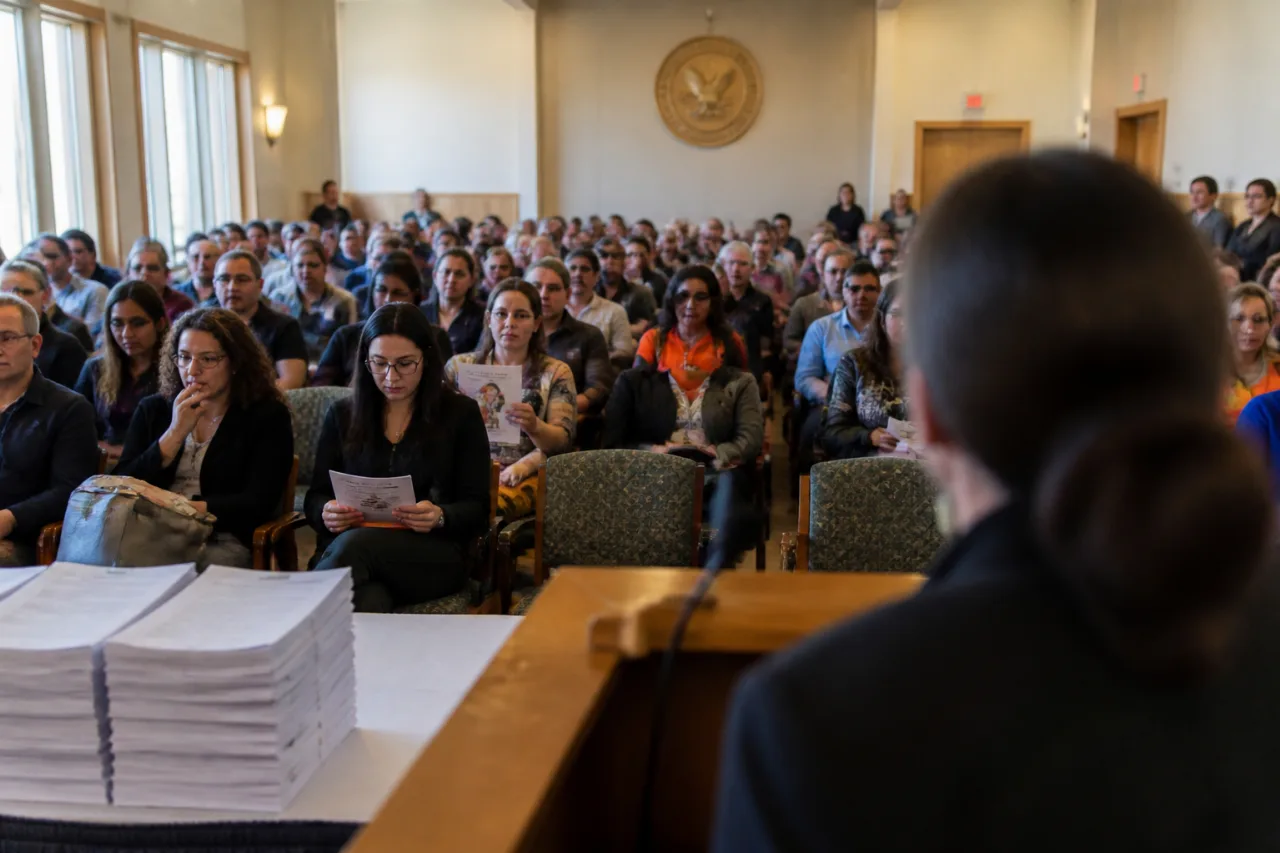
At a public hearing in the capital, owners and association officials said the flat percentage could make it difficult for many providers to keep their doors open or expand services. Several operators noted the proposal excludes positions such as cooks, janitors and maintenance staff from the 57% calculation, leaving centers to cover those costs from remaining revenue.
“This should be one of the most exciting times in my career,” Amanda Baca said. “Instead, I find myself asking a question I never thought I’d have to ask: Can I really afford to do this?”
Barbara Tedrow, president of the New Mexico Early Childhood Association and owner of A Gold Star Academy centers in Farmington, urged regulators to avoid a one-size-fits-all mandate for a sector that includes home-based providers, small centers, large nonprofits and for-profit operations.
“A one-size-fits-all of just randomly saying 57% doesn’t work,” Tedrow said.
Legal and legislative context
The proposed spending rule is intended to implement Senate Bill 241, the legislation that established universal childcare statewide earlier this year and set broad requirements for program design. The draft rules also include reporting provisions intended to demonstrate compliance with the law and to allow the state to monitor program stability and outcomes.
Alternatives and industry requests
Representatives of the early childhood sector recommended a lower minimum percentage. Tedrow and other speakers suggested a 45% wage floor would better accommodate the wide variety of provider models while still raising compensation for care workers.
- Proposed requirement: 57% of revenue must go to wages for teachers and administrators
- Industry alternative: 45% wage floor suggested by the New Mexico Early Childhood Association
- Concerns: exclusion of support staff from the calculation, differing cost structures across provider types
Speakers at the hearing said the proposed rule could unintentionally penalize centers with higher overhead or those that employ essential non-instructional staff. Smaller providers and new entrants — including one operator planning a center in Los Lunas — warned the mandate could threaten solvency or deter investment.
| Item | State draft rule | Industry request |
|---|---|---|
| Minimum share of revenue for teacher/admin wages | 57% | 45% |
| Inclusion of cooks/janitors/maintenance | Excluded from 57% calculation | Advocates want flexibility to account for these costs |
What’s next
State officials are soliciting feedback as they finalize rules to implement the law. Any changes will affect how the program reimburses providers and monitors compliance, and could influence the pace and shape of the state’s rollout of universal childcare. Providers urged regulators to adopt a more flexible approach that accounts for differences in size, geography and business model.
The debate highlights the tension policymakers face in raising wages for early childhood educators while ensuring program design allows diverse providers to participate — a central goal of the universal childcare law enacted earlier this year.