
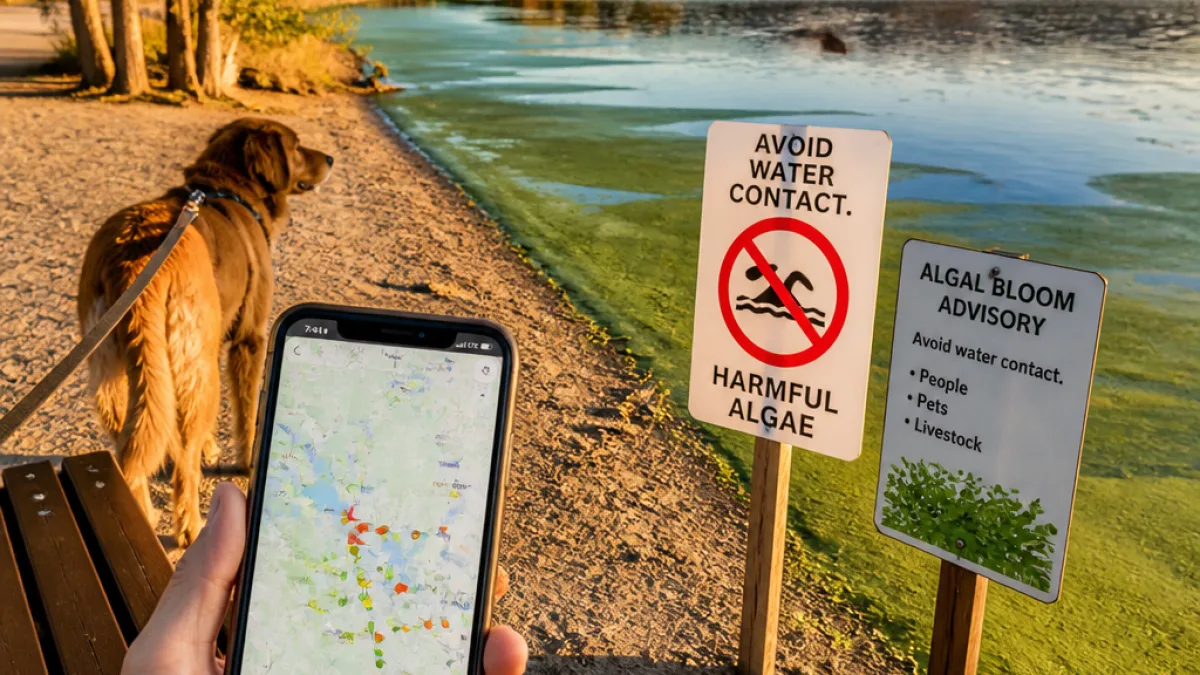
The New Mexico Environment Department on Monday said seven lakes across the state are under advisories for harmful algal blooms and unveiled a new interactive advisory map to track conditions during the peak season, running July through November.
Where the advisories are in effect
Officials said blooms can produce toxins dangerous to people and animals and often appear as blue, bright green, brown or red patches that may look like scum or floating grass clippings on the water’s surface. The department urged caution around affected waters and provided guidance for recreation and fishing.
| Lake | County | Advisory status |
|---|---|---|
| Quemado Lake | Catron | Warning |
| Clayton Lake | Union | Warning |
| Lower Charette Lake | Mora | Warning |
| El Vado Reservoir | Rio Arriba | Watch |
| Bluewater Lake | Cibola | Watch |
| Eagle Nest Lake | Colfax | Watch |
| Santa Cruz Lake | Santa Fe | Watch |
Health guidance and practical steps
The department outlined different precautions depending on whether a site is under a watch or a more severe warning. For all advisories, officials advise avoiding contact with visible blooms and taking steps to protect pets and yourself.
- Avoid swimming or wading in areas with visible algae; for warning sites, do not swim or water-ski at all.
- Do not drink untreated surface water.
- Keep pets away from the water and shoreline algae; rinse pets immediately if they come into contact with blooms.
- If you catch fish in affected lakes, rinse them with clean water before cooking and eat only the fillet.
- If boating or paddleboarding, steer clear of patches of algae.
"[Harmful algal blooms] can produce toxins that are harmful to humans and animals."
Officials also cautioned that the impacts of algal toxins on fish are not fully understood, recommending extra care when handling or consuming fish taken from waters with active blooms.
Map aims to assist public and local authorities
The new advisory map is intended to provide a real-time view of lake conditions across New Mexico during the prime season. That tool could help residents, visitors and local officials make informed decisions about recreation and public safety as blooms develop. The department also offers an online guidance document with more detailed information about harmful algal blooms, how to recognize them and the testing methods used to detect toxins.
For counties with affected waters — including Catron, Union, Mora, Rio Arriba, Cibola, Colfax and Santa Fe — the advisories carry implications for tourism, local recreation economies and public safety planning over the summer and early fall. Water managers and local health officials will monitor conditions and update advisories as tests and observations warrant.
Residents are urged to consult the New Mexico Environment Department’s online resources and the new interactive map for the latest status at specific lakes before visiting.