Organized spectacle in D.C. raised alarms about private activity
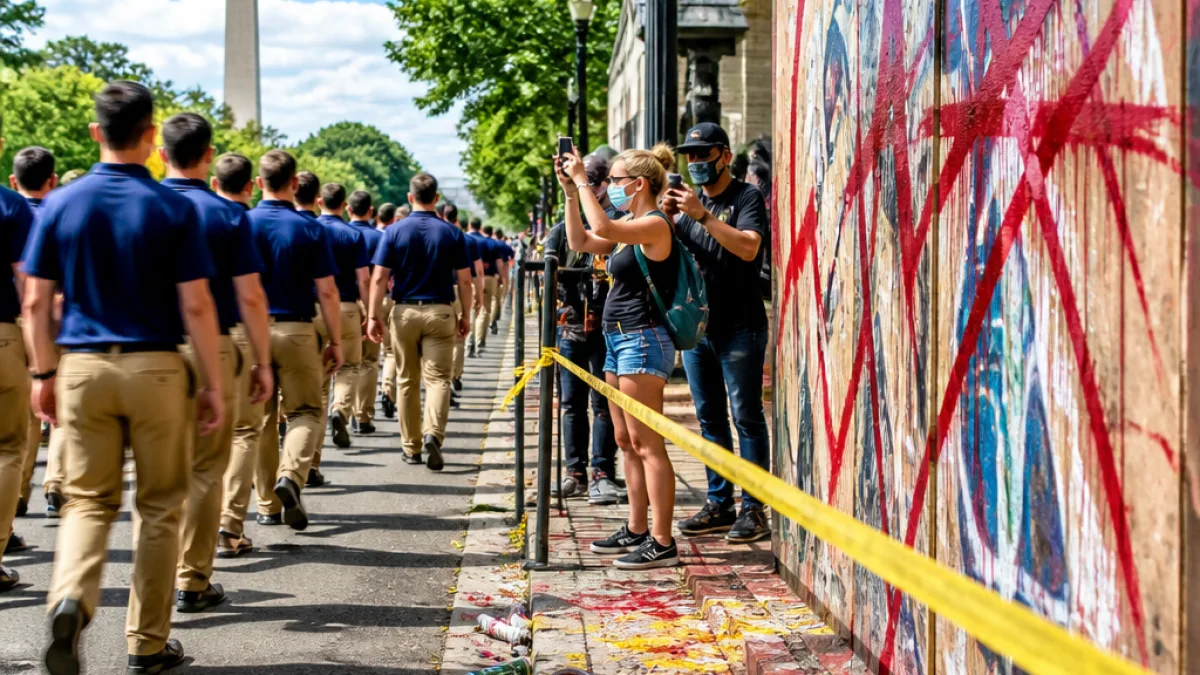
On the weekend marking the nation’s 250th anniversary, hundreds of men affiliated with the white nationalist group Patriot Front marched through Washington, D.C., wearing matching khakis and blue shirts and attracting widespread media attention. The carefully staged presence and largely nonviolent behavior in public drew sharp scrutiny from civil-rights advocates who say the appearance was intended to boost the group’s profile and recruitment potential.
While the demonstration generated national headlines and viral images — including one of an African American woman photographed inside a Metro car surrounded by masked members — experts familiar with the organization caution that the polished public display does not reflect the group’s activities away from cameras.
"That is not who they are in private," said Len Kamdang, director of the Criminal Justice Project at the Lawyers' Committee for Civil Rights Under Law.
History of covert attacks and vandalism
Civil-rights lawyers point to prior incidents in which people linked to the organization have engaged in destructive actions. One notable case involved the 2021 vandalism of a public mural honoring tennis legend and activist Arthur Ashe in Richmond, Virginia. According to the Lawyers' Committee, individuals associated with the group arrived at night and defaced the mural with white stencils and paint, an act described by advocates as an attempt to "whitewash" the memory of a Black civic figure.
Advocates say these kinds of clandestine operations — often timed to avoid immediate detection — are part of a broader pattern that can include property damage and intimidation. The July weekend demonstration in D.C., they contend, served to amplify the group’s brand while members temporarily refrained from overt violence.
What this means for communities
For communities in Washington state, experts recommend vigilance without panic. Civil-rights organizations and local authorities often urge residents to document incidents of vandalism, report threats to law enforcement, and share information with neighborhood groups and community leaders. Public displays by extremist groups can be intended to normalize their ideology and attract new supporters; local responses that protect targeted communities and hold perpetrators accountable are critical.
- Document and report vandalism or threats to local police.
- Stay informed through trusted local news and civil-rights organizations.
- Support community centers and public art that promote inclusion.
Incidents and dates tied to the group
| Year | Incident |
|---|---|
| 2017 | Group formed out of the Unite the Right rally in Charlottesville, Va. |
| 2021 | Vandalism of Arthur Ashe mural in Richmond, Va., attributed to members. |
| 2026 | Large public appearance in Washington, D.C., during July Fourth weekend. |
Local leaders and civil-rights defenders emphasize that organized, nonviolent public demonstrations can nonetheless be a strategic tool for extremists to normalize their presence and recruit new adherents. They encourage residents to report suspicious activity and to work with public officials to ensure safety and protections for vulnerable groups.
As the national conversation continues about how to balance free-speech protections with public safety, communities in Washington state and elsewhere face the challenge of responding to visible extremist organizing while addressing the concealed harms such groups have been accused of committing.