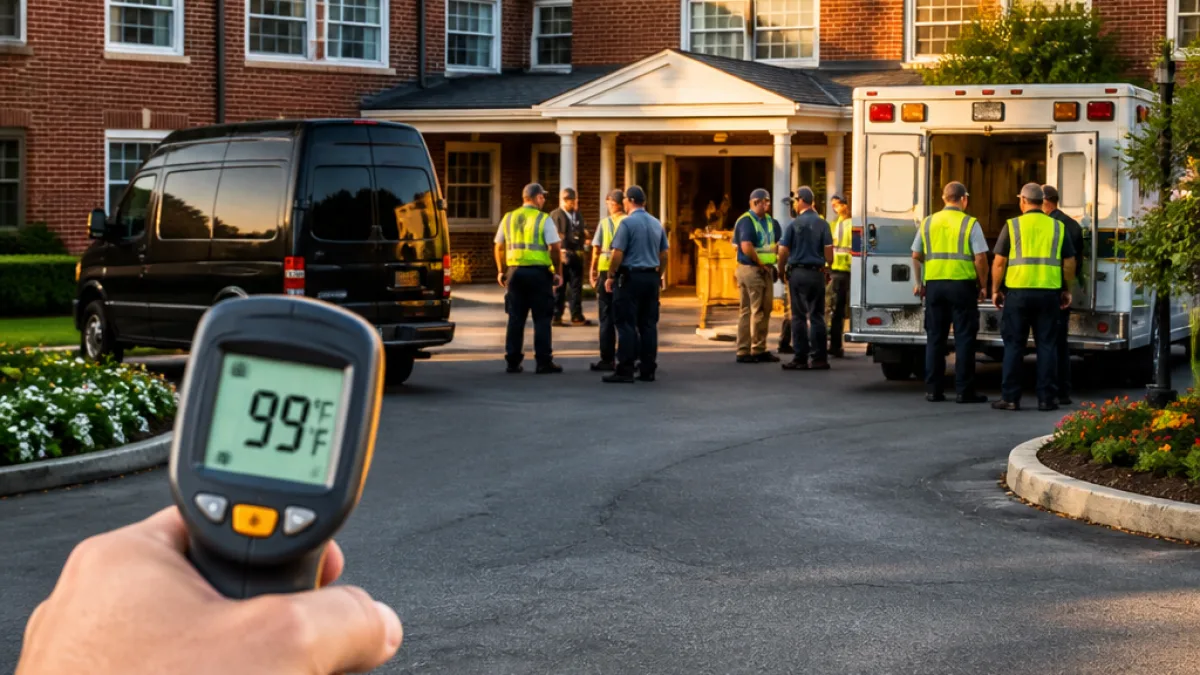
Hopkinton — Multiple authorities are investigating the unattended death of an 86-year-old woman at Golden Pond Assisted Living after first responders and staff reported extremely high temperatures in her apartment, according to police and media accounts.
What investigators say
Hopkinton police said officers who responded in the days after the death observed unusually high temperatures. A police report notes the resident’s unit was "extremely hot," with the thermostat indicating the room reached 99 degrees Fahrenheit. The woman had lived at Golden Pond for about seven weeks at the time she was found deceased on Sept. 30.
"The apartment was extremely hot with the thermostat indicating that the room temperature was 99 degrees Fahrenheit."
According to the report, facility management told investigators the building’s system had been switched from air conditioning to heat the day before the death. The manager suggested it was possible the resident attempted to use the thermostat’s "cool" setting, which might have continued to blow warm air into the room.
Staff accounts and facility conditions
Employees who spoke to WBZ-TV on the condition of anonymity described more widespread heat problems after the system switch. They told reporters some rooms became very hot and that staff relocated residents to common areas to be near portable air conditioners and fans while the issue persisted.
- Resident: 86-year-old woman, lived at Golden Pond about seven weeks.
- Date found: Sept. 30; officers noted temperatures Oct. 1.
- Reported temperature: Thermostat reading of 99°F in the unit.
Hopkinton Police Chief Scott van Raalten confirmed officers noted the extreme temperatures during their response. The report and staff statements indicate differing accounts on whether the problem was isolated to one unit or affected multiple rooms.
Why this matters locally
The case raises questions about climate control, maintenance and resident safety in long-term care settings. Older adults are particularly vulnerable to heat-related illness, and lapses in HVAC systems or in monitoring residents’ conditions can have serious consequences.
State and local regulators typically oversee assisted living licensing and safety standards; the involvement of multiple agencies suggests the matter will draw scrutiny beyond the local police investigation. Family members of residents and community advocates often press for transparent reviews in such incidents to determine whether operational failures, staffing issues or equipment malfunctions contributed.
Next steps in the inquiry
Authorities have not publicly released the identities of investigators beyond the Hopkinton Police Department or disclosed whether criminal charges are being considered. The police report, staff accounts and media coverage form part of an ongoing probe; officials will determine cause of death after completing their reviews and any required autopsy or medical examiner findings.
For relatives of residents, the case is a reminder to ask care providers about HVAC maintenance, emergency response plans and how staff monitor vulnerable residents during extreme temperatures.
Reporting from Hopkinton. — Erin Sullivan