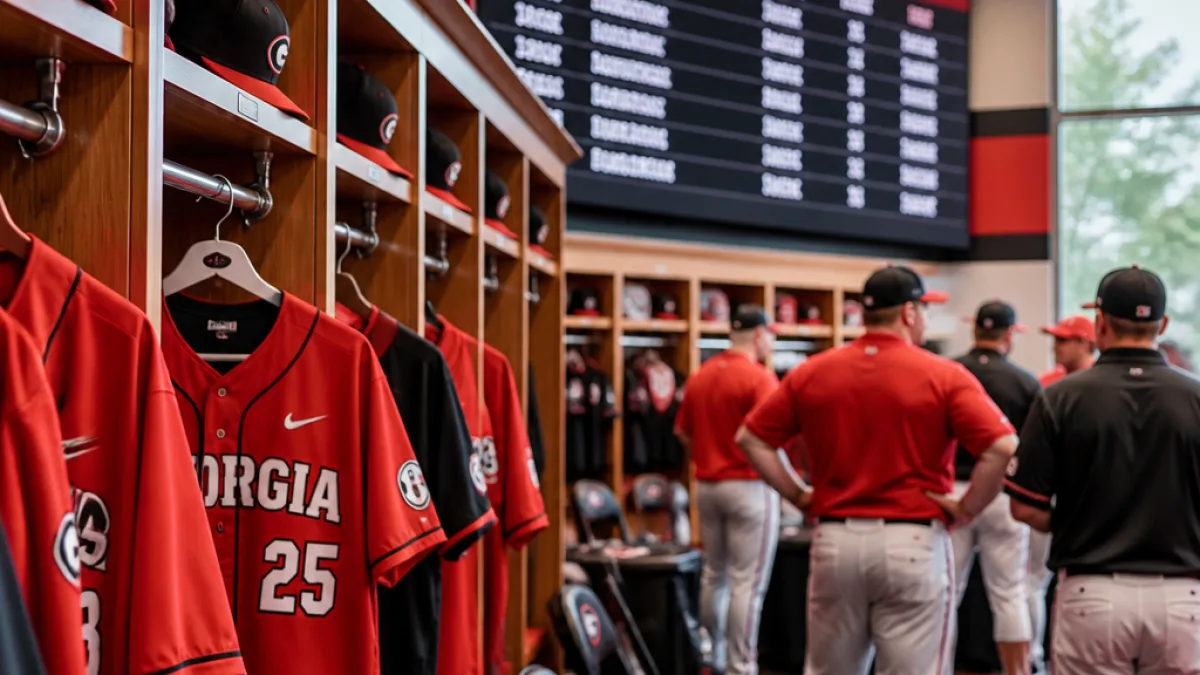
The University of Georgia matched a milestone for the baseball program this weekend when 13 Bulldogs had their names called in the 2026 Major League Baseball Draft — a program record and the most selections of any college in the country this year.
Big weekend for Georgia baseball
After three Georgia players were selected on Day 1 of the draft, the Bulldogs added 10 more picks on Day 2, bringing the total to 13. The haul capped a standout collegiate season for the Athens program and underscored the depth of talent developed under the current coaching staff.
Among the Day 2 selections was right-handed pitcher Justin Byrd, a Bogart native who came off the board in the sixth round to the Los Angeles Angels. Byrd joins teammate Rylan Lujo, who was chosen by the Angels in the fourth round earlier in the draft.
- Total Georgia selections: 13 (program record)
- Day 1 picks: 3
- Day 2 picks: 10
- Notable picks named in source: Justin Byrd (6th round, Angels); Rylan Lujo (4th round, Angels)
- Additional notes: The draft also included one UGA high school player and two transfer commits from Georgia's 2026 roster.
Local impact and context
For Athens and the broader Georgia baseball community, the draft results reinforce the university's standing as a pipeline for professional talent. Program records like this can boost recruiting, energize local supporters who follow the Bulldogs through NCAA tournaments, and provide financial and developmental incentives for the university's baseball operations.
While the source lists several of the players and rounds, it does not provide a full roster-by-round breakdown in the published summary. Still, the headline figures — 13 draftees and being the nation’s leader in selections — convey the scope of the achievement for the 2026 Bulldogs.
| Category | Figure |
|---|---|
| Program total selections | 13 |
| Day 1 | 3 |
| Day 2 | 10 |
For families and fans tracking Bulldogs prospects, the next practical steps typically include signing deadlines, signing bonuses per club announcements, and decisions by drafted players weighing professional offers against returning to college. Those developments will determine how many of Georgia’s draftees actually join minor-league systems this summer versus returning to Athens.
As the baseball offseason proceeds, the program will aim to convert this draft success into continued on-field performance and to leverage the national attention in recruiting and community engagement around Georgia baseball.