The latest Kids Count Data Book, released July 12, 2026, finds that Maine has experienced the largest decline in child well‑being of any state since 2019. The annual report attributes the downturn primarily to poorer child health outcomes and lower performance on national academic tests, while also noting a few areas of continued strength.
Education and test scores pull state rankings down
The Data Book ranks Maine among the bottom 10 states for educational achievement. According to the summary, a striking 75% of Maine students failed to reach proficiency on the most recent national exams. The report also points to a substantial share of high school students who did not graduate on time, a factor that weighs on long‑term measures of child well‑being.
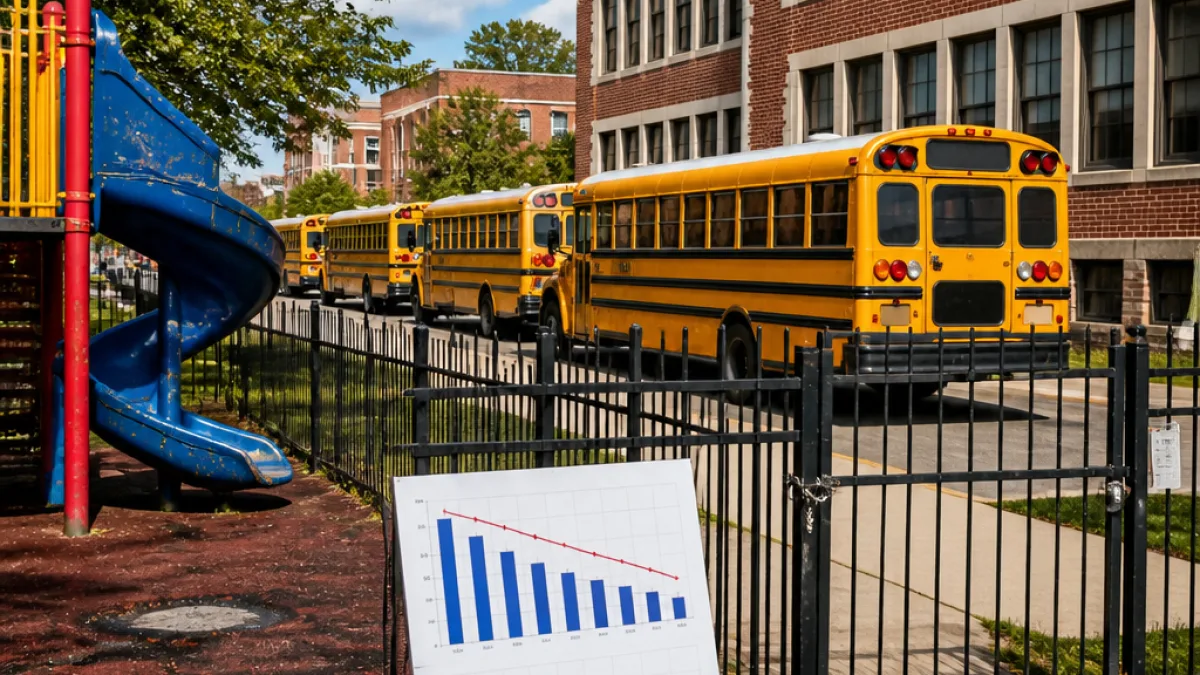
School buses parked near Lisbon High School in August 2025 were used for a photo accompanying the report’s release, underscoring the local impact: communities across the state are feeling the effects of lower test scores and delayed graduations on workforce preparedness and civic life.
Health indicators show mixed picture
Health measures are another driver of Maine’s decline. The report calls out a comparatively high child obesity rate and notes declining access to health care in rural areas — a persistent challenge for many Maine towns where distances and provider shortages complicate routine care.
At the same time, the state saw improvements in some areas that helped its overall score, the Data Book says. Maine benefits from a low teen birth rate and a relatively small proportion of children living in poverty compared with other states, which mitigated the overall decline.
- Education: Bottom 10 states for achievement; 75% not proficient on national tests.
- Health: High child obesity rate; reduced rural access to care.
- Offsets: Low teen birth rate and comparatively small number of children in poverty.
| Indicator | Report finding |
|---|---|
| Academic proficiency | 75% of students failed to reach proficiency on the latest national exams |
| High school on‑time graduation | Higher than desirable portion of students did not graduate on time (state ranks low) |
| Child health | Comparatively high obesity rate; declining rural health access |
| Protective factors | Low teen birth rate; relatively small number of children in poverty |
The Kids Count report refrains from assigning single causes but links the trend to declines in both health and educational outcomes. For Maine communities, that combination creates overlapping challenges: students who are not meeting academic benchmarks may also face health barriers that make learning more difficult, and families in rural areas may have fewer local supports.
Local school officials and health providers will be watching the report closely as they plan budgets and interventions for the coming school year. The findings point to the need for coordinated efforts that address both classroom learning and children’s health — including expanded access to preventive care in rural towns and targeted academic supports for students below proficiency.
The report was summarized by Maine Public’s Madi Smith, the outlet’s Emerging Voices Journalism Fellow for 2026, and published July 12, 2026.