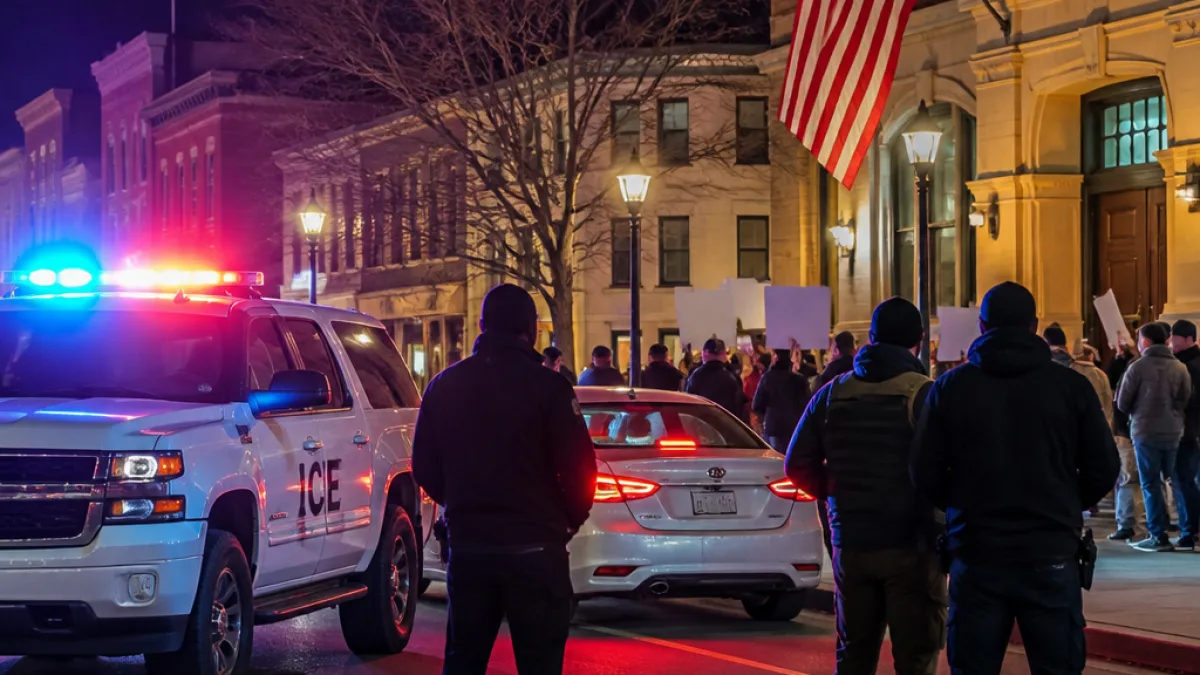
PORTLAND, Maine — A fatal shooting by U.S. Immigration and Customs Enforcement during a traffic stop in Biddeford this week has prompted public outrage across the state and left Sen. Susan Collins navigating a politically sensitive moment less than five months before the November elections.
Timeline of events and federal response
According to Reuters reporting published July 16, the incident occurred after the collapse of a potential Democratic challenge to Collins when Graham Platner withdrew his candidacy, a development that had already unsettled the Maine Democratic Party. The ICE shooting at a Biddeford traffic stop then escalated tensions, driving public scrutiny onto federal immigration enforcement practices and the senator's position.
- July 16 — Reuters reports on the shooting and its political implications.
- Soon after — Collins urged Homeland Security Secretary Markwayne Mullin to "cease all non-urgent" ICE traffic stops.
- Following Collins' request — Mullin initially agreed to halt non-urgent stops, but President Donald Trump publicly opposed such pauses the next morning on Truth Social.
Collins' stance and local concerns
Collins framed her appeal as a temporary pause while investigations proceed and while planned law enforcement safeguards are implemented. In a statement to Reuters she said routine traffic enforcement should be re-examined given the two recent shootings under investigation and the fact that Maine is still awaiting the deployment of body-worn cameras and increased training funding she helped get signed into law.
"But to have them routinely done when we have had two recent shootings that are under investigation calls for a halt in that approach for now," Collins said. "This is especially true because we're still waiting for the deployment of the body-worn cameras and the increased funding for training that I worked so hard to get signed into law."
Her intervention reflects a longstanding approach in Maine politics: Collins has cultivated a reputation for independence from the national party, often emphasizing pragmatic solutions and bipartisanship. Yet the episode has raised questions about how much influence she can exert within the Republican Party at a moment when national leaders are sharply opposed to curbing ICE enforcement.
How national politics entered a local debate
President Trump’s post on Truth Social the morning after the shooting, opposing a halt to ICE traffic stops and framing them as an essential crime-fighting tool, complicated Collins’ position. Political analysts in Maine told Reuters the president’s comments undercut Collins’ leverage at a time when she is the only Republican U.S. senator up for re-election in a state that voted for Democrat Kamala Harris in 2024.
| Event | Effect |
|---|---|
| Withdrawal of Graham Platner | Created uncertainty among state Democrats |
| Biddeford ICE traffic-stop shooting | Produced public outrage and renewed scrutiny of ICE tactics |
| Collins requests halt to non-urgent stops | Signaled concern for public safety and oversight |
| Trump’s public objection | Raised questions about Collins’ influence in her party |
For many Mainers, the shooting has added urgency to demands for accountability and transparency in federal law enforcement activities in the state. Collins tied her request directly to the broader roll-out of safety measures she advocated for, including body cameras and additional training — measures she says are not yet fully in place.
While federal officials initially signaled a willingness to pause non-urgent traffic stops, the president’s public opposition suggests that an immediate policy shift is unlikely without further pressure. The episode has highlighted the cross-currents that can occur when a local incident prompts national response, and how those dynamics reverberate in state politics ahead of a high-stakes Senate contest.
As investigations into the shooting continue, Mainers and state leaders will be watching for updates from federal authorities and for any concrete steps toward the safety measures Collins referenced. The political implications for Collins — a two-term senator approaching three decades in office — remain uncertain as Maine heads into a contentious election year.