The Ebola epidemic in the Democratic Republic of Congo has spread to an eighth province, authorities said Sunday, as the nation grapples with what has become its deadliest outbreak on record. The Health Ministry reported two new cases in Nord-Ubangi, including one fatality.
Current scale and geography
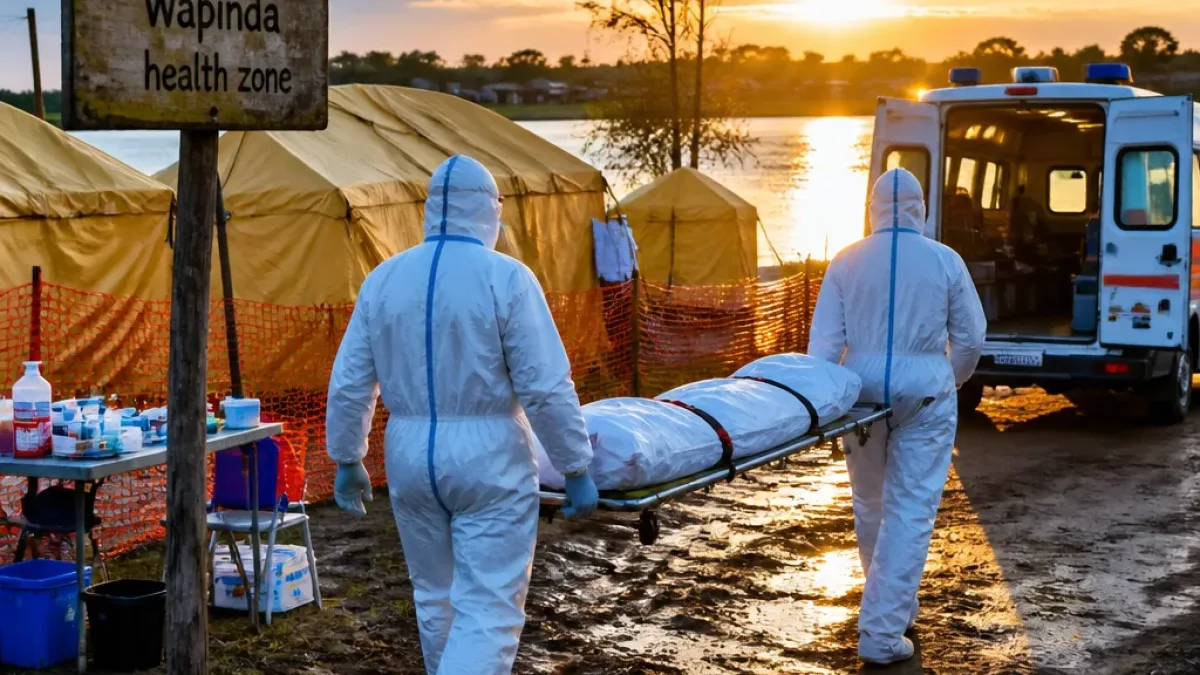
Since the outbreak was declared in mid-May, officials have tallied at least 9,400 cases and over 4,500 deaths, figures that make this the most lethal Ebola crisis in Congo’s history. The newly reported cases in Nord-Ubangi — a province bordering the Central African Republic — involved two men in their 20s from the Wapinda health zone, which adjoins Bas-Uele province where earlier cases were confirmed.
“We see pockets of Ebola generally going down, but unfortunately geographically it’s spreading out,” World Health Organization Regional Director for Africa Mohamed Yakub Janabi told The Associated Press.
Health officials say the virus has crossed international borders, with cases documented in neighboring countries. Uganda has since declared itself free of the disease, while Kenya has recorded cases linked to the outbreak. The Central African Republic has not reported any confirmed infections.
Operational challenges for response teams
Authorities and field epidemiologists cited multiple obstacles undermining containment efforts. In some areas, insecurity and poor transport and communications infrastructure complicate access, particularly along border zones where displacement from violence has concentrated vulnerable populations. Health workers also report resistance or fear among affected communities, with some patients avoiding treatment centers and deaths occurring in the community.
- New provincial spread: Nord-Ubangi — 2 cases, 1 death.
- Nationwide impact: At least 9,400 cases and over 4,500 deaths since mid-May.
- Cross-border reports: Cases reported in Uganda and Kenya; CAR has no confirmed cases.
Where the outbreak is concentrated
Government data indicate that Ituri province in eastern Congo remains the epicenter, accounting for roughly three-quarters of confirmed infections. Health authorities have identified dozens of affected health zones across the country, prompting teams to expand surveillance and localized interventions.
| Metric | Reported figure |
|---|---|
| Confirmed and suspected cases | 9,400 |
| Reported deaths | 4,500+ |
| Newly affected province | Nord-Ubangi (2 cases, 1 death) |
Field coordinators describe adaptive strategies, such as periodic home visits by surveillance teams, to reach people who are too fearful to seek care at hospitals. Public-health officials emphasize that encouraging people with symptoms to present for testing and treatment remains a major hurdle.
Given the outbreak’s size and its geographic spread, international health agencies and national responders face a complex task: maintaining surveillance and care in conflict-affected and hard-to-reach areas, treating infected patients, and interrupting chains of transmission that have now crossed provincial and national borders.
Reporting for this article is based on statements from the Democratic Republic of Congo Health Ministry, field epidemiologists working in affected provinces, and an interview with the World Health Organization regional director for Africa.