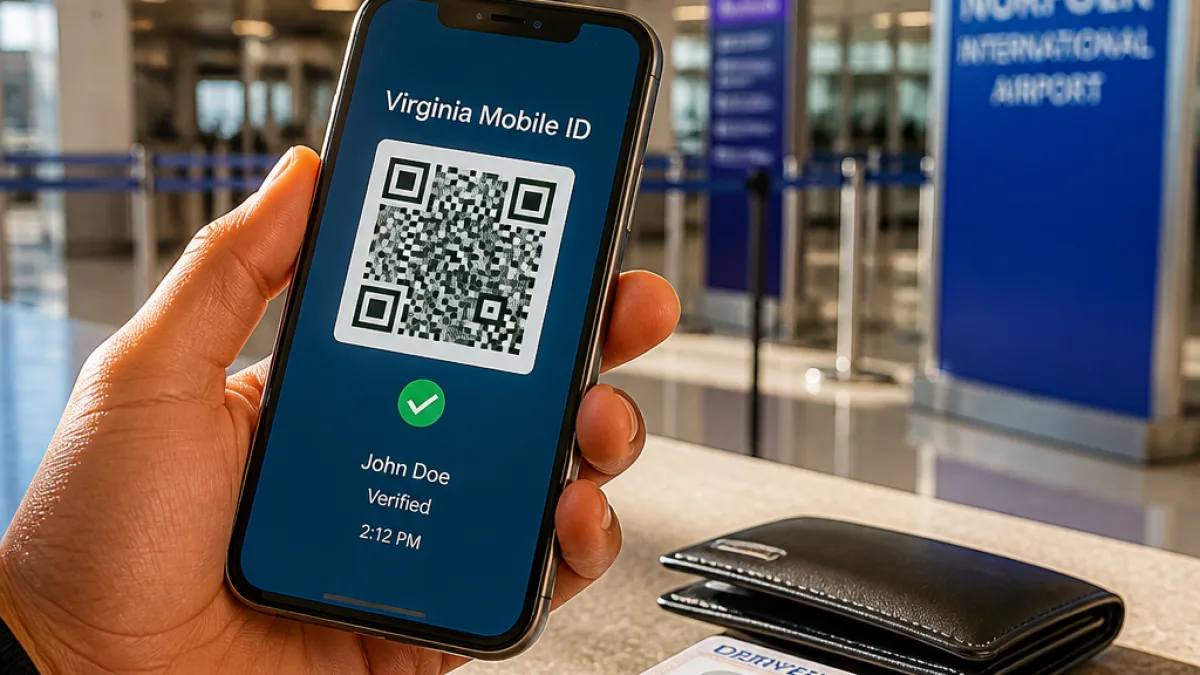
The Virginia Department of Motor Vehicles has expanded its Mobile ID to Hampton Roads, giving residents another way to prove identity and age without digging for a wallet. The digital credential, which launched in Richmond in late 2025, arrived locally at the end of June and is already in use at a handful of sites around the region.
How it works and where you can use it
To enroll, users download the Virginia Mobile ID app, scan the barcode on the back of their physical driver’s license and take a selfie to confirm identity. The app then provides a scannable code that businesses and agencies can use to verify a person’s status. The DMV emphasizes the Mobile ID is optional and that physical cards remain valid.
- Accepted locations in Hampton Roads include checkpoints at Norfolk International Airport and several entertainment and hospitality spots.
- Local businesses already accepting the Mobile ID include independent and craft breweries as part of a pilot acceptance network.
- State agencies such as Virginia State Police also recognize the digital credential for certain checks.
Local benefits and practical use
Officials framed Hampton Roads as a natural fit for the rollout because the region has busy travel hubs, attractions and an active nightlife scene where quick identity checks matter. For residents, that could mean faster lines at airport security, quicker age verification at restaurants and bars, and fewer instances of leaving home without a needed ID.
“Hampton Roads is home to busy airports, attractions and travelers, making it a natural place to expand Virginia Mobile ID,”
The DMV says the Mobile ID shares only the information necessary for a particular transaction rather than the full set of personal details on a physical license. That selective-sharing feature is highlighted as a security advantage.
Privacy concerns and safeguards
Digital IDs have stirred debate nationally over privacy, data security and the risk of making users more vulnerable to unlawful searches. Some critics worry about centralized data, potential breaches and how scanned digital credentials could be logged by private businesses. The DMV counters that the Mobile ID minimizes data exposure by limiting what is displayed to a verifier and by avoiding handing over the device itself during checks.
Local law enforcement and businesses joining the acceptance network must use a scanning process rather than taking a phone from a customer. That, the DMV says, reduces the chance of unnecessary access to the device.
What this means for Hampton residents
For many people in Hampton, the Mobile ID will be a convenience: another tool in the pocket for travel and everyday life. Adoption will likely grow if more airports, retailers and venues sign on. But residents should weigh the convenience against lingering questions about digital privacy and control of personal information.
| Item | Notes |
|---|---|
| How to get it | Download app, scan physical license, take selfie |
| Where it’s accepted locally | Norfolk International Airport checkpoints, select breweries, some entertainment venues |
| Is the physical card going away? | No — Mobile ID is optional |
As the Mobile ID spreads across more states and services, Hampton residents will be able to judge whether the digital credential offers the convenience officials promise without sacrificing privacy. For now, the choice remains theirs.