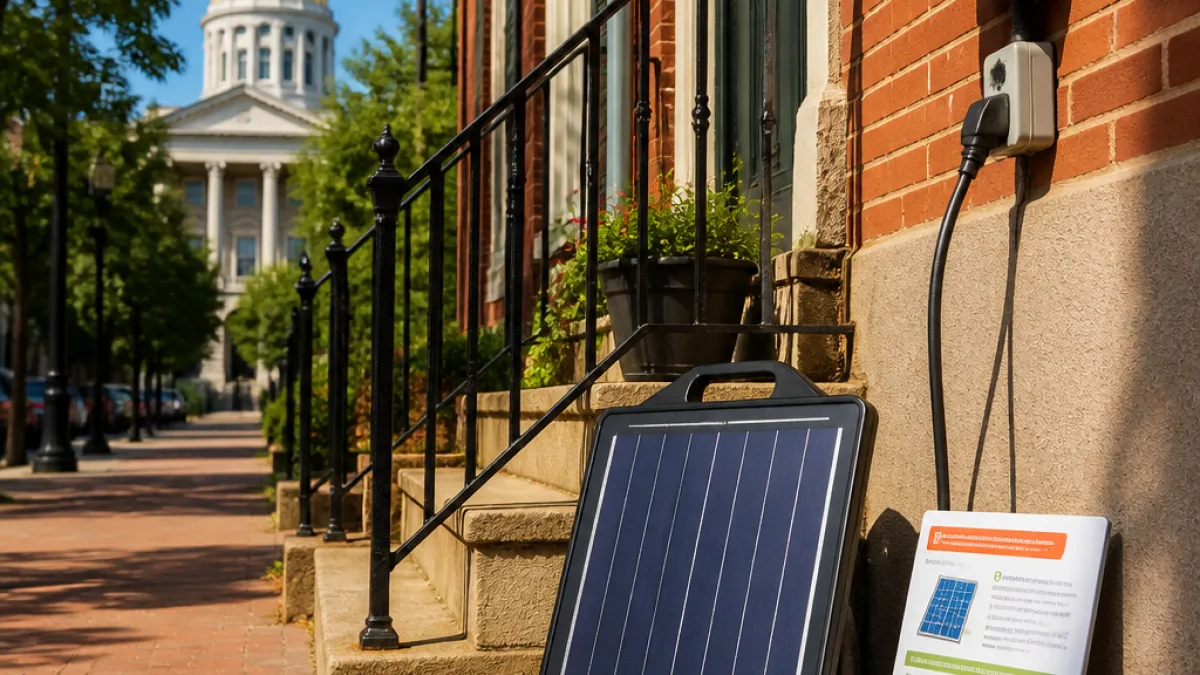
New Hampshire has cleared the way for an easier, lower-cost route into rooftop solar with a law that lets residents use small, plug-in systems without seeking approval from their utility or paying added charges. Gov. Kelly Ayotte signed Senate Bill 540 on July 2, setting statewide standards for what are often called balcony or plug-in solar units.
What the law does
Under SB 540, customers may install a single plug-in solar device per metered account, as long as the unit is no larger than 1,200 watts and meets safety certifications from a nationally recognized testing laboratory such as UL Solutions. Utilities are barred from requiring interconnection agreements, seeking approval, or charging extra fees for these portable systems.
Why it matters locally
For many Granite Staters, full rooftop installations remain costly and complex. Plug-in systems offer a simpler, cheaper first step into generating solar power at home — an option that can be especially attractive to renters or homeowners who do not want to alter their rooflines or go through extensive utility paperwork.
- Consumer access: Easier entry to solar without formal utility approval.
- Limits and safety: One device per meter; 1,200-watt cap; required third-party testing.
- Grid data: The law also aims to give utilities clearer information about adoption so they can plan demand.
The bill’s sponsor, state Sen. David Watters, a Dover Democrat, framed the measure as a way to balance consumer access with safety and grid management. The change puts New Hampshire alongside other Northeastern states developing rules for such technology — including Maine, Vermont and Connecticut — while noting that Utah became the first state to legalize balcony solar last year.
| Provision | Detail |
|---|---|
| Signed | July 2, 2026 |
| Maximum per device | 1,200 watts |
| Units per account | One per metered account |
| Utility requirements | No interconnection agreement, approval, or extra fees required |
| Safety standard | Must meet testing from nationally recognized lab (e.g., UL) |
Officials and installers say plug-in systems can be an important entry point into distributed solar, helping residents cut energy bills without the expense or permanence of a whole-roof array. Consumer tools such as EnergySage can still help residents compare full rooftop options and incentives if they decide to expand later.
For utilities, the law provides a clearer legal framework for how to account for this growing category of distributed generation. That clarity should help utilities model demand more accurately and incorporate small-scale solar into planning without imposing extra administrative barriers on customers.
As New Hampshire joins a growing number of states setting rules for plug-in solar, residents considering a purchase should confirm the product’s certification, check their meter/account status and review manufacturer guidance on safe installation and operation.