Program moves into city to expand reentry services and workforce supports
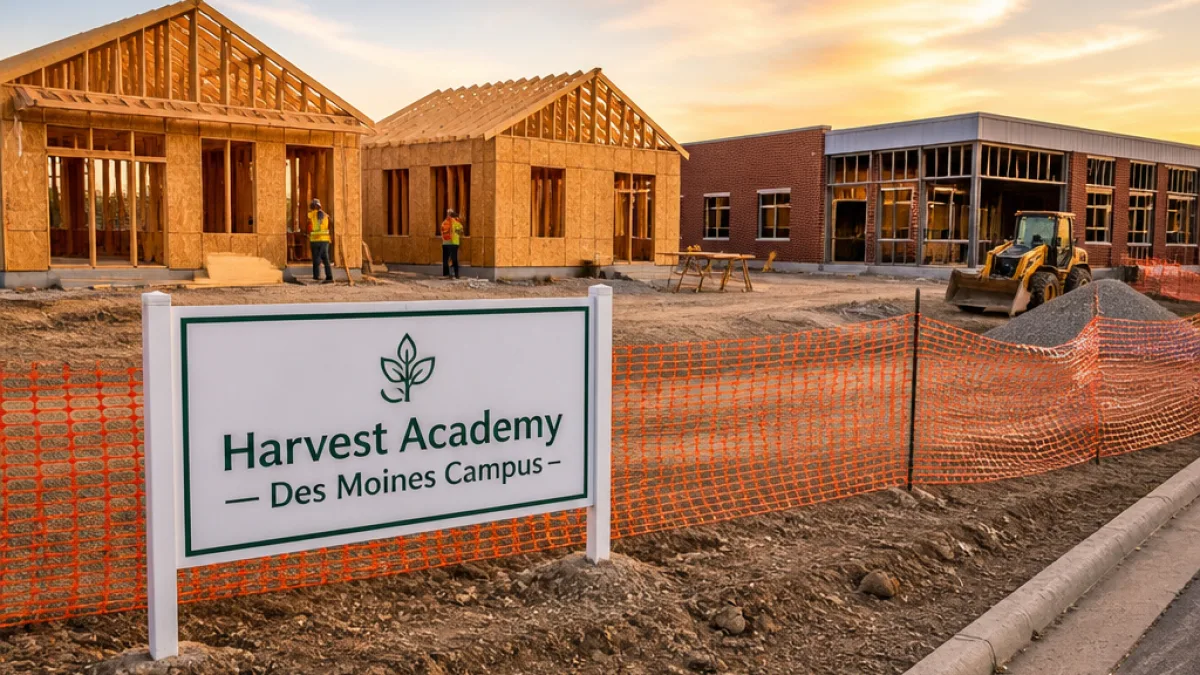
Harvest Academy, a community-based program that works with previously incarcerated men to rebuild daily routines, housing stability and employment skills, has chosen Des Moines for a new, larger campus. Leaders broke ground this summer on a site near Fleur Drive where the program expects to grow beyond its current capacity and add communal supports aimed at preventing a return to homelessness, addiction or incarceration.
The nonprofit currently runs a small residential operation capable of housing roughly 20 people. Officials say the first phase of the Des Moines campus will include two residential houses that can serve up to 50 men, plus a community center and space for workforce training.
"We are relocating up here into Des Moines where we will be able to serve. Our first two houses, we’re going to be able to serve up to 50 men," said Derek Johnson, chief operations officer at Harvest Academy.
Johnson, who is a program graduate and oversees operations, emphasized that Harvest’s staff are people with lived experience. All frontline employees are formerly incarcerated men who completed the program, a model organizers say improves trust and outcomes.
- Current residential capacity: ~20 people
- Planned initial capacity in Des Moines: 50 men
- Program length: two years (per organizers)
Harvest Academy describes the program as focused on building routine and life skills — from showing up for community responsibilities to basic daily habits like waking on time and preparing meals. Organizers argue that longer-term, structured community living can address the underlying behaviors that often lead to repeat offenses.
| Item | Current | Planned Des Moines Campus |
|---|---|---|
| Residential beds | ~20 | 50 (first two houses) |
| Services | Limited | Residential housing, community center, workforce training |
| Staff composition | Not specified | Primarily program graduates |
Local and state discussions about how to reduce prison populations have given groups like Harvest renewed attention. Johnson pointed to a Legislative Services Agency analysis indicating that, under current trends, Iowa could need additional prison capacity — a projection that supporters of reentry programs cite when arguing for alternatives.
Leaders say the Des Moines move will allow Harvest to serve more people at once and to pilot workforce training that connects participants to steady employment. Expansion plans also include a future goal of offering services to women, though organizers say the initial focus will be on building out the men’s campus.
For Des Moines, the arrival of Harvest Academy means added housing and nonprofit activity in neighborhoods where services for people leaving incarceration are limited. City officials and community groups often weigh both the potential benefits — reduced recidivism, increased employment and stable housing — and the short-term demands on social services and coordination.
Harvest Academy’s model — peer-run, residential, and multi-month to multi-year in duration — differs from shorter reentry interventions. Organizers say those differences are deliberate: they aim to give participants time to form stable routines and to practice employment and relationship skills that supporters say are key to long-term success.
As the new campus takes shape, local providers and policymakers will be watching for outcomes on housing stability, employment placement and recidivism — measures that could influence future support for similar programs across the state.