Orange County’s 34 cities are operating on markedly different financial footing, a mid-2026 review shows — a variation that matters for residents of Orange because neighboring cities’ decisions shape regional services, economic conditions and local tax patterns.
Key changes for residents: some municipalities are running surpluses and healthy reserves; others are relying on one-time cash fixes or voter-approved sales-tax increases to cover structural gaps. The review makes clear that where you shop, work and receive services can affect the sales tax rate you pay and the fiscal stability of nearby cities.
"sun, stucco, strip malls"
Two types of cities, mixed outcomes
The county contains 34 cities, split between charter and general-law forms. Ten charter cities — including Anaheim, Irvine, Santa Ana and Huntington Beach — have extra autonomy on local matters. But charter status does not guarantee financial health: the review notes that some charter cities face deep budget shortfalls while others maintain strong reserves.
Conversely, among the 24 general-law cities (from Fullerton to Villa Park), financial conditions also vary widely: some post surpluses while others are in significant budget distress.
Sales-tax differences and local measures
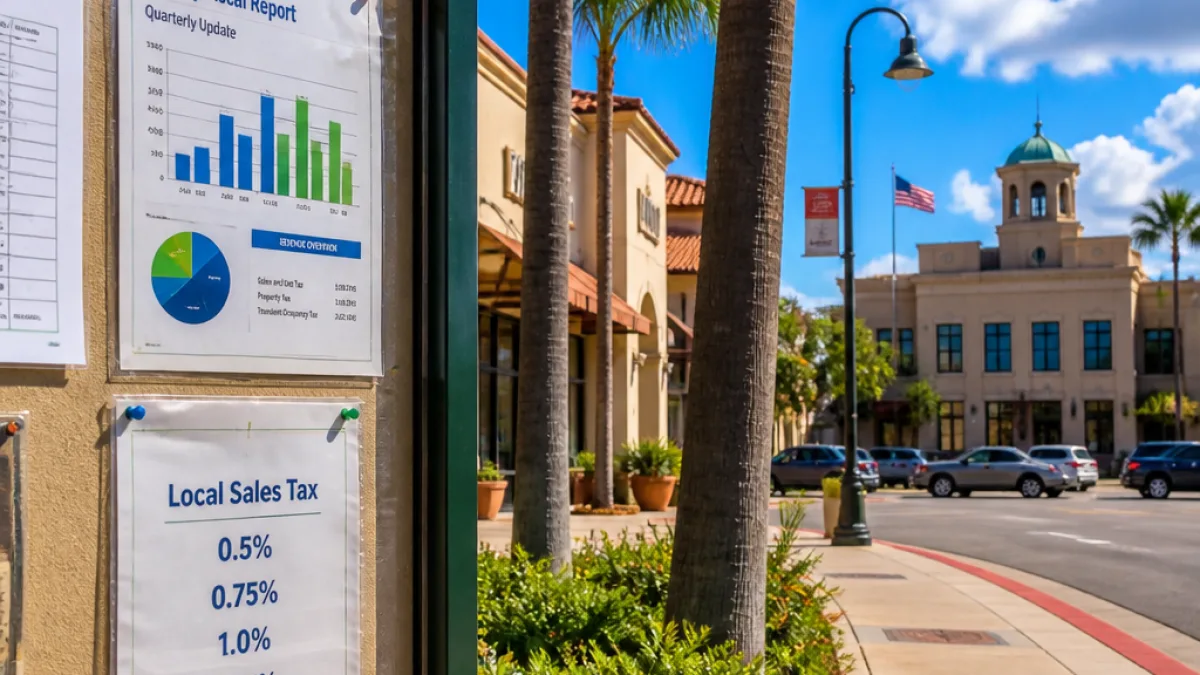
Most shoppers in the county pay a base combined rate of 7.75%. But local ballot measures have raised rates in many cities. The review highlights how small fractions of a percent have large budgetary impacts.
- 9.25%: Santa Ana, Westminster, Seal Beach, Los Alamitos
- 8.75%: La Habra, Buena Park, Garden Grove, Placentia, Stanton, Fountain Valley, La Palma
- County average: about 8.1%
Several cities explicitly credit voter-approved taxes with stabilizing their finances. Seal Beach points to Measure GG (a 0.5% sales tax) as eliminating a structural deficit. Los Alamitos relies on Measure Y (1.5%). Fountain Valley cites Measure HH (1%), and Stanton has its own Measure GG penny.
What this means for Orange residents
While the city of Orange is one of 34 municipalities in the county, the patchwork of tax rates influences consumer costs and competitive retail decisions. Areas with higher sales taxes may face different shopping patterns, which can shift retail traffic across borders and affect local sales-tax revenue streams that fund city services.
City officials and voters elsewhere are using ballot measures to plug gaps that recurrent revenue has not covered. That approach can provide short-term relief, but the review warns that some cities still face structural deficits that one-time cash or temporary measures mask.
| Measure | Rate | City (example) |
|---|---|---|
| Measure GG | 0.5% | Seal Beach |
| Measure Y | 1.5% | Los Alamitos |
| Measure HH | 1% | Fountain Valley |
As neighboring cities weigh taxes, reserves and service levels, residents of Orange should watch local budgets and ballot measures in the coming months. Changes in sales-tax rates, regional retail patterns and municipal reserves could influence everything from street maintenance and parks funding to public safety resources beyond city borders.