CINCINNATI — An Ohio judge has temporarily halted the National Collegiate Athletic Association’s implementation of a new age-based eligibility policy for a group of college basketball players, opening the door for them to pursue additional playing time and enter the transfer portal ahead of the coming season.
Injunction allows plaintiffs to pursue fifth season
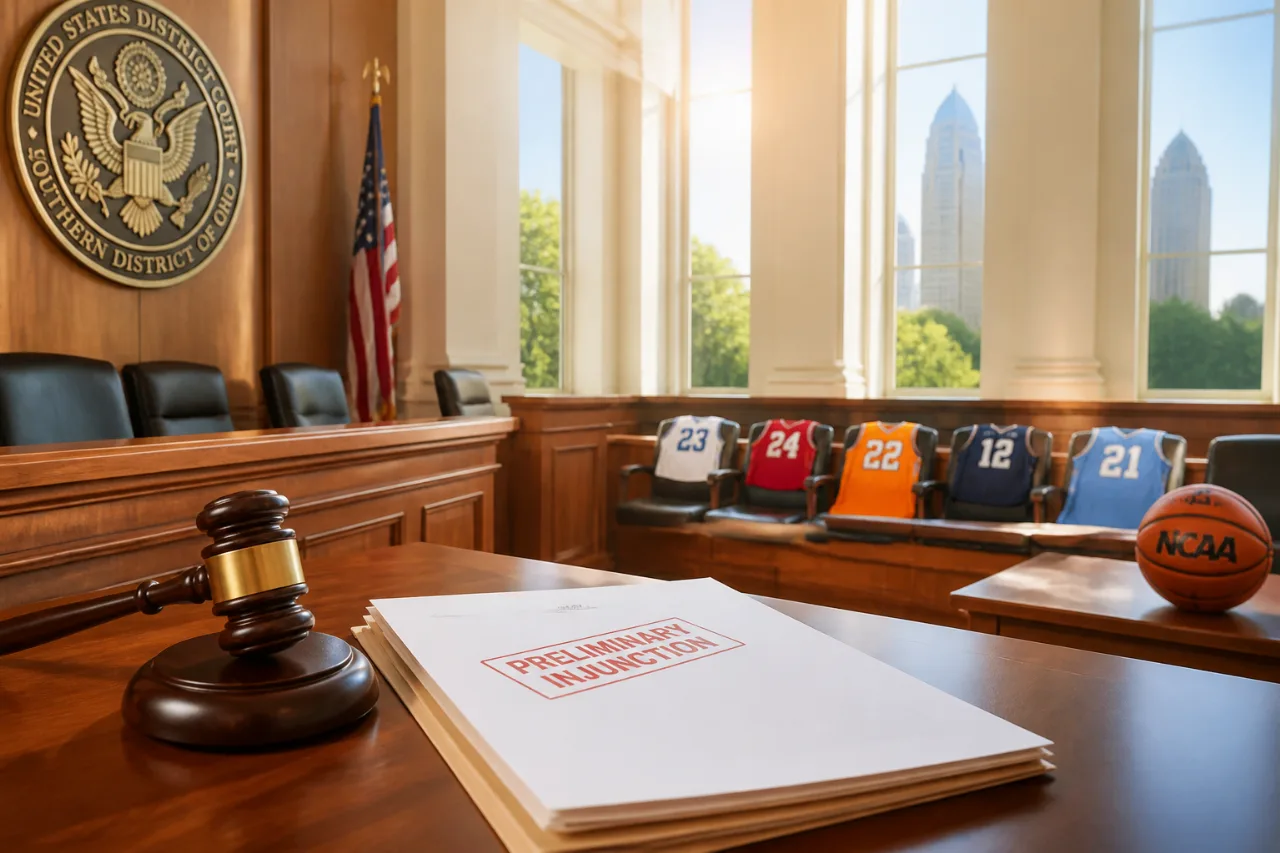
U.S. District Judge Christopher Wagner said Thursday the NCAA applied its new rules in an "arbitrary and capricious" manner when denying eligibility to 24 men’s and women’s basketball players represented in the Cincinnati lawsuit. The ruling grants a preliminary injunction that will let those athletes attempt to compete for remaining roster spots.
"We hope the NCAA reconsiders its position and allows all other similarly situated athletes from the high school class of 2022 to compete for remaining roster spots in all sports," attorney Ryan Downton said.
Wagner scheduled a conference for Aug. 4 to prepare for trial. Downton has filed similar suits on behalf of nearly 30 other basketball players, according to court filings.
What the dispute is about
The lawsuit centers on a sweeping change the NCAA Division I Cabinet approved last month. Under the new framework, athletes are allowed five seasons of competition over a five-year period, with that period starting at either their first full-time enrollment or the academic year after their 19th birthday — whichever comes first. The rule effectively limits traditional waiver and redshirt extensions in most circumstances.
The plaintiffs are players who graduated from high school in 2022, began college that autumn and never took a redshirt year, and who seek to play a fifth season in the upcoming campaign. In filings, Downton argued those athletes were denied opportunities to compete against older players who have been granted extra seasons. The NCAA has countered that the rule change reflected a clear policy decision to standardize eligibility windows.
Practical effects and remaining questions
- Immediate effect: The 24 named plaintiffs may enter the transfer portal and seek roster spots for the 2026-27 season while the litigation proceeds.
- Broader implications: The ruling could affect other athletes from the high school class of 2022 and prompt similar litigation.
- Exceptions retained: The NCAA has said limited exceptions will remain for religious missions, pregnancy and active-duty military service; medical extensions for injuries will no longer be routinely granted under the new structure.
The NCAA argued in court that, when the plaintiffs completed their fourth seasons in 2025-26, they should have understood their eligibility had ended under the new standard. In its filing, the association also highlighted the broader policy goals behind the change, including predictability and consistency across sports and institutions.
| Key date | Action |
|---|---|
| Spring 2026 | Some athletes’ eligibility expired under NCAA’s new framework |
| Late June/July 2026 | NCAA Division I Cabinet approves the new five-season/five-year rule |
| July 9, 2026 | Judge Wagner grants preliminary injunction for 24 plaintiffs |
| Aug. 4, 2026 | Pretrial conference scheduled |
The decision is preliminary; a full trial will determine whether the NCAA’s policy and its application to these athletes violate federal law. If the injunction withstands further legal challenge, other athletes whose eligibility expired under the same standard may seek similar relief.
This case is part of a broader period of legal friction between athletes and the NCAA as the association revises long-standing rules about eligibility and athlete movement. For Ohio programs and athletes, the ruling could affect roster planning, scholarships and transfer activity in the weeks before the season begins.
Further developments are expected after the Aug. 4 conference, when the court and parties will set a timeline for resolving the larger legal questions at issue.