Los Angeles hotels that reported weak early bookings experienced a sharp turnaround this month as last-minute World Cup travelers filled rooms and drove up nightly rates.
What changed for residents and travelers
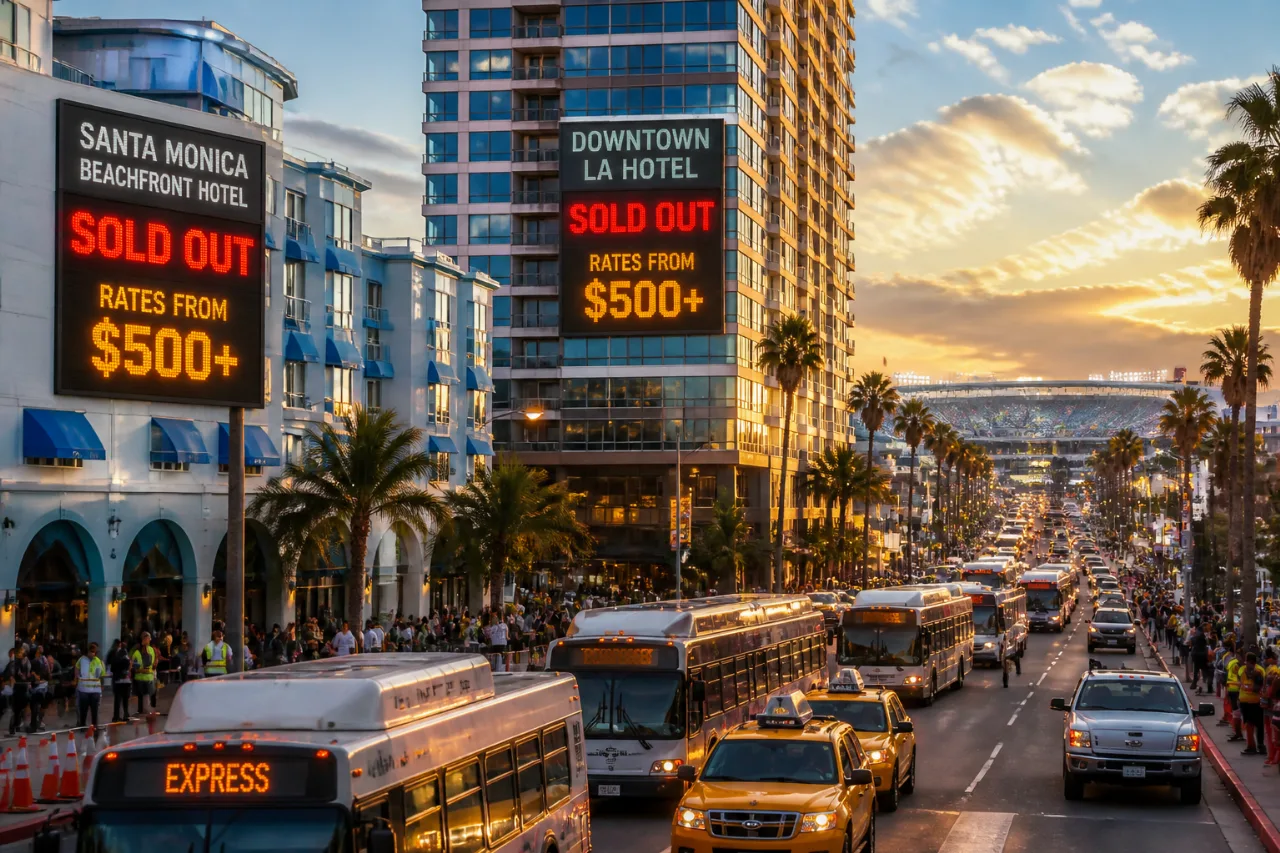
The spike in bookings means higher short-term room prices across several neighborhoods and increased tourist traffic near major transit routes to SoFi Stadium. Hotels popular with soccer fans reported being sold out or charging premium rates in the days leading up to Los Angeles’ final tournament match.
Industry data earlier this summer signaled concern. An early May survey by the American Hotel and Lodging Association found that roughly 80% of respondents nationally said bookings were running below expectations about a month before the games, and more than 65% of Los Angeles respondents reported figures lower than a typical summer.
Where visitors are staying
Beachside properties drew an unexpected share of travelers, even though they require longer commutes to the stadium. The Pierside in Santa Monica reported near-capacity conditions for the weekend.
- Santa Monica: High demand at beach hotels despite distance to SoFi Stadium.
- Stadium District: Hotels like the Anthem reported strong bookings and premium rates.
- Downtown L.A.: Last-minute reservations increased after FIFA released previously held blocks.
At the Anthem Hotel in the Stadium District, general manager Ruben Flores said guests were often planning extended stays, treating match days as part of broader Los Angeles itineraries. Late in the week, a limited number of rooms were priced at more than $500 per night.
“Many guests are planning longer stays, using match days as the centerpiece of a broader Los Angeles itinerary,” said Ruben Flores.
Operational and economic effects
Some downtown rooms that had been blocked for FIFA staff, media and stakeholders were later released, prompting a surge in local bookings at properties such as Hotel Indigo around the July 2 knockout match. Hoteliers said visa difficulties and travel distances had been suspected causes for sluggish early sales, but final attendance proved stronger than initial projections.
The late demand brings mixed consequences for residents. On the one hand, higher hotel revenue benefits local hospitality workers and the city’s tourism economy. On the other, elevated room rates and fuller hotels can increase neighborhood congestion, reduce short-term lodging availability for local events, and strain transit on match days.
| Area | Reported trend |
|---|---|
| Santa Monica | Beach hotels near capacity |
| Stadium District | High demand; premium nightly rates |
| Downtown L.A. | Last-minute booking surge after room releases |
Hotel managers said some properties have only brief gaps between bookings and expect continued demand through the weekend, particularly around match days. The situation illustrates how quickly large events can alter travel patterns and local market conditions in Los Angeles.
Local officials and hospitality leaders did not provide new estimates of total visitor counts for the Los Angeles matches, but the pattern of early underbooking followed by a late surge underscores the unpredictable nature of event-driven tourism and its immediate impact on neighborhoods and services.