City sees month-over-month and year-to-date gains
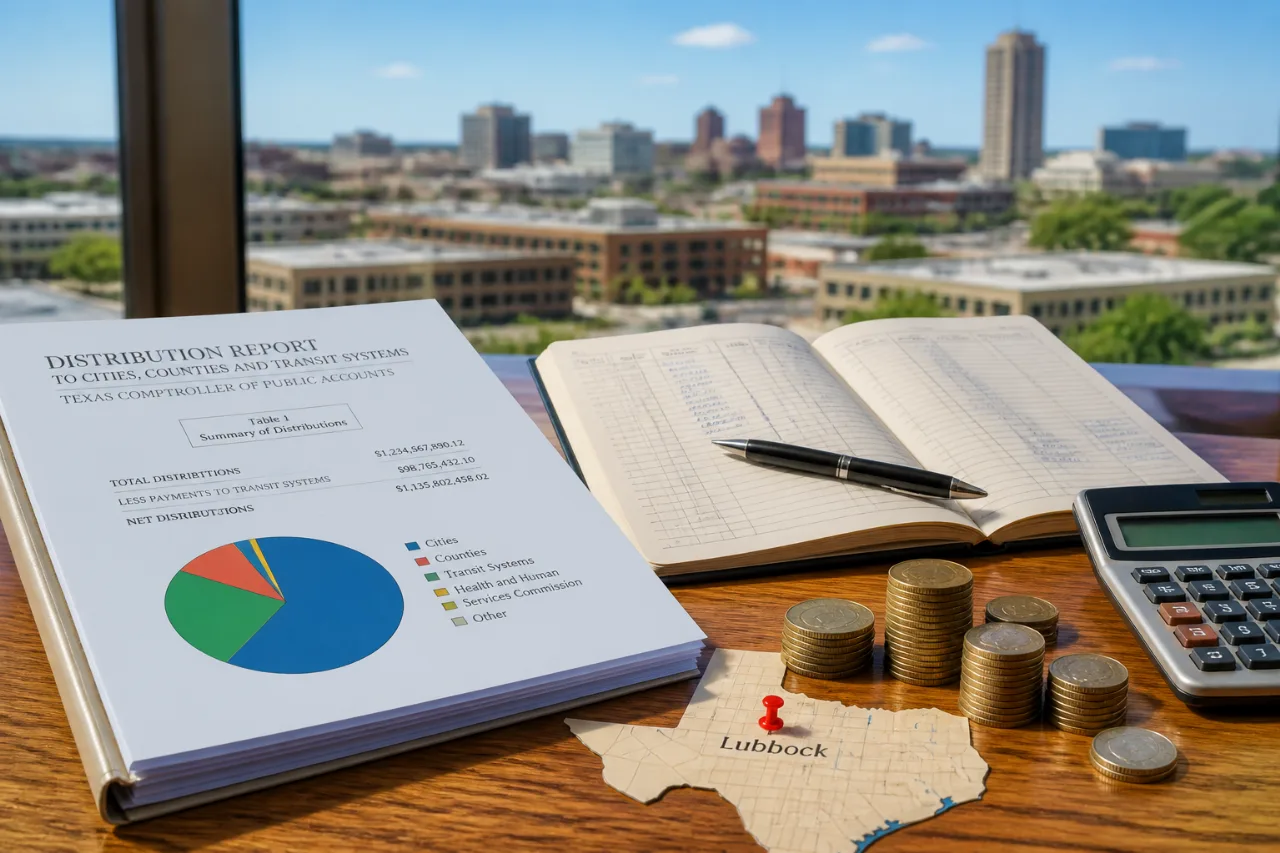
The City of Lubbock will receive $8,944,843.18 in sales tax revenue tied to sales made in May, according to the latest distribution report from the Texas Comptroller’s office released Wednesday. That monthly payment is up 5.23% compared with the payment the city received for the same reporting cycle a year earlier.
The increase continues a trend visible in the year-to-date figures: Lubbock’s cumulative sales tax receipts stand at $66,543,741.69, a 6.69% rise over the comparable period in 2025. For local officials, those gains help support general operations, capital projects and other municipal needs funded in part by local sales tax collections.
Statewide context and stakes for the region
The comptroller’s report shows growth beyond Lubbock. Statewide, roughly $1.2 billion will be distributed to cities, counties, transit systems and special purpose districts in this payment — an increase of 5.6% over the same payment last year. Year-to-date distributions to districts across Texas are up 5.7% through this point in 2026.
"About $1.2 billion will be sent to cities, counties, transit systems and special purpose districts across Texas,"
Those statewide gains matter to Lubbock area leaders because higher collections can cushion budget shortfalls and provide flexibility for local priorities, from infrastructure repairs to public safety. Conversely, reliance on sales tax revenue leaves local finances sensitive to shifts in consumer spending and business activity.
Quick figures for Lubbock
- May distribution (for May sales): $8,944,843.18 (up 5.23% year-over-year)
- Year-to-date through this payment: $66,543,741.69 (up 6.69% vs. 2025)
- Statewide month distribution to districts: ~$1.2 billion (up 5.6% year-over-year)
| Measure | Amount | Change vs. 2025 |
|---|---|---|
| Lubbock — May distribution | $8,944,843.18 | +5.23% |
| Lubbock — Year-to-date | $66,543,741.69 | +6.69% |
| Texas — District distributions (month) | ~$1.2 billion | +5.6% |
City budget managers and the City Council will be watching whether the upward trend holds through the summer months, a period that can reflect seasonal retail patterns as well as changing consumer and business behavior. For Lubbock, sustained growth in sales tax revenue would bolster funding for services relied upon by residents across Lubbock County and support longer-term capital planning.