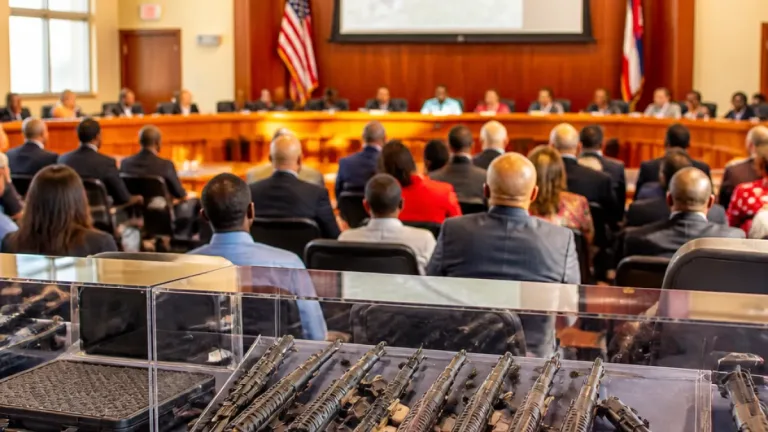

MISSOULA — Montana Attorney General Austin Knudsen told local law enforcement officials on Tuesday that the state is seeing a changing drug landscape, growing pressure on forensic testing and encouraging gains in Highway Patrol staffing.
The discussion, held at the state Forensic Science Division in Missoula, brought together local and state officials to review recent seizure data, laboratory workloads and initiatives to protect children from exploitation.
What residents may notice
Knudsen said one immediate change for communities is a shift in what drugs appear on the streets. While fentanyl-related seizures and overdoses are moving downward statewide, other substances — especially methamphetamine — have surged. He also signaled a localized return of cocaine use in more affluent, fast-growing counties.
That mix affects public-safety responses: patrol officers and investigators face different patterns of use and trafficking, and forensic analysts must contend with increasingly complex drug formulations.
Drug-seizure trends and forensic strain
According to Knudsen, fentanyl levels in Montana have fallen compared with prior years. He said seizures declined sharply last year and remain lower in 2026 than in earlier periods. At the same time, methamphetamine seizures rose dramatically — about a 130% increase from the previous year, he reported.
"The good news is we're seeing fentanyl continue to drop in Montana," Knudsen said. "Our seizures last year were way down. This year, not as far down, but definitely still trending down."
Knudsen warned that laboratory challenges are growing as illegal-supply networks introduce new synthetic compounds and complex mixtures. Traditional, faster screening methods that worked on established drugs are less reliable for unknown formulations, he said, leading to longer testing times while analysts perform multiple rounds of identification.
"We're seeing more and more weird new stuff, these new synthetics like fentanyl," Knudsen said. "Unfortunately we're seeing more and more other weird new formulations that the cartels are throwing at us that aren't stuff that we're looking for."
Staffing wins at Montana Highway Patrol
Amid the concerns about drugs and lab capacity, Knudsen highlighted a positive development in highway enforcement. The Montana Highway Patrol has rebounded from significant shortages and is nearing full staffing for the first time in decades, he said.
The agency had been down roughly 60 positions within a force of about 260 to 270 officers; Knudsen said vacancies have narrowed and the department expects to reach near-full strength soon.
Child protection and other priorities
The attorney general also raised enhanced efforts to combat crimes against children, a continuing area of emphasis for state law enforcement and prosecutors. The meeting in Missoula served as a platform to coordinate resources, share emerging intelligence and align investigative priorities across agencies.
Practical implications for local agencies
Local law enforcement agencies may face several operational impacts in the coming months:
- Longer forensic turnaround times as labs test more complex or novel substances.
- Shifts in patrol and investigative focus where methamphetamine activity has increased.
- Targeted outreach and enforcement in wealthier, high-growth counties where Knudsen said cocaine use has reappeared.
Knudsen’s remarks did not include new statewide policy proposals or specific funding commitments during the Missoula meeting; instead, they emphasized information-sharing and coordination among agencies involved in policing, lab work and child-protection efforts.
| Issue | Reported trend |
|---|---|
| Fentanyl | Declining — seizures down from previous years |
| Methamphetamine | Rising — seizures up about 130% year over year |
| Cocaine | Increasing locally in more affluent, fast-growing counties |
| Highway Patrol staffing | Improving — nearing full strength after significant shortfall |
Officials at the Forensic Science Division and local police departments did not provide additional comments beyond the roundtable summary released by the attorney general's office. Knudsen’s presentation underscores the evolving nature of drug threats in Montana and the operational pressures facing both investigators and laboratory staff.
As agencies adapt, residents can expect law enforcement to increasingly coordinate across jurisdictions and emphasize analytic capacity to keep pace with changing drug chemistry and trafficking tactics.