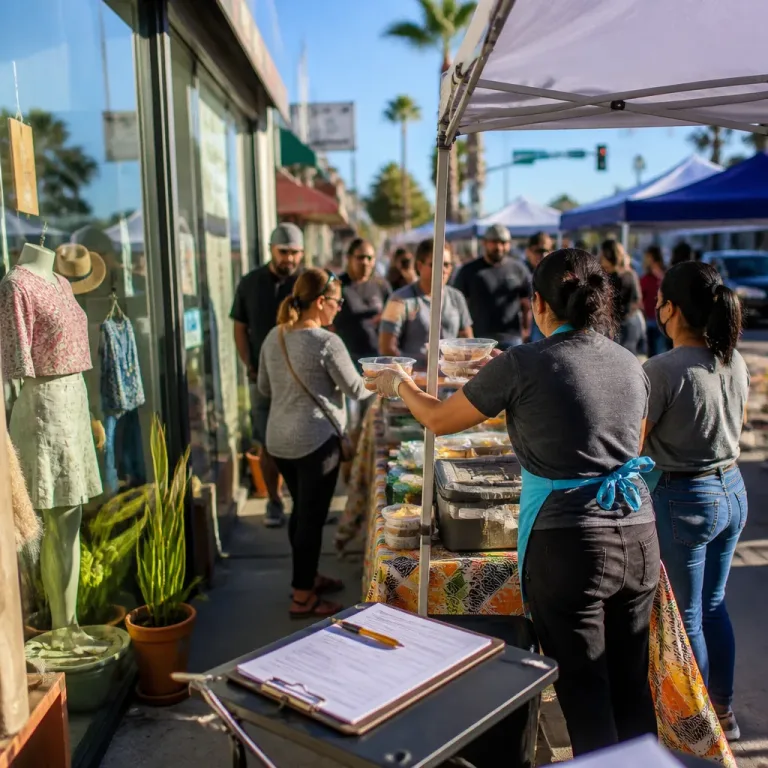

Northwest Montana merchants and service providers are preparing for a surge in customers as the summer events calendar brings steady foot traffic and revenue to communities across the region.
At Fresh Roots Farm in Polson, producers Karl Sutton and Darci Jones are scaling up production to meet demand from two major music festivals and a local fair. In a compact commercial kitchen, the pair said they are making about 6,000 popsicles for the season — a concentrated effort that replaces the dozens of smaller markets they used to attend.
What this means for local businesses
For vendors, event season can mean a sizable share of annual income condensed into a few high-volume weekends. For firms that provide support services — from staging and sanitation to food service — festivals translate into predictable contracts and expanded payroll needs.
Zak Anderson, executive director of Explore Whitefish, said the visitors bureau sees clear benefits from summertime programming but also emphasizes stewardship.
"Big events present both opportunities and challenges, and it’s important that we understand their full impact," Anderson said.
Community leaders and tourism officials say the priority is balancing visitor benefits with long-term livability and infrastructure capacity. That approach aims to protect the local experience while capturing economic value for businesses and workers.
Scale of the impact
Regional and national studies underscore the economic weight of live entertainment. The National Independent Venue Association estimates Montana hosts more than 150,000 live events annually, which contributed about $260 million in economic output in 2025.
| Metric | Figure |
|---|---|
| Popsicles prepared by Fresh Roots | 6,000 |
| Live events in Montana (annual) | 150,000+ |
| Economic output from events (2025) | $260 million |
| Treefort Music Fest (Boise) — jobs supported | ~130 jobs |
| Treefort — associated labor income | $4.7 million |
| Treefort — total contribution | $6.6 million |
Smaller vendors told local reporters they have adapted their business plans to focus on a handful of high-return events rather than many smaller markets. That concentration helps reduce travel and staffing burdens while increasing per-event profitability.
- Vendors report concentrating on two major festivals and one local fair.
- Event operators and tourism bureaus emphasize responsible destination management.
- Support businesses — sanitation, staging, catering — see steady seasonal demand.
As the season unfolds, communities across Flathead County and beyond will be watching how visitation patterns translate into incomes for small businesses, temporary hiring for local workers and long-term effects on infrastructure and quality of life.
Local organizers and the visitors bureau say they will continue monitoring impacts and encouraging practices that balance economic gains with community needs.