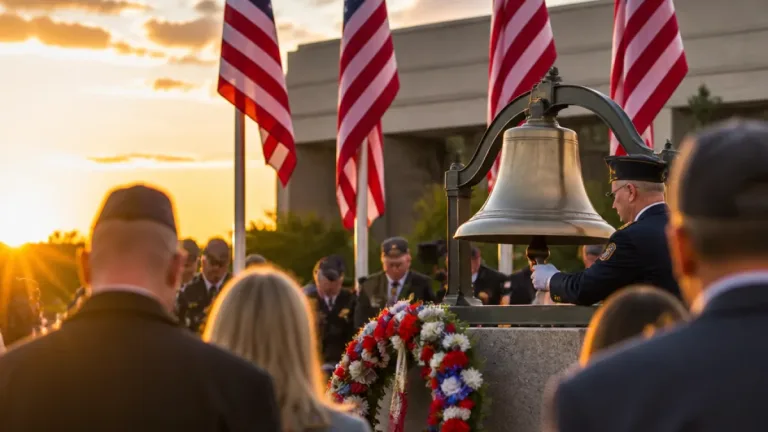
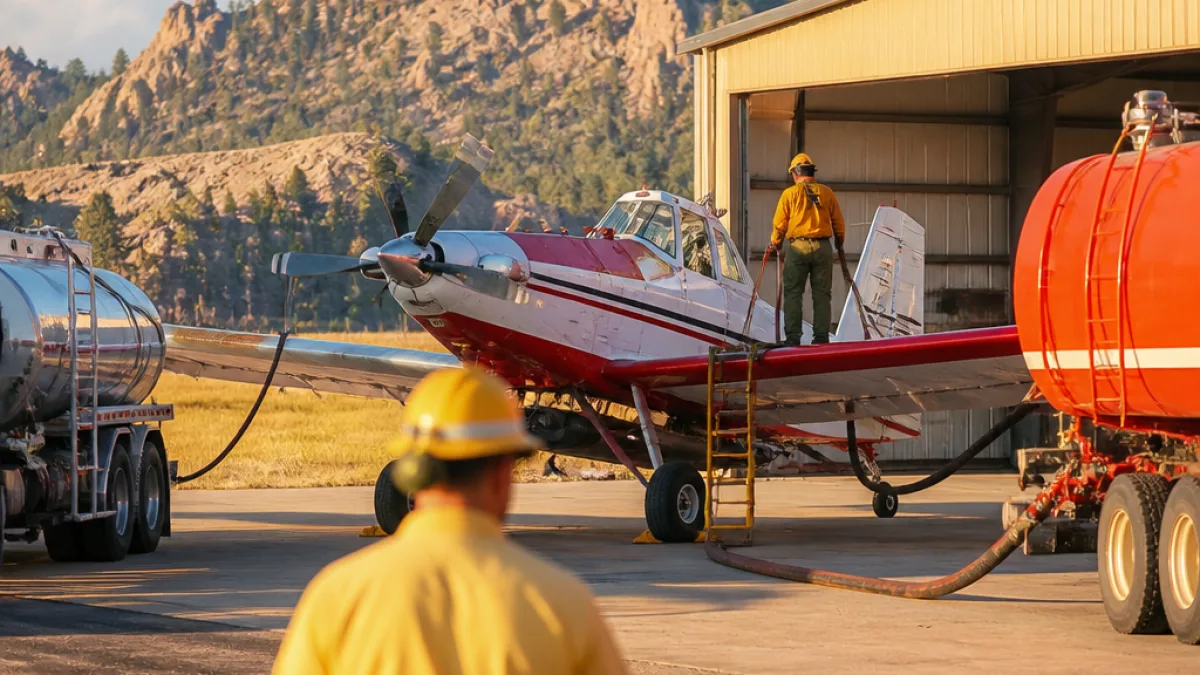
State officials gathered in Wall on Oct. 16 to inaugurate a new Single Engine Air Tanker (SEAT) base intended to shorten the time it takes firefighters to reach emerging wildfires across western South Dakota. The facility will serve as an aerial resource for initial attack missions in areas such as the Black Hills and the Cheyenne River Valley, where quick response can mean the difference between a small blaze and a major incident.
Shorter flight times, more rapid initial attacks
Aircraft operating from the Wall base are capable of carrying as much as 800 gallons of water or fire retardant. State leaders say locating a SEAT closer to high-risk terrain will reduce travel time for crews and give ground firefighters additional coverage during the critical first hours of a wildfire.
“This new base will play a key role in mitigating wildfires,” Gov. Larry Rhoden said. “I have no doubt it will keep the Black Hills and other forest areas like the Cheyenne River Valley safe.”
The Wall installation is the latest in a series of investments in South Dakota’s wildland fire capabilities this year. Earlier openings included South Dakota Wildland Fire facilities in Hot Springs and Rapid City. Officials also point to an executive order signed by Gov. Rhoden — Executive Order 2026-10 — which preapproves assistance and resource sharing with rural fire departments outside the Black Hills Forest Fire Protection District.
What the new base adds to the state’s toolbox
- Faster initial attack: Reduced transit times to fires in western and central parts of the state.
- Extra capacity: An additional SEAT complements existing air and ground resources.
- Support for rural departments: Preapproved assistance under the governor’s order eases mobilization.
| Item | Detail |
|---|---|
| Aircraft type | Single Engine Air Tanker (SEAT) |
| Maximum load | 800 gallons (water or retardant) |
| Primary coverage | Black Hills, Cheyenne River Valley, surrounding areas |
For residents living near forested or grassland areas, the addition of a SEAT base in Wall could translate to quicker aerial support when fires ignite. That matters particularly during fire season when multiple incidents can strain resources and initial attacks are the most effective way to contain a blaze.
Local and state fire officials will still rely on ground crews, mutual aid agreements and other air resources for larger incidents. But by stationing a rapid-response aircraft closer to known high-risk zones, the state is aiming to strengthen its front-line defenses against wildfires.
I’ll continue following how the Wall base is staffed, how often it’s deployed this season and whether response times measurably improve for communities near the Black Hills and Cheyenne River Valley.