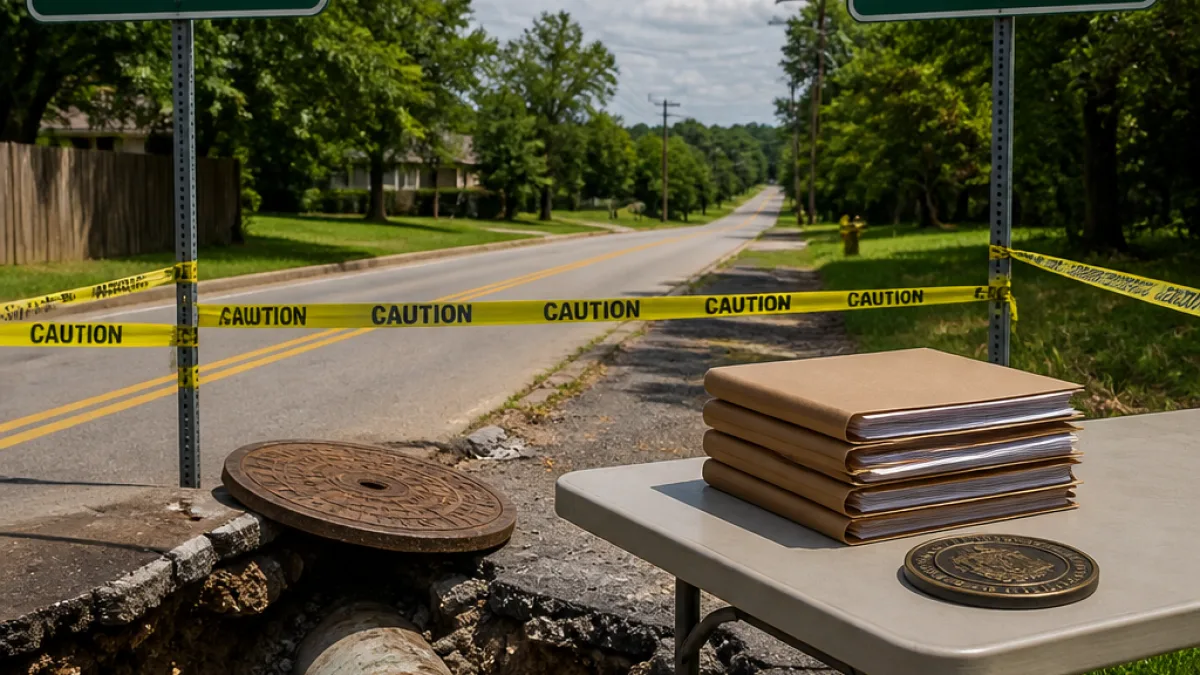
The city of Sherwood said it will “vigorously” defend itself after North Little Rock filed a lawsuit last week accusing Sherwood of failing to keep up maintenance on a sewer system governed by a 36-year agreement between the two cities.
What the suit says and what officials have said
The complaint, filed by North Little Rock, alleges Sherwood did not meet its obligations under the long-standing contract that covers operation or upkeep of the shared sewer infrastructure. Sherwood’s response, issued through city channels, vows a forceful legal defense. Neither side has released further details about specific maintenance issues, repair costs or a proposed remedy.
“vigorously”
The case centers on an agreement that has governed sewer responsibility for more than three decades. The dispute could affect rates, repair schedules and the timing of infrastructure work that touches residents and businesses served by the implicated system.
Local stakes and broader context
Water and sewer litigation between municipalities typically raises practical concerns for residents, including potential service interruptions and financial impacts. Courts in such disputes can order repairs, require payments for past work, or rewrite terms when an agreement’s performance is at issue. The outcome could set precedent for other Arkansas municipalities that rely on intercity utility contracts.
- Parties: North Little Rock (plaintiff) and Sherwood (defendant)
- Contract length: 36 years
- Allegation: Failure to maintain the shared sewer system
- Timing: Lawsuit filed last week; Sherwood has signaled an aggressive defense
| Item | Detail |
|---|---|
| Plaintiff | North Little Rock |
| Defendant | Sherwood |
| Agreement | 36-year sewer contract |
| Allegation | Failure to maintain sewer system |
City leaders, utility managers and residents in both communities will be watching how the case unfolds. If the courts find Sherwood breached the agreement, remedies could include monetary damages, orders to complete repairs or negotiated changes to the contract. If Sherwood prevails, the ruling could reinforce municipal autonomy in how cities manage shared infrastructure.
Legal actions between neighboring municipalities are not uncommon, and they often hinge on the precise language of long-term contracts and on documentation of work and inspections. As this case progresses through the court system, local officials may release further details, including timelines for repairs, potential costs, and any interim arrangements to ensure continuous sewer service.
Residents concerned about potential impacts should monitor statements from the two cities and court filings for updates. News Block will continue to follow developments and report new information as it becomes available.