
Households across Florida that rely on lithium-ion–powered devices now face a growing, unpredictable fire risk, Seminole County fire officials say. Products from hoverboards to e-bikes and other battery-powered items can ignite violently, burn at extreme temperatures and even reignite after being extinguished.
“Boom boom boom boom, just blowing up and I just all I can do is just grab my daughter, grab everyone and try and get out,” recalled a Palm Coast mother who survived a hoverboard explosion in 2018, illustrating how rapidly these incidents can unfold.
What responders are doing
Lieutenant Tom Mirasola of the Seminole County Fire Department said the agency has adapted its handling of damaged lithium-ion batteries but still has uncertainties to address. Fire crews now separate damaged batteries and take extra steps to reduce the chance of reignition.
Among the measures in use locally:
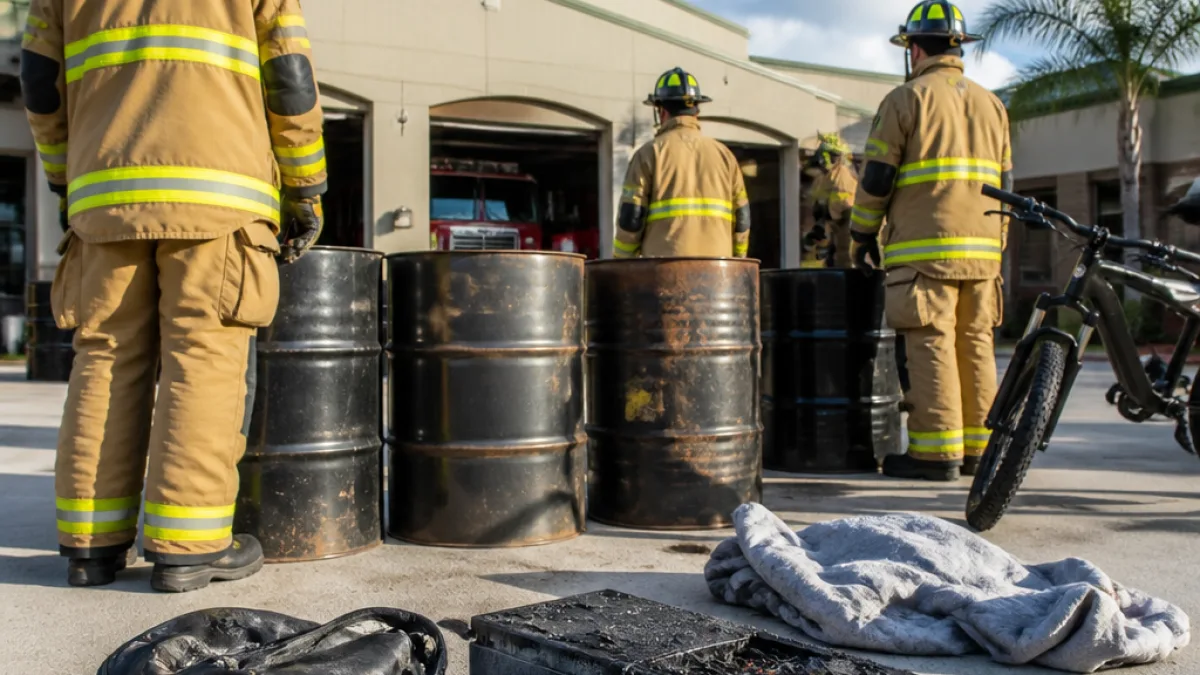
- 30-gallon containment drums: The county uses these to store batteries that have caught fire; some batteries, particularly those from electric vehicles, are monitored for 30 days.
- Fire blankets: Seminole County purchased fire blankets, but officials caution they are used to control a fire temporarily while responders determine mitigation, not to extinguish a high-energy battery fire outright.
- Modified incident procedures: Crews are training and experimenting with different tactics for damaged batteries, recognizing that traditional suppression methods may not be sufficient.
“We’re still working on how to handle that situation where the batteries are damaged,” Mirasola said, stressing the need for caution and new practices.
“We obviously don’t want to leave them inside the home where they could reignite the fire.”
Why these fires are different
Responders describe lithium-ion fires as fast and extremely hot. The reporting notes that after swelling, some batteries can reach temperatures the article described as more than 22,500 degrees when they burn — a figure used to emphasize the intensity of such fires. Even lower temperatures can cause severe burns: an example cited compared 130 degrees to the temperature of a scalding pot and listed a room-engulfing fire at roughly 1,800 degrees.
Because these fires can escalate so quickly and can reignite, officials say homeowners and users of battery-powered devices should change habits to reduce risks and know how to respond if a device begins to smoke or swell.
Explosion-proof bags under scrutiny
Items marketed as “explosion-proof” battery bags have drawn scrutiny after incidents where they failed to contain explosions. A Michigan fire department posted images online showing an e-bike battery inside such a bag that blew apart. Seminole County officials caution that these products may not perform as advertised and should not be relied upon as a sole protective measure.
| Protective item | Primary purpose |
|---|---|
| 30-gallon drum | Store and monitor burned batteries (some monitored 30 days) |
| Fire blanket | Control fire temporarily while responders plan mitigation |
| Explosion-proof bag | Marketed to contain blasts but shown to sometimes fail |
Officials emphasized prevention and safe habits as the best defense. They encourage residents to:
- Watch for swelling, smoking or overheating in batteries and devices; unplug and move them outside if it can be done safely;
- Avoid storing damaged batteries inside the home;
- Follow manufacturers’ charging and storage instructions and dispose of batteries through approved recycling or hazardous-waste programs.
Seminole County’s evolving tactics reflect a statewide and national challenge as lithium-ion batteries become more common in consumer goods. Local fire departments continue to share lessons learned and test equipment and procedures to reduce risks to homes and families.
For now, responders say, there is no single, foolproof consumer product that guarantees protection from a high-energy battery blast — and changing daily habits remains the most practical step residents can take to protect their homes and loved ones.