The Scottsdale City Council last week approved an ordinance that could make dialing 911 for nonemergency reasons a Class 1 misdemeanor and allow the city to recover response costs when police or fire units are dispatched unnecessarily.
Why the change now
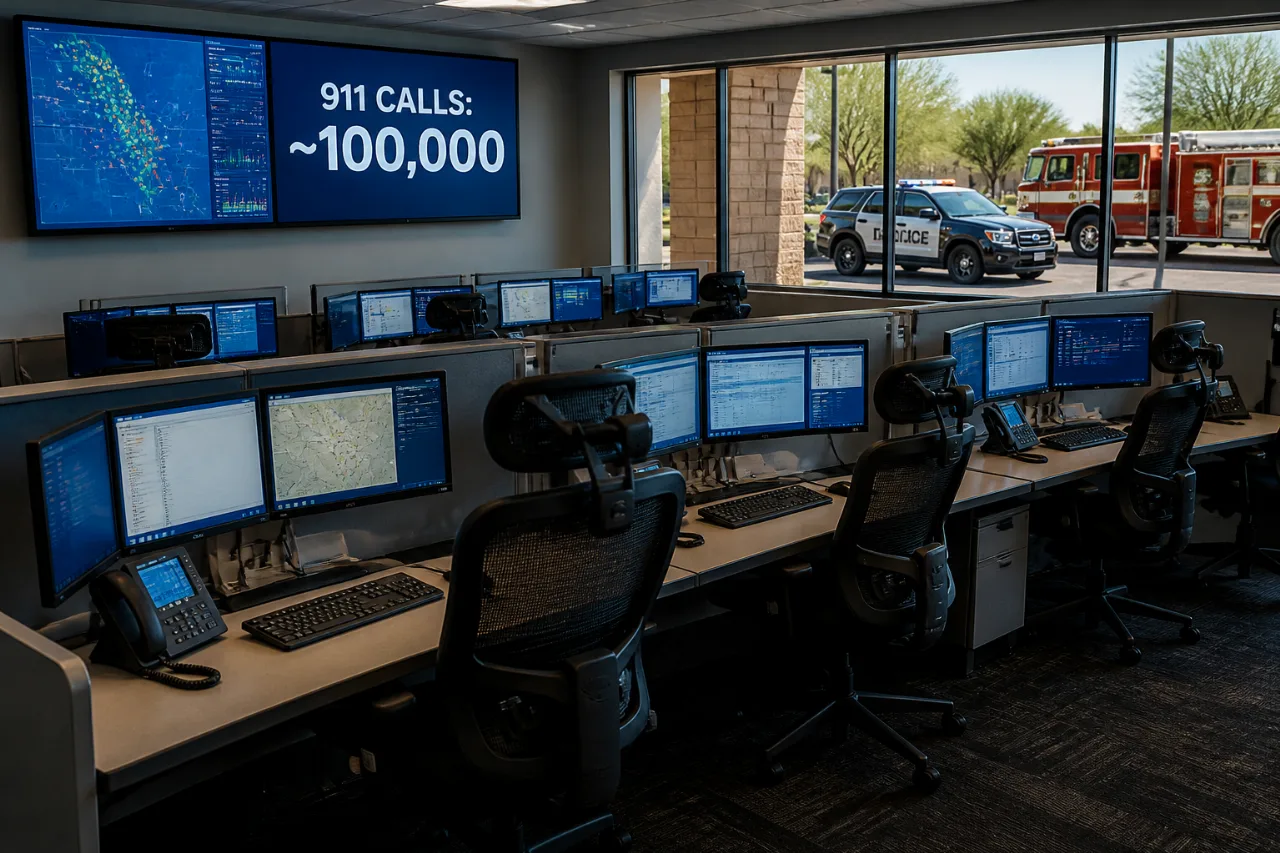
City officials and Scottsdale police told council members the volume of 911 traffic has grown to the point that dispatchers and first responders are being tied up by calls that do not present an imminent threat. The city says its 911 communications center answers nearly 100,000 calls each year, and a large share are for issues that do not meet the ordinance's definition of an emergency.
What counts as an emergency — and what doesn’t
The ordinance spells out examples to guide callers and law enforcement. A portion of that language was read into council materials:
"Emergencies include, but are not limited to, fires, life‑threatening situations, accidents, gas leaks, hazardous material incidents, medical calls and events, deceased persons, hazardous vehicles, suicide attempts, animals in danger or posing a danger, and missing persons."
By contrast, the ordinance specifically lists items that are not emergencies unless the caller has a reasonable factual basis to believe otherwise.
- Non-hazardous nuisance issues
- Requests for general police or fire department information
- Requests for directions
- Complaints about city services, utilities, or code enforcement
- Other issues that do not present an imminent threat to life, safety, property, or public order
Consequences and local impact
Under the new ordinance, a person who calls 911 for a nonemergency could face misdemeanor charges. If officers respond and determine the call was not an emergency, a court could also order the caller to pay the total cost of that response. Scottsdale police say the measure is aimed at preserving limited emergency resources and reducing delays for people who truly need immediate help.
| Statistic | Detail |
|---|---|
| Annual 911 calls | Nearly 100,000 |
| Possible criminal charge | Class 1 misdemeanor |
Scottsdale residents should take note: routine requests for information or nonurgent complaints are better handled through city nonemergency lines or online resources. The ordinance does allow for a caller’s good‑faith belief that an emergency exists — meaning prosecutors would still need to show the call lacked a reasonable factual basis in cases that go to court.
As other Arizona cities wrestle with rising calls for service and stretched public safety budgets, Scottsdale’s ordinance reflects a broader effort to prioritize 911 for immediate threats and to discourage misuse that can endanger people waiting for help.