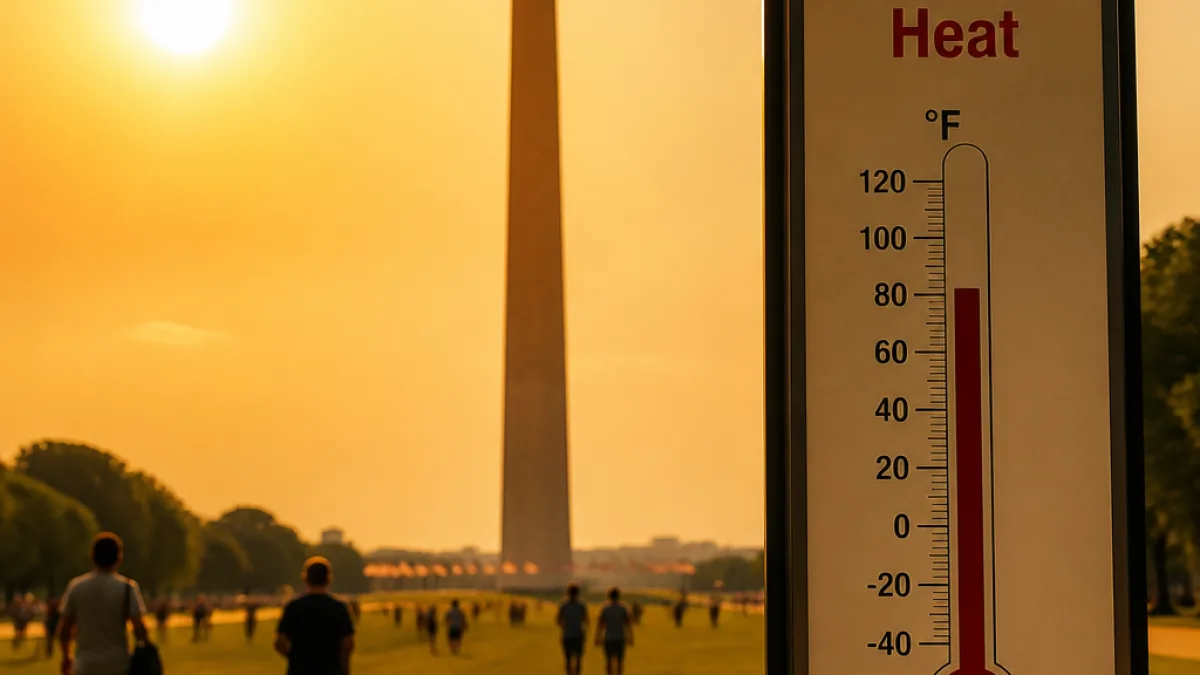
WASHINGTON — A photograph taken early Wednesday, July 1, 2026, shows the morning sun lifting above the Washington Monument as the nation’s capital contends with an episode described by the Associated Press as extreme heat.
"The sun rises over the Washington Monument Wednesday, July 1, 2026, in Washington." — Tom Brenner, AP
Image and context
The image, credited to AP photographer Tom Brenner, was published as part of an AP photo package that carried the headline linking the scene to extreme-weather and heat conditions. The photograph captures a familiar landmark at dawn and underscores how prolonged warm conditions can frame everyday life in major cities.
Local impact and public safety considerations
When news agencies label conditions as extreme heat, public-health and emergency-response systems typically emphasize steps residents can take to reduce risk. Common, widely recommended precautions include staying hydrated, avoiding strenuous work outdoors during the hottest hours, checking on vulnerable neighbors and using cooling centers when available.
- Stay hydrated and limit prolonged outdoor activity during daytime heat.
- Know where local cooling centers and shaded public spaces are located.
- Check on elderly or medically vulnerable neighbors and family members.
Why images matter
Photographs like Brenner’s serve two roles: they document current conditions and they help focus public attention on weather-related risks. Even a tranquil sunrise can be a visual reminder of a broader, ongoing weather situation that affects health, transportation and city services.
| Item | Detail |
|---|---|
| Photographer | Tom Brenner, AP |
| Date | July 1, 2026 |
| Location | Washington (the Washington Monument) |
Newsrooms monitor developments such as heat advisories or extreme-weather bulletins from the National Weather Service and local health departments to provide timely information. Readers in affected areas should consult those official sources for the latest advisories, shelter locations and medical guidance.
For community members seeking assistance during hot spells, local governments and nonprofits often operate cooling centers and outreach programs — particularly for seniors and people with chronic health conditions. Confirm hours and eligibility with municipal websites or local emergency-management offices before visiting.
Photographs that capture familiar sites under strain have a practical function: they can prompt residents to review personal and household preparedness steps before conditions worsen. As the summer advances, officials routinely remind the public that simple, preventive measures reduce heat-related illness and strain on emergency services.