
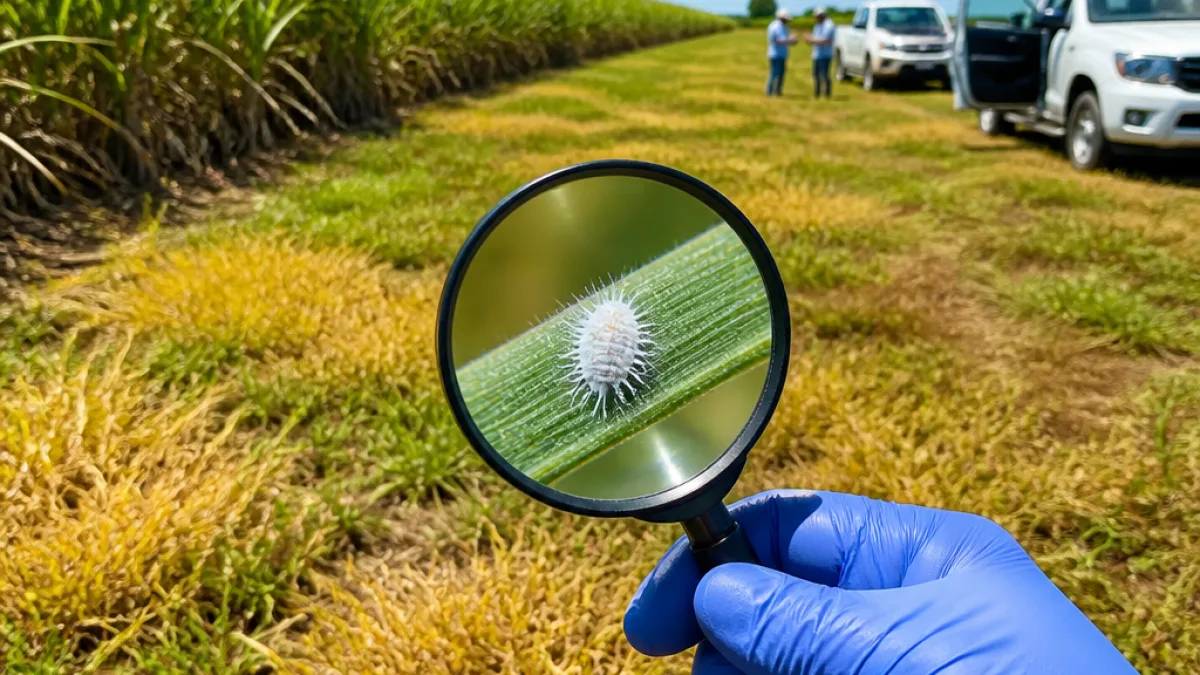
Florida farmers and turf managers are confronting a fast-moving invasive pest no larger than a match head that researchers say can sap fields of vitality in under a month.
Pasture mealybug was first detected in Florida in May and, in a matter of weeks, officials have confirmed its presence in 15 counties. The insect is cold tolerant, reproduces rapidly and has shown resistance to many common pesticides, prompting an urgent response from state agriculture officials and University of Florida researchers.
What this means for residents and growers
Growers of corn, rice, sugarcane, sorghum, sod and pasture grasses face immediate risk. Turf managers at golf courses and homeowners with St. Augustine turf also could see damage. The pest’s small size and fuzzy appearance make early detection difficult, increasing the risk of rapid spread.
"It's very serious and it could be devastating in areas being affected," said Stewart Stein, a grower of sugarcane and corn in the muck soils of western Palm Beach County. Stein said he had not detected the pest in Belle Glade but expressed concern about its proximity.
"It's very serious and it could be devastating in areas being affected,"
State response and research
The Florida Department of Agriculture, University of Florida scientists and the Florida Farm Bureau have mobilized to identify control options. That response included petitioning for—and receiving—an emergency exemption to test a pesticide not previously approved for use on the grasslike crops targeted by the pasture mealybug.
A UF fact sheet released to growers cautions that these are early days in the invasion and that some crop losses are likely while researchers determine effective controls.
- Detection timeline: First sighted in May; now found in 15 counties.
- Traits: Cold tolerant, highly fecund, often impervious to standard pesticides.
- Crops at risk: Corn, sugarcane, rice, sorghum, turf grasses, hayfields and pasture.
Where the pest has been found
| County | Region |
|---|---|
| Palm Beach | Southeast |
| Brevard | East Central |
| Charlotte | Southwest |
| Collier | Southwest |
| Glades | Southeast |
| Hardee | Central |
| Hendry | Southwest |
| Highlands | Central |
| Indian River | East Central |
| Lee | Southwest |
| Martin | Southeast |
| Okeechobee | Central |
| Osceola | Central |
| Polk | Central |
| St. Lucie | Southeast |
What farmers and homeowners should do now
UF extension materials emphasize early detection and reporting. Affected growers should work with local extension agents and the Florida Department of Agriculture for confirmation and management guidance. Officials are testing the emergency pesticide exemption on the crops most at risk while researchers evaluate biological and cultural controls.
Officials warn that some short-term losses are possible as researchers and regulators identify safe and effective treatment strategies. The long-term outlook depends on how quickly the pest can be contained and on development of control measures that can be used broadly without harming non-target plants or beneficial insects.
State and university scientists continue monitoring the spread and urging vigilance across the agricultural supply chain from the Panhandle to the Keys.
Mateo Rivera, News Block Florida correspondent, contributed reporting from regional agricultural sources and university releases.