Cheyenne — Wyoming regulators have asked Rocky Mountain Power to explain its role in a massive Nov. 13 power outage after a joint reliability report found the blackout stemmed from miscommunication and inadequate procedures during planned maintenance.
Report points to coordination breakdowns
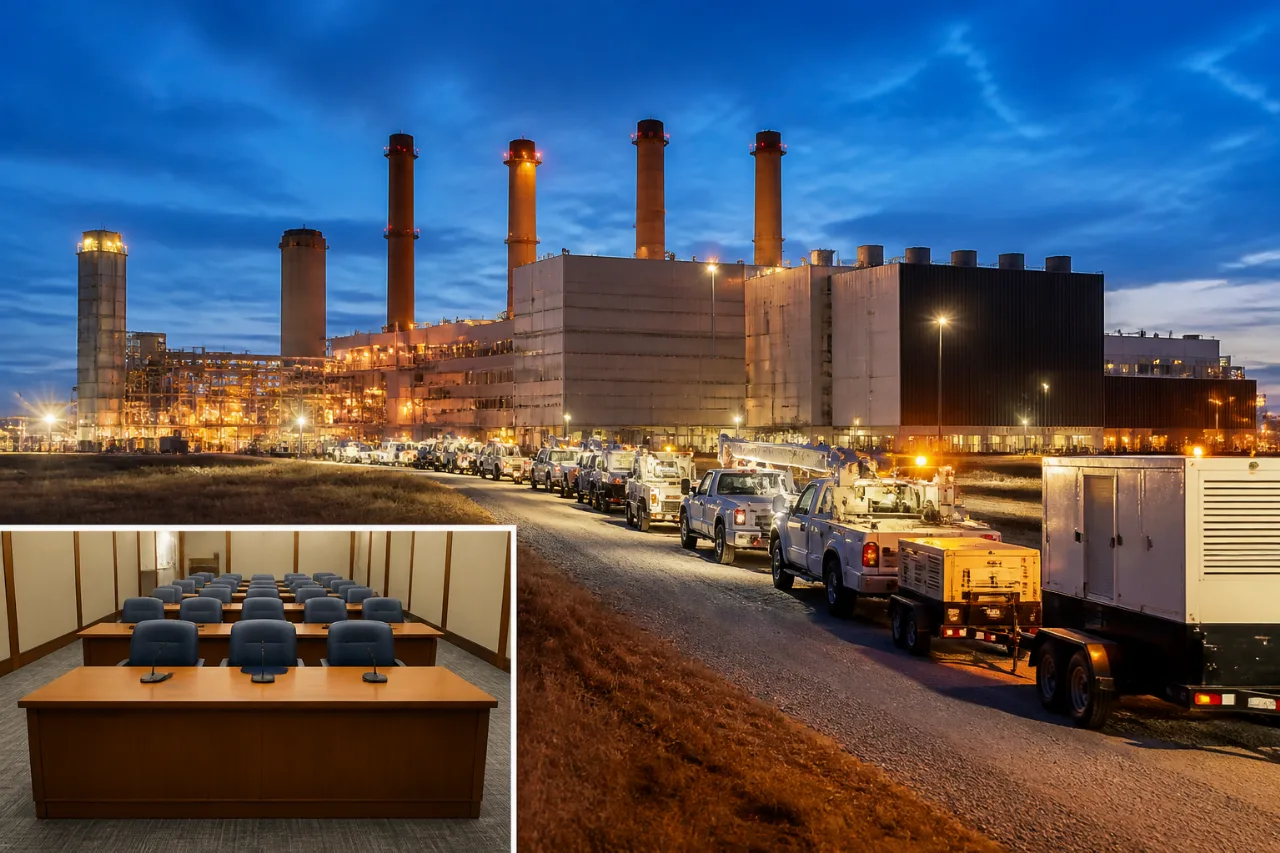
The 49-page review by the Western Electricity Coordinating Council and the North American Electric Reliability Corporation concluded that coordination problems between PacifiCorp (the parent company of Rocky Mountain Power), the Western Area Power Administration and regional grid teams triggered the event. The outage left about 250,000 customers across parts of Wyoming, South Dakota and Montana without power and disabled a coal-fired generator at the Dave Johnston Power Plant near Glenrock.
The affected generator remains offline. As a result, Rocky Mountain Power has been required to backfill roughly 300 megawatts — an amount the report equated to the capacity needed to power about 225,000 homes.
Public Service Commission schedules hearing
The Wyoming Public Service Commission set a public hearing for 2:30 p.m. Wednesday at its Cheyenne office, 2515 Warren Avenue, Suite 300. The commission said it wants Rocky Mountain Power to “describe the specifics and details of the event and report” and said it “may consider and take any action that is in the public interest.” The hearing will be livestreamed.
- Date of outage: Nov. 13 (last fall)
- Duration: About 9.5 hours for many customers; some experienced longer outages
- Entities involved: PacifiCorp/Rocky Mountain Power; Western Area Power Administration; regional grid coordinating teams
- Report released: June (by WECC and NERC)
The report describes a planned maintenance action that required temporarily de-energizing PacifiCorp’s Aeolus–Clover 500-kilovolt line, which runs east-west and is anchored in part by a substation near Medicine Bow. The maintenance also entailed curtailing some local wind generation so the systems could be worked on in tandem. According to the findings, sequence-of-operations questions and communication failures between the parties contributed to the loss of multiple utilities’ power.
Officials did not place explicit blame on a single party in the public summary. The report identifies a series of procedural and communication lapses rather than a single point of failure. It remains unclear whether the North American Electric Reliability Corporation or other authorities will assign formal fault or seek penalties.
Local stakes and broader implications
The outage’s impact extended beyond simple inconvenience. Loss of the Dave Johnston unit removed a bulk source of baseload capacity from the grid and required utilities to source replacement generation across the region. For Wyoming, where coal-fired plants still supply substantial on-peak capacity to local communities and regional markets, the incident underscores the operational consequences when generation and transmission work are not tightly synchronized.
| Measure | Reported figure |
|---|---|
| Customers affected | ~250,000 |
| Generator capacity offline | 300 MW (backfilled) |
| Typical outage duration | About 9.5 hours (varied by customer) |
The PSC’s hearing gives state officials an opportunity to question Rocky Mountain Power executives about operational decisions, communications protocols and any steps the utility has taken or plans to take to prevent a recurrence. For consumers and local governments, the session is a chance to press for clearer timelines on restoring the offline generation and for assurances about resilience during coordination of future maintenance work.
Members of the public who want to follow the hearing can attend in person or view the livestream through the commission’s posted link.
Reporting for this article relied on the joint WECC/NERC report, public notices from the Wyoming Public Service Commission and company identifications provided in that review.