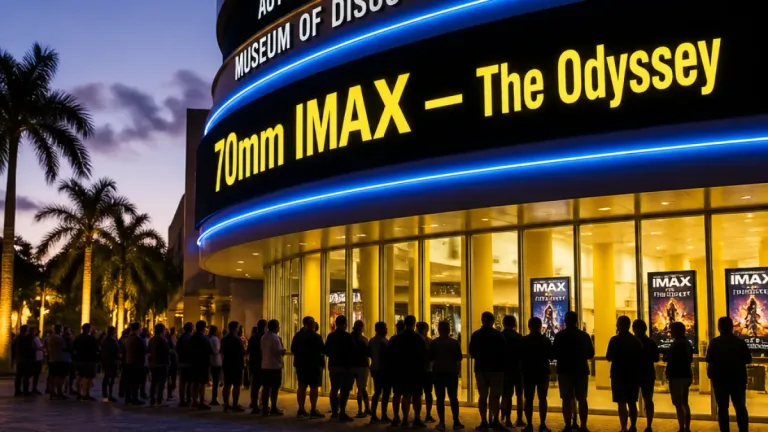

As Christopher Nolan’s lavish adaptation of The Odyssey heads into theaters with blockbuster expectations, a parallel trend is unfolding in the digital marketplace: small studios are releasing AI-generated, low-cost reimaginings that seek to profit from audience excitement without competing on the same stage. These films, produced with automated tools and minimal budgets, are emerging as a new form of direct-to-digital product designed to capture attention — and revenue — by riding the coattails of big-budget tentpoles.
Cheap production, quick turnover
One recent example comes from Fountain 0, which announced an AI-generated project titled Odysseus: The Fall. The film’s director, Ash Koosha, previously worked with the same startup on Dreams of Violets, an AI-assisted docudrama produced for a reported $2,000. According to coverage, the new Odysseus project was created for a budget in the “mid-five figures,” a fraction of the roughly $250 million reportedly spent on Nolan’s studio production.
| Production | Reported Budget |
|---|---|
| Dreams of Violets (AI docudrama) | $2,000 |
| Odysseus: The Fall (AI reimagining) | mid-five figures |
| The Odyssey (studio, Nolan) | $250 million |
What the films look and sound like
Trailers and early viewings show the aesthetic fingerprints of current AI video tools: short, highly polished shots, slightly uncanny character motion and synthetic vocal performances. Creators often model characters on real people — in this case, the director’s likeness was reportedly used for the title role and the director provided the voice for multiple cast members. The result, critics say, is an unmistakable AI-generated texture: glossy but stiff, familiar but mechanized.
- Cost efficiency: AI tools compress production timelines and budgets, enabling single creators or small teams to produce feature-length works.
- Marketing strategy: Some studios appear to time releases to coincide with major theatrical debuts, aiming to attract viewers who prefer streaming or digital rentals.
- Creative limits: Early AI-driven films often reveal technical and expressive shortcomings that distinguish them from human-crafted cinema.
Industry and audience consequences
The trend raises immediate commercial and ethical questions for the industry. For distributors and platforms, low-cost AI films offer a new revenue stream with lower financial risk. For talent and unions, the proliferation of synthetic performances amplifies concerns about compensation, credit and the protection of human performers’ likenesses. For audiences, the availability of cheap, AI-derived alternatives may broaden choice but also risks cluttering the market with derivative material that blurs lines between homage, parody and knockoff.
"...like going to the movie theaters, but have a real interest i
Studio executives and creators will watch how audiences respond this summer as Nolan’s big-budget outing seeks box-office success. If AI-driven releases find even a modest paying audience on digital platforms, they could encourage more entrants, accelerating investment in generative tools and prompting new policy conversations about disclosure, rights and creative standards.
The emergence of AI-produced films is not merely a technological curiosity; it represents a shift in economics and attention in entertainment. As automated production matures, the industry faces a choice: adapt distribution and labor frameworks to this new reality or reinforce barriers that preserve traditional filmmaking’s economic and aesthetic value. Either way, the summer’s slate will be an early test of how audiences distinguish between spectacle built by hundreds of human artisans and pictures assembled by code and a few small teams.