A new poll commissioned by Common Cause North Carolina finds a broad consensus among likely voters that the state’s election administration should operate outside of party politics, even as control of the State Board of Elections has become a battleground between Democrats and Republicans.
Survey shows strong public preference for independence
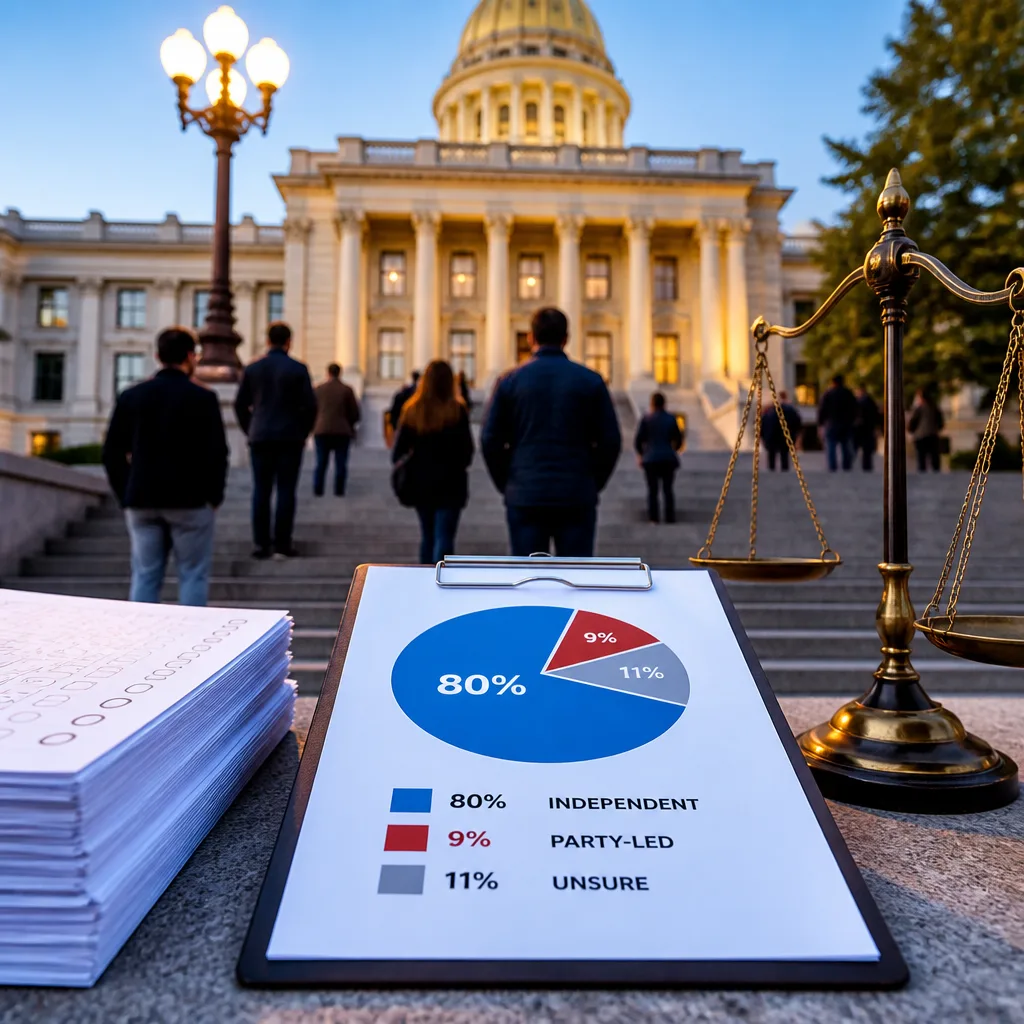
The poll reports that 80% of likely voters said the elections board should function independent of party influence, while 9% said it should be led by the party that wins statewide office. The remaining respondents were unsure.
| Response | Share |
|---|---|
| Board should operate independent of party politics | 80% |
| Board should be led by winning party | 9% |
| Unsure | 11% |
Context: statutory changes and legal conflict
For decades, the state Board of Elections operated with five members appointed by the governor, a structure that ordinarily produced a 3-2 majority aligned with the governor’s party. A 2024 law shifted appointment authority away from the governor and to the newly elected Republican auditor, a change that flipped control of both state and county election boards to Republicans.
Democratic Governor Josh Stein challenged the law in court. An appeals court issued a 2-1 ruling upholding the transfer of appointment power; Stein has said he will continue to pursue appeals. The political dispute has extended into the legislature, where a bill that would have required the auditor to audit county election procedures was vetoed by the governor.
Audit role, oversight and partisan staffing
Republican Auditor Dave Boliek has taken a high-profile role in post-election oversight, defending audits as a means to increase public confidence. In a statement cited by the poll’s sponsor, Boliek framed audits as objective checks on systems and controls.
“Post-election audits are a commonsense, objective way to boost public confidence in our elections. These examinations of election systems and controls are an additional layer of accountability that should be welcomed.”
The auditor’s office also has been more active in county-level planning than previous administrations. Last year the auditor hired a political operative as an elections liaison; that hire and subsequent communications with county officials have attracted scrutiny as county boards developed early voting plans.
- Public sentiment: Vast majority prefers nonpartisan election administration.
- Institutional shift: 2024 law transferred appointment power to the state auditor, changing board majorities.
- Legal fallout: Appeals court upheld the change; governor has pursued further legal challenges.
The poll underscores a tension common to many states: while political actors jockey for institutional control that can affect electoral rules and procedures, a large share of voters appear to prioritize impartial administration of elections over partisan advantage. How lawmakers and officials respond could shape public trust in the mechanics of voting and in the legitimacy of future election outcomes.