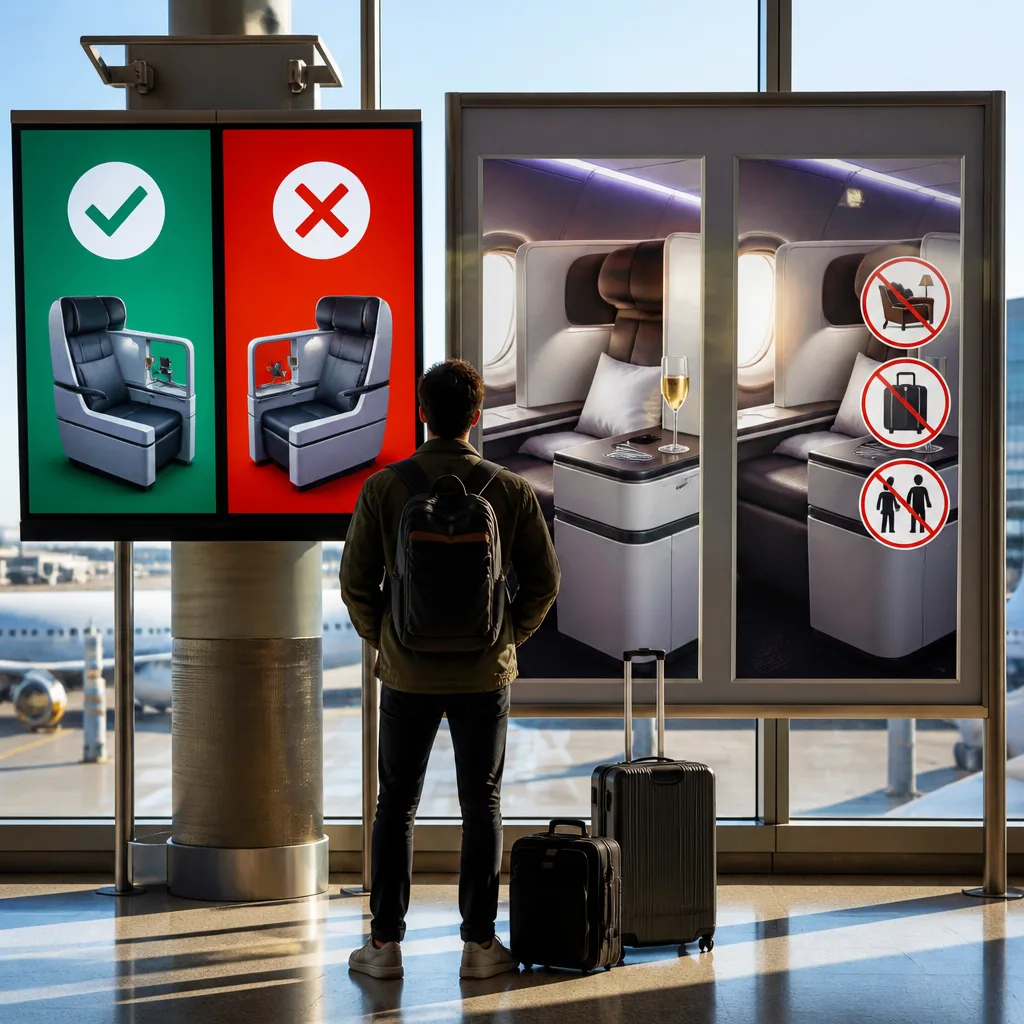
Major airlines are increasingly offering pared-down business-class fares that retain an on-board premium seat while stripping away many traditional extras. The emerging product, commonly called "basic" business class, is designed to give price-sensitive travelers access to lie-flat seats and upgraded meals without paying for a full suite of amenities.
What the new fares include — and exclude
Carriers advertising the new tier say passengers still receive the central in-flight advantages of business class. But several common conveniences are often removed, including:
- Lounge access
- Checked baggage allowance
- Seat selection and upgrades
- Flexible changes and refunds
- Priority check-in and boarding
United Airlines announced "basic" fares for its Polaris business class and Premium Plus; Delta Air Lines followed by expanding similar unbundled options across its cabins. Several overseas carriers — including Qatar Airways and Air France — also offer comparable products.
"basic" business class
How much cheaper are they?
Discounts for stripped-down business fares vary and appear modest in some cases. Delta's own materials show an example where a basic business ticket is about 7% less than the carrier's standard business fare on an unspecified route. A separate example cited shows a United Polaris fare from Houston to Lima where the basic option costs only $100 less than the full fare.
| Carrier | Example saving | Notes |
|---|---|---|
| Delta Air Lines | 7% less | Example shown in Delta materials; route not specified |
| United Airlines | $100 less | Example: Houston to Lima in September |
Implications for travelers and businesses
For individual travelers who prioritize the quality of the in-flight seat and meal, the new fares could offer a cost-effective upgrade path. Corporate travel managers will need to reassess policy language that assumes a single definition of "business class," since price and inclusions can now differ significantly within the same cabin.
Critics warn the trend could shift the industry baseline: fully inclusive business fares might become rarer as airlines unbundle more services and charge extra for amenities that were once standard. The savings on the ticket may not outweigh the value of lost perks — such as lounge time or baggage allowance — for some travelers.
Airlines say the move increases choice, attracting passengers who want the onboard comfort without paying for every ancillary benefit. Observers will be watching whether the price gap widens over time and how market segmentation affects revenue and customer satisfaction.
As carriers expand unbundled premium options, both leisure and corporate travelers should compare total trip costs — including ancillary fees and lost conveniences — rather than focus only on the headline fare.