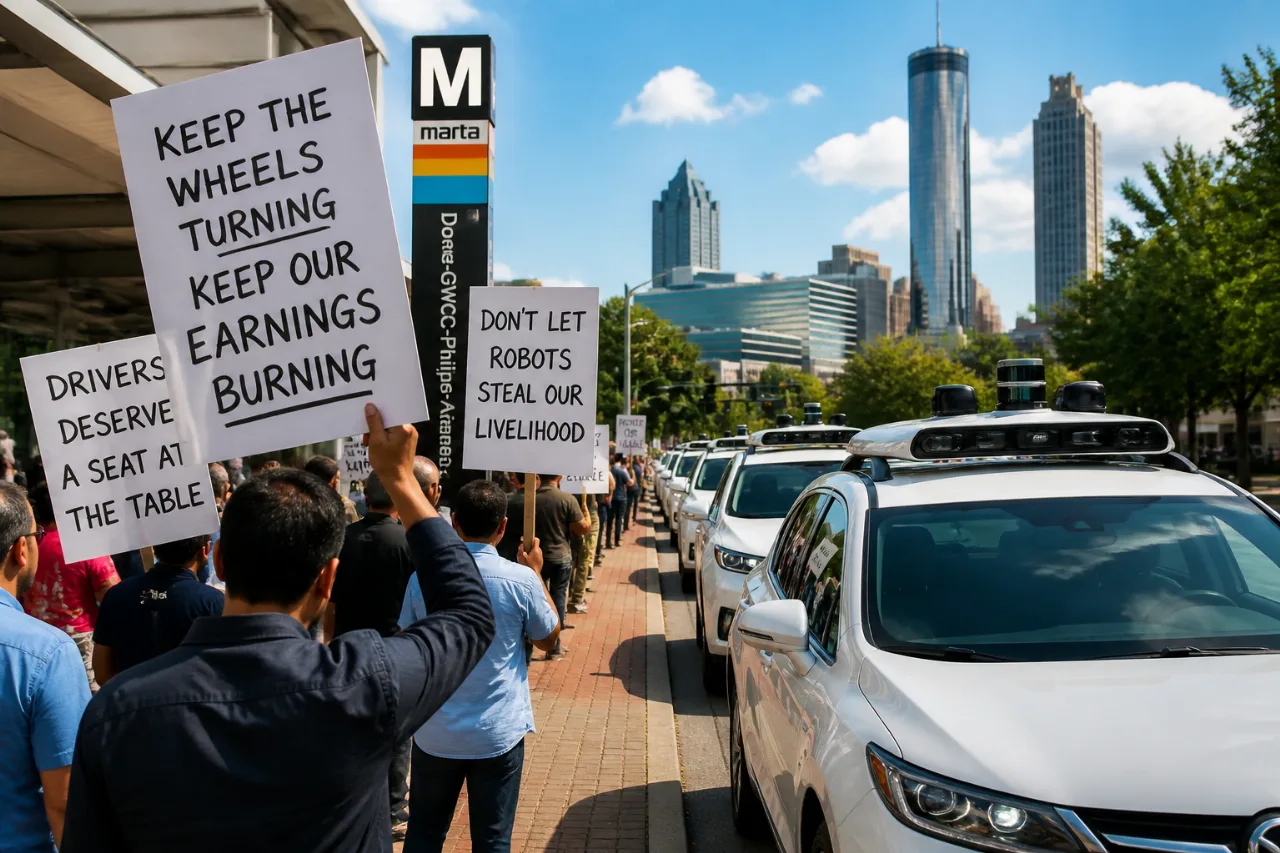
Rideshare drivers gathered in Atlanta on Thursday to voice concerns that the expanding presence of Waymo’s autonomous vehicles is cutting into their earnings and reshaping the city’s transportation market without their input. The protest, organized in part by the Atlanta Rideshare Drivers Union, highlighted growing tension between drivers, tech companies and local policymakers over how and when self-driving services should operate in the region.
Drivers say income is shrinking
At the rally, Bob Chouhan, co-leader of the Atlanta Rideshare Drivers Union and a longtime Uber and Lyft driver, told fellow drivers that the pace of Waymo’s expansion worries him. “
‘The rate at which they’ve been coming into this market, they could easily within a space of the next few years replace all drivers because they don’t need bathroom breaks, they don’t need to sleep,’” Chouhan said. He described a steady erosion of earnings, saying rides that were once among the most profitable — shorter, in-city trips — are becoming scarcer.
Platform responses and broader implications
Uber acknowledged the potential for autonomous vehicles to both create opportunities and displace workers. The company noted that 85% of its drivers use the platform fewer than 40 hours per week, and said it is working on transition plans for affected workers. In a written statement, Uber said, “Durable solutions will require broader collaboration among governments, industry, and worker representatives.”
Lawmakers and differing community views
Georgia state Rep. Gabriel Sanchez, D-Smyrna, attended and criticized what he described as corporate-driven rollout decisions made without sufficient community consultation. “
‘Our community is supposed to be built with the input of the people right and that is not what’s happening,’” Sanchez said, and he added he is also concerned about potential effects on the trucking industry as autonomous technology advances.
Not all attendees opposed Waymo. Scott Dukes, who lives in Atlanta’s Old Fourth Ward, said he supports the service and noted convenience features as part of his reasoning. “
‘No I like them, I really like them and if, really selfishly, you don’t have to tip a Waymo and you can choose your own music,’” Dukes said.
Local stakes and next steps
The rally underscores a local debate with practical consequences for Atlanta residents: drivers who rely on ride-hailing for income, commuters who use app-based services, and city officials who must balance innovation with labor impacts. Organizers and participants are calling for more inclusive decision-making involving workers, elected officials and residents as autonomous services expand.
- Who rallied: Atlanta rideshare drivers and union representatives.
- Main concerns: Declining earnings, loss of profitable short trips, corporate decisions without community input.
- Voices at the rally: Bob Chouhan (drivers union), Rep. Gabriel Sanchez (D-Smyrna), Scott Dukes (resident and Waymo supporter).
| Actor | Position |
|---|---|
| Bob Chouhan | Co-leader, Atlanta Rideshare Drivers Union — concerned about job displacement |
| Uber | Acknowledges displacement risk; cites 85% of drivers work under 40 hours/week; says solutions need multi-party collaboration |
| Rep. Gabriel Sanchez | Critical of rollout lacking community input; worried about trucking impacts |
| Scott Dukes | Supporter of Waymo, cites convenience |
The demonstrators did not announce formal demands in the account provided, but their statements focused attention on how Atlanta will manage the transition as autonomous vehicle services scale up. For residents and local leaders, the central questions remain: how to protect incomes of drivers who depend on rideshare work, how to ensure community input in technology rollouts, and what regulations may be needed to balance innovation with labor and safety concerns.
Coverage for this report was based on accounts provided at the rally and statements from involved parties. Further developments will depend on discussions among companies, worker representatives and local and state officials.