North Dakota oil producers are turning to trucks to move Bakken crude after an Enbridge-operated pipeline slowed during testing for contamination, a disruption that is putting pressure on storage capacity and could force some wells to shut in.
The pipeline has been running at reduced rates since last week, after reports of crude containing organic chlorides prompted Enbridge to begin testing. The compounds can corrode refinery equipment, creating a risk that facilities may have to suspend operations if the material reaches their systems.
Producers seek another route
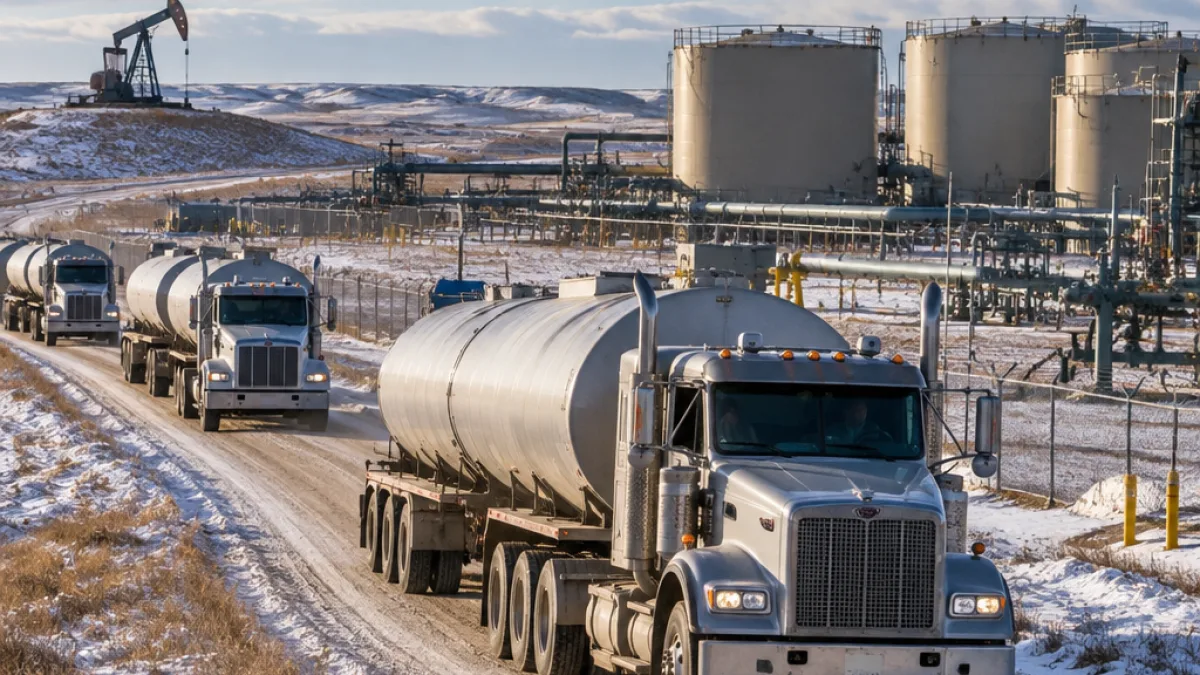
With the Enbridge system constrained, some producers and marketers are hauling oil by truck to delivery points on the Dakota Access Pipeline. The move is intended to keep Bakken production flowing, but available trucking capacity is becoming a concern as more companies seek an alternative outlet.
“Their tanks are filling up and they can’t get enough trucks to evacuate the Bakken crude they have, which could potentially lead to production shut-ins,”
Jeremy Irwin, global crude lead for Energy Aspects Ltd., described the situation in an interview. His assessment points to a problem that can spread beyond transportation: If crude cannot be moved from producer storage, companies may have to reduce or stop output until space becomes available.
Refiners pause Bakken deliveries
At least two Midwest refiners have declared force majeure, temporarily suspending acceptance of Bakken crude because of the contamination issue, Irwin said. The North Dakota pipeline carries Bakken oil to refiners in the United States and Canada, so a prolonged slowdown could affect both producers and buyers across the region.
| Development | What the source reports |
|---|---|
| Pipeline status | Operating at lower rates while Enbridge conducts testing |
| Producer response | Some crude is being trucked to Dakota Access delivery points |
| Refinery response | At least two Midwest refiners have suspended Bakken deliveries |
| Restart timing | Enbridge has provided no timeline for a full return to normal operations |
No timetable for a full restart
Enbridge said Nov. 19 that it was working to restore normal operations as quickly as possible, but the company has not announced when the pipeline will fully restart. Enbridge did not immediately respond to a request for comment included in the report.
The disruption also carries broader market implications. The pipeline moves Bakken crude to refining markets in the U.S. and Canada, and the reduced flow could accelerate withdrawals from the storage hub at Cushing, Oklahoma, a key pricing center for benchmark West Texas Intermediate crude. For North Dakota communities, however, the immediate concern is more direct: keeping oil moving when pipeline capacity, trucks and receiving facilities are all under strain.
- Organic chloride testing is slowing an Enbridge-operated pipeline.
- Truck deliveries are being used to reach Dakota Access connections.
- Storage pressure could lead to production shut-ins if the disruption continues.