Gov. Kelly Armstrong said Thursday he will oppose Measure 2 on the November ballot, a proposed constitutional amendment to provide free school meals to all K-12 students. Armstrong told reporters he is concerned the measure would lock in large recurring spending that lawmakers could not revisit when the Legislature convenes next year in Bismarck.
Cost concerns and constitutional limits
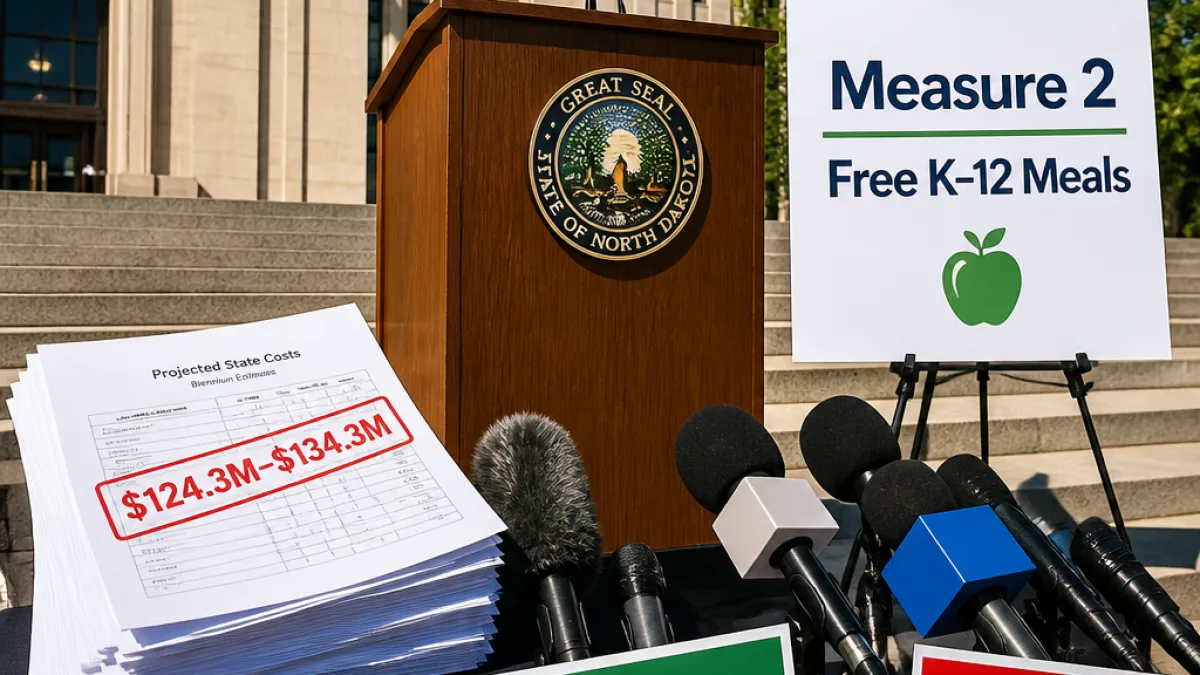
The state Department of Public Instruction attached a fiscal estimate to the ballot language that places the biennial cost between $124.3 million and $134.3 million. Armstrong said that constitutionalizing the program would require that money to be spent before the Legislature could make broader budget choices.
“No matter what happens in the future of North Dakota’s budget, you could have $7 soybeans, you could have $12 oil, and this money comes off before anything else is spent,” Armstrong said. “I don’t like constitutional mandated spending at all. Because by its nature, you are saying this is the single most important thing that exists.”
The governor acknowledged the importance of the debate over school meals but said he does not view the program as the most critical use of roughly $140 million per biennium under any fiscal scenario. He noted he has only one vote in the election and that the ultimate decision rests with voters.
Responses from advocates and context
Supporters of Measure 2 pushed back on the governor’s announcement. Amy Jacobson, a leader with the Together for School Meals Coalition, said Armstrong’s opposition would not deter the measures’ campaign and pointed to repeated legislative defeats as the reason advocates moved to the ballot initiative process.
“The state has had several opportunities to pass school meals for all kids at no cost and it’s been defeated every time and that’s why we have the ballot measure process,” Jacobson said.
Advocates argue the ballot approach exists to let voters weigh policy when elected officials have not enacted it. Opponents, including the governor, argue a constitutional spending mandate constrains future fiscal flexibility and could force priorities off the table in tight budget years.
What voters should know
- Measure: Proposed constitutional amendment to guarantee free school meals for K-12 students.
- Estimated biennial cost: $124.3 million to $134.3 million (Department of Public Instruction fiscal estimate).
- Decision point: Voters statewide in November will approve or reject the amendment.
As the campaign unfolds, voters will see messaging from both sides focused on child nutrition, budget trade-offs and the role of the constitution in directing recurring spending. The fiscal estimate and the question of whether such a program belongs in the state constitution are likely to be central themes in the months ahead.
| Item | Figure |
|---|---|
| Lower-end biennial cost | $124.3 million |
| Upper-end biennial cost | $134.3 million |
Reporting will continue as campaigns file campaign finance statements and as lawmakers and local stakeholders respond in the lead-up to the November vote.