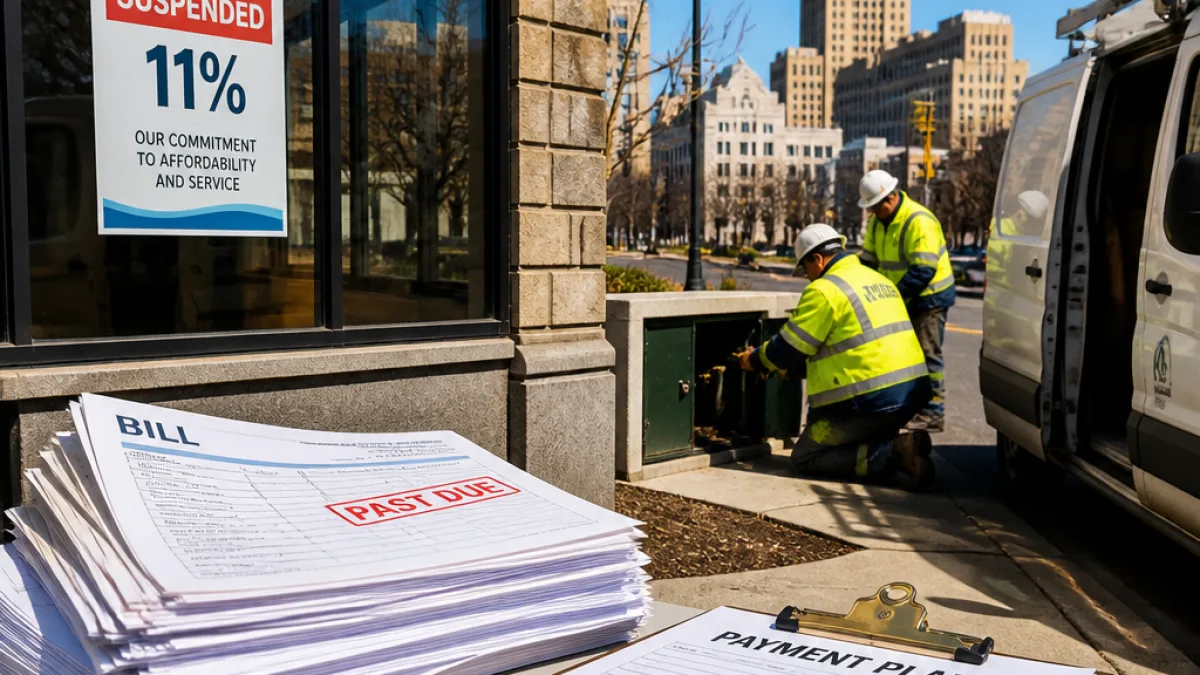
The Buffalo Water Board announced that roughly $5 million in overdue accounts was collected over about three months, a recovery the board says made it possible to postpone an 11% rate increase that had been scheduled for July 1. The board credits targeted outreach and expanded payment-plan options for the turnaround.
Who was targeted and how
Board Chair Brian A. Gould told reporters the board focused on customers with balances exceeding $1,000 that had been outstanding for more than 12 months. That group represented about 12% of Buffalo’s roughly 75,000 water customers.
- Collection window: mid-March through June (about three months)
- Customers contacted: those owing more than $1,000 for more than 12 months
- Payment plans created: 1,900
- Temporary shutoffs: about 1,200 customers (roughly 2%), later restored
Gould, who was appointed to the board in early 2025 after serving as Buffalo’s deputy mayor under Christopher Scanlon, said the effort included repeated notifications. "This was a thought-out process," he said, adding that customers were notified up to five times within a 90-day period.
"This was a thought-out process. We wanted proper notifications sent because this hasn't been done in years," Gould said.
Why the collections mattered
The board reported that the overdue balances had left a situation in which "about 58% of customers [were] paying for 100% of the system," a distribution the chair described as unsustainable and unfair. By collecting arrears and enrolling many residents in payment plans, the board says it averted the immediate need to push an across-the-board 11% hike on customers starting July 1.
Officials emphasized that shutting off service was not the goal. Gould said the temporary disconnections affected a small share of customers and that all had been restored after resolving balances or enrolling in payment arrangements. "If you call us and you have $20 to put on your bill, you're not gonna be shut off," he said.
Local consequences and next steps
For households across Buffalo, the collections effort and the pause on the rate increase provide immediate financial relief. But board leaders framed this as part of broader system sustainability measures: they want more equitable cost distribution so maintenance and service obligations are covered without disproportionately burdening on-time payers.
| Metric | Figure |
|---|---|
| Amount collected | $5,000,000 |
| Planned rate increase | 11% |
| Customers targeted (owed >$1,000 / >12 months) | ~12% of 75,000 |
| Payment plans established | 1,900 |
| Temporary shutoffs | ~1,200 (~2%) — all restored |
City residents and advocacy groups will likely watch whether the board adopts additional policies to prevent future arrears and reduce the need for collections that risk short-term shutoffs. For now, the board’s actions have bought time to pursue a longer-term plan that officials say will be fairer to the full customer base.