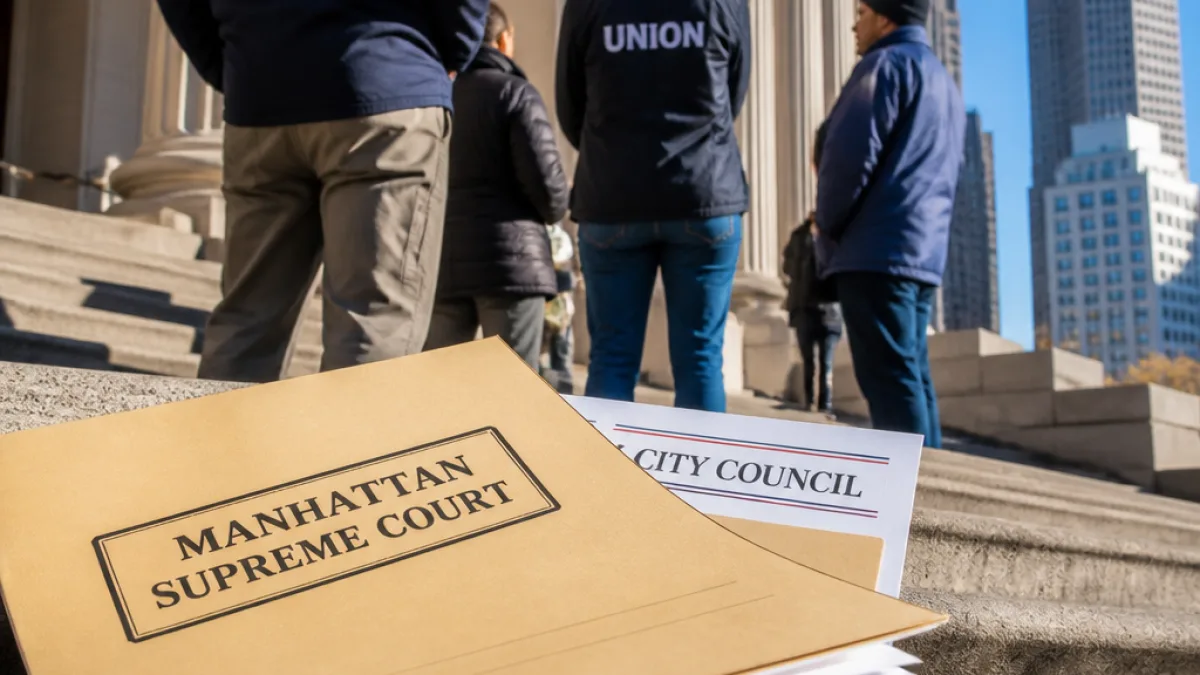
Mayor Zohran Mamdani sued Wednesday to overturn a recently enacted City Council law that would provide up to $10,000 to paraprofessionals, setting up a major confrontation between City Hall and education labor advocates.
Mayor says council circumvented bargaining process
The complaint, filed in Manhattan Supreme Court, contends the measure improperly intrudes on collective bargaining and violates long-standing labor rules that govern public-employer negotiations in New York. City officials argue the legislation — which took effect without the mayor’s signature after a unanimous Council vote last month — amounts to a mandated form of compensation that should have been negotiated with unions.
“Collective bargaining is how working people make their voices heard and win the wages, benefits and protections they deserve. It’s a fundamental pillar of a fair economy,”
The mayor’s spokesman described the law as an illegal end-run around bargaining, and said it sets a “dangerous precedent” by allowing elected officials to determine employment terms rather than the parties at the negotiating table.
Who would be affected and the projected cost
According to the suit, the law targets approximately 25,000 paraprofessionals — the teaching assistants who provide support to students with disabilities — and would require payments of up to $10,000 each. The administration estimates the city liability could be about $324 million.
| Item | Figure |
|---|---|
| Paraprofessionals affected | ~25,000 |
| Maximum payment per worker | $10,000 |
| Estimated city cost | $324 million |
| Labor framework cited | Taylor Law (nearly 60 years) |
Union role and political stakes
The legislation was backed by the United Federation of Teachers and reflects pressure from labor to secure higher pay for paraprofessionals, a group long seeking greater recognition and compensation. City Hall’s lawsuit asserts that even if the payments are labeled as one-time or stabilization awards, they function as additional compensation and therefore fall squarely within contract negotiations.
The administration’s filing invokes the Taylor Law, which governs public-sector collective bargaining in New York and requires employers and unions to negotiate in good faith over mandatory subjects such as pay. The suit argues the Council’s action disregards “nearly sixty years” of that legal framework.
- Legal fight centers on whether City Council can impose pay without union negotiation.
- Potential fiscal exposure estimated at roughly $324 million.
- About 25,000 paraprofessionals stand to receive up to $10,000 under the law.
The lawsuit opens a contentious chapter in the relationship among the mayor’s office, the City Council and labor unions representing education workers. How courts interpret the interplay between local legislation and the Taylor Law will shape whether the pay mandate takes effect, how similar measures are used in future, and how the city budgets for education personnel.
Coverage will continue as court filings progress and as the parties — including union leaders and Council members who sponsored the measure — respond to the administration’s legal challenge.