Advocates emphasize trauma-informed support for grieving teens
Charlotte organizations and law enforcement are urging a renewed focus on the needs of children and teenagers who carry grief and trauma after exposure to violence, saying that supportive interventions can prevent further harm.
Public health advocate Quaneka Falls, who leads the nonprofit Connecting the Gap, said many youth she works with are coping with deep, unaddressed sorrow and lack healthy ways to express it. She urged adults to look beyond behavior and consider underlying trauma as a cause.
“When a child does something, let’s not look at that child and say you did this,” Falls said. “Let’s look at that child and say, why did you do this? Because I promise you there is some type of trauma… that was not handled.”
Charlotte-Mecklenburg Police Department leaders and county officials have pointed to programming intended to give teens safe, supervised activities — particularly during the summer months when youth violence historically rises.
Summer programming seen as an immediate intervention
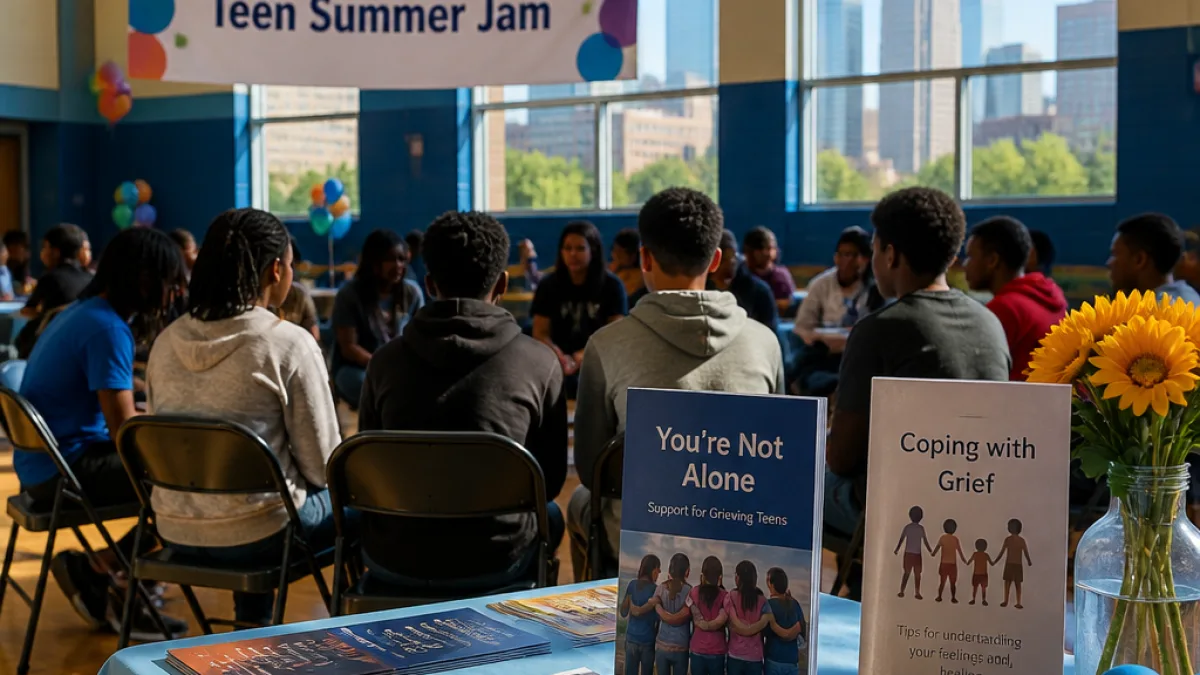
Police Chief Estella Patterson highlighted recent events aimed at keeping teens engaged in positive activity. She said a recent Teen Summer Jam brought roughly 300 adolescents and concluded without incident, an example officials cited of how structured events can provide alternatives to street activity.
“I think some 300 kids or so were there… We did not have any issues,” Patterson said.
Organizers and advocates say these gatherings serve multiple functions: reducing unsupervised time, strengthening ties between young people and trusted adults, and offering opportunities to connect grieving youth with services.
- Immediate need: Support for children who have experienced or witnessed violence.
- Community role: Trusted adults and shared life experience help build credibility and pathways to care.
- Programs: County-run and nonprofit activities intended to provide supervised, constructive outlets for teens.
What’s at stake for Charlotte and Mecklenburg County
Leaders say focusing on survivors — especially young people — can interrupt cycles of violence and prevent trauma from compounding into future offending or victimization. For county officials, success means both improved public safety and reduced long-term social and health costs associated with untreated childhood trauma.
| Program | Reported details |
|---|---|
| Teen Summer Jam | Recent event drew about 300 teens; scheduled on several upcoming Fridays as a county initiative |
Advocates like Falls stressed that trust is critical when youth have experienced violence. She described relying on "lived expertise" — personal history with community violence — to connect with young people and guide them toward resources. Both nonprofit and official efforts this summer aim to build those trusted relationships.
As the school year ends and unstructured summer hours expand, local leaders say continued investment in grief counseling, mentoring and accessible programming will be essential to protect Charlotte’s youth and improve community safety across Mecklenburg County.