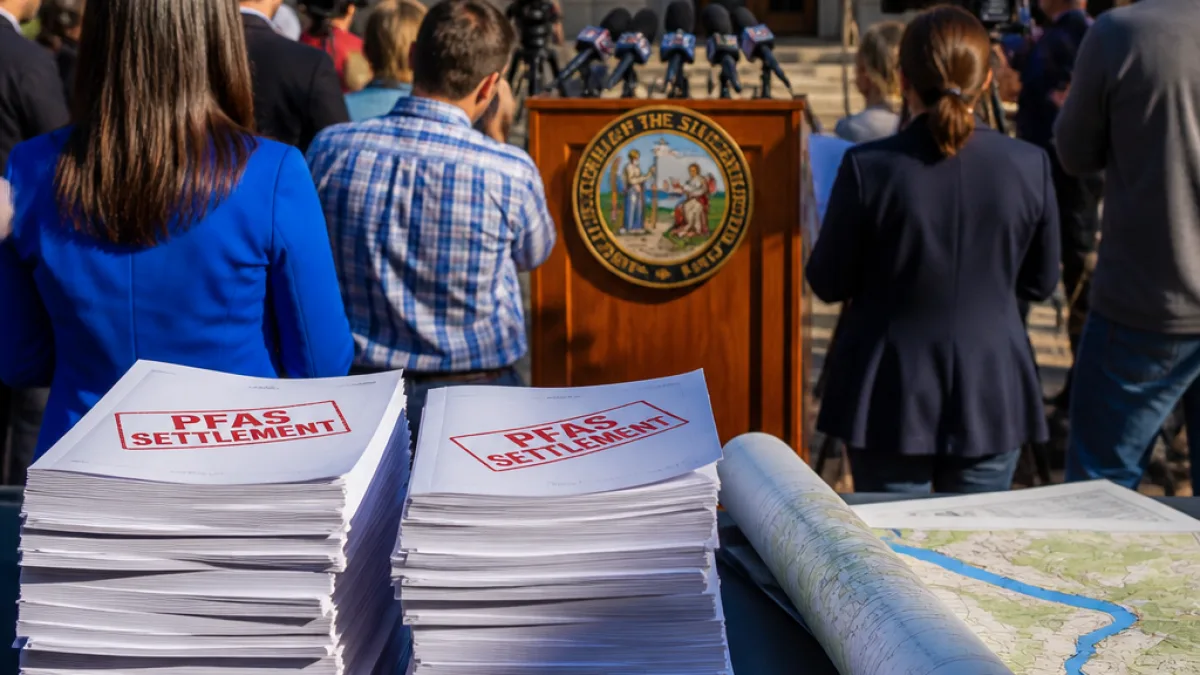
RALEIGH — North Carolina Attorney General Jeff Jackson is seeking public comment and pressing federal regulators to reconsider terms of a proposed $450 million settlement between the Environmental Protection Agency and chemical company Chemours that addresses pollution from per- and polyfluoroalkyl substances, commonly called PFAS.
State officials say deal leaves North Carolina on the sidelines
Jackson, whose office says it was not at the negotiating table, criticized the pact as negotiated primarily outside the view of North Carolinians and questioned whether the agreement ensures meaningful remediation and compensation for communities affected by years of contamination along the Cape Fear River and other sites.
"This deal was negotiated behind closed doors without anyone from North Carolina at the table, and it guarantees our state nothing," Jackson said in a statement.
The proposed settlement would direct most of the total payment to mitigation efforts outside North Carolina; under the agreement Chemours would also pay up to $90 million over 15 years for water cleanup and drinking-water projects. That figure and the structure of the settlement prompted Jackson to warn that the state could receive little tangible benefit even though Chemours’ operations in the Fayetteville-area have been linked to decades of PFAS discharges, including the GenX chemical identified in 2017.
Background and scale
Chemours, which was spun off from DuPont, has faced thousands of claims alleging chemical releases from manufacturing sites contaminated drinking water, air, soil and groundwater. More than 2,600 plaintiffs brought suit seeking compensation for lowered property values, health concerns and loss of use of their land, according to court filings.
Under terms reported by state officials, much of the $450 million would fund alternate water supplies and mitigation outside North Carolina while up to $90 million would be allocated across states over a 15-year period for remediation projects — with final project selection and locations subject to agreement language that Jackson argues gives Chemours substantial control.
| Item | Amount | Term |
|---|---|---|
| Total settlement | $450 million | One-time agreement |
| Designated water cleanup funds | Up to $90 million | Paid over 15 years |
| Known plaintiffs | 2,600+ | N/A |
What this means for residents and state agencies
Jackson said neither the state Department of Justice nor the Department of Environmental Quality participated in the negotiations and warned the settlement’s project-selection process could allow the company to propose how and where money is spent without meaningful North Carolina input. He urged residents who rely on affected water sources or who have been part of related litigation to submit comments to the EPA.
State and local leaders have previously expressed concern about PFAS contamination in the Cape Fear watershed, linked to long-term chemical releases that drew national attention after GenX was found in drinking water. PFAS are persistent in the environment and have been associated with health risks in some studies, raising stakes for cleanup and compensation decisions.
- Jackson is asking North Carolinians to submit comments to the EPA about the settlement.
- The settlement would allocate most funds outside the state, officials say.
- Up to $90 million would be paid over 15 years for water projects; distribution and project selection remain a point of contention.
Jackson’s announcement signals potential legal and political challenges ahead as state leaders push for a larger voice in how federal settlement funds are distributed and used. The outcome could affect remediation timelines, funding for local water systems and broader accountability for long-term environmental contamination affecting the Cape Fear region.
Reporting from state and federal agencies and the parties to the settlement continues to evolve; residents seeking to provide feedback or to learn more should watch for guidance from the Attorney General’s office and the EPA on public comment procedures.