City examines potential rollback of strict water limits as upstream storms send inflows
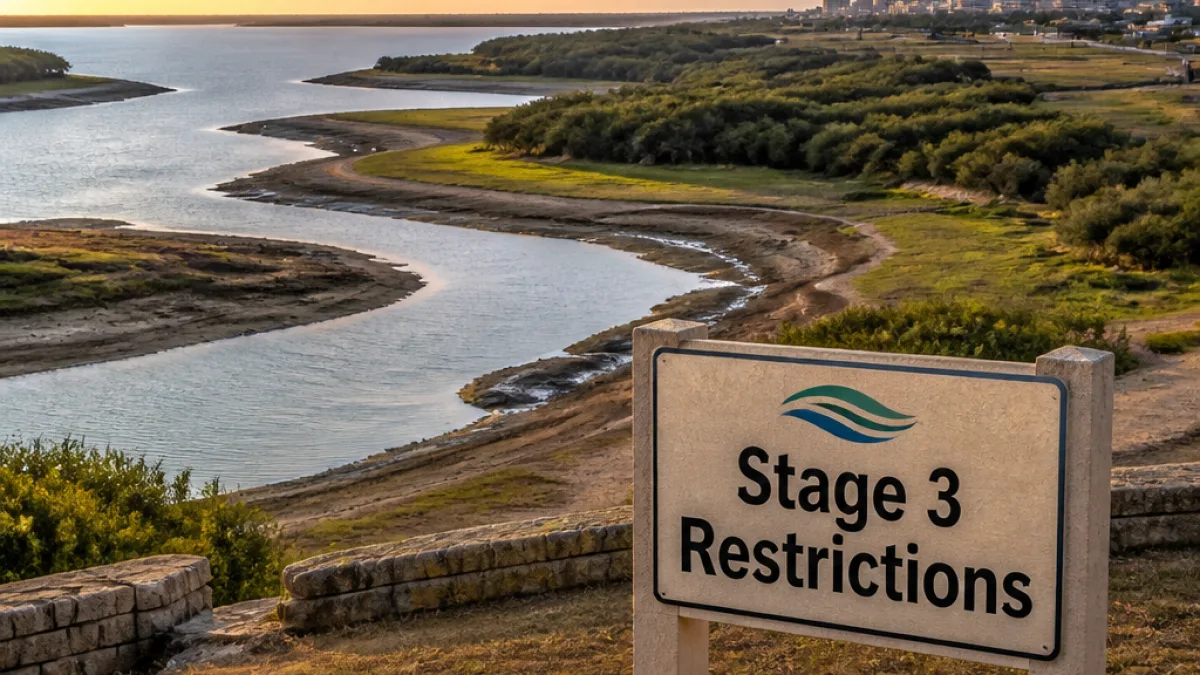
Corpus Christi officials signaled cautious optimism July 16 that heavy rains north of the city could relieve local drought conditions and lead to a loosening of water restrictions. City Council members and water staff said inflows from recent storms may replenish Lake Corpus Christi and Choke Canyon Reservoir, a change that would affect irrigation rules for residents.
At present, Corpus Christi is operating under Stage 3 drought restrictions, which have prohibited lawn watering for roughly 18 months. Moving to Stage 2 would allow residents to water lawns every other week. City staff indicated the council could begin discussing any loosening of limits between the end of July and mid-August.
“We, of course, are being so thankful for the recharge of our water systems,” Councilwoman Kaylynn Paxson told colleagues during a July 16 workshop.
City water staff said it will take about two to 2½ weeks for the rivers to carry the full volume of recent rains into the upstream reservoirs. Esteban Ramos, the city’s water resources manager, urged patience in assessing the actual benefit, calling the process comparable to a long-distance race rather than an immediate finish.
- Combined reservoir capacity for Choke Canyon and Lake Corpus Christi stood at 15.2% on July 16, up from earlier lows after May rainfall.
- City staff will provide updated water projections at the July 28 council meeting.
- The current water emergency projection remains September 2027, which is the modeled date before supply could fail to meet demand if conditions do not improve.
Local stakes and broader implications
For residents, a shift to Stage 2 would restore limited outdoor irrigation and reduce a frequent source of frustration during the drought. For local government, any change must balance short-term relief with long-range supply planning; council members noted that inflows now may not guarantee sustained recovery for the reservoirs.
The situation also illustrates how regional weather patterns can produce uneven outcomes across Texas: heavy rains caused flooding in northern areas while potentially benefiting coastal-area reservoirs via downstream flows. City officials emphasized the uncertainty in how much of the stormwater will reach storage and how long the improvement may last.
| Item | Reported figure |
|---|---|
| Combined reservoir capacity (July 16) | 15.2% |
| Estimated river travel time for inflows | 2 to 2½ weeks |
| Projected water emergency date | September 2027 |
City staff caution that updated projections at the July 28 council meeting will provide the next official assessment. Until then, officials and residents are watching inflows closely but preparing for multiple possible outcomes.