
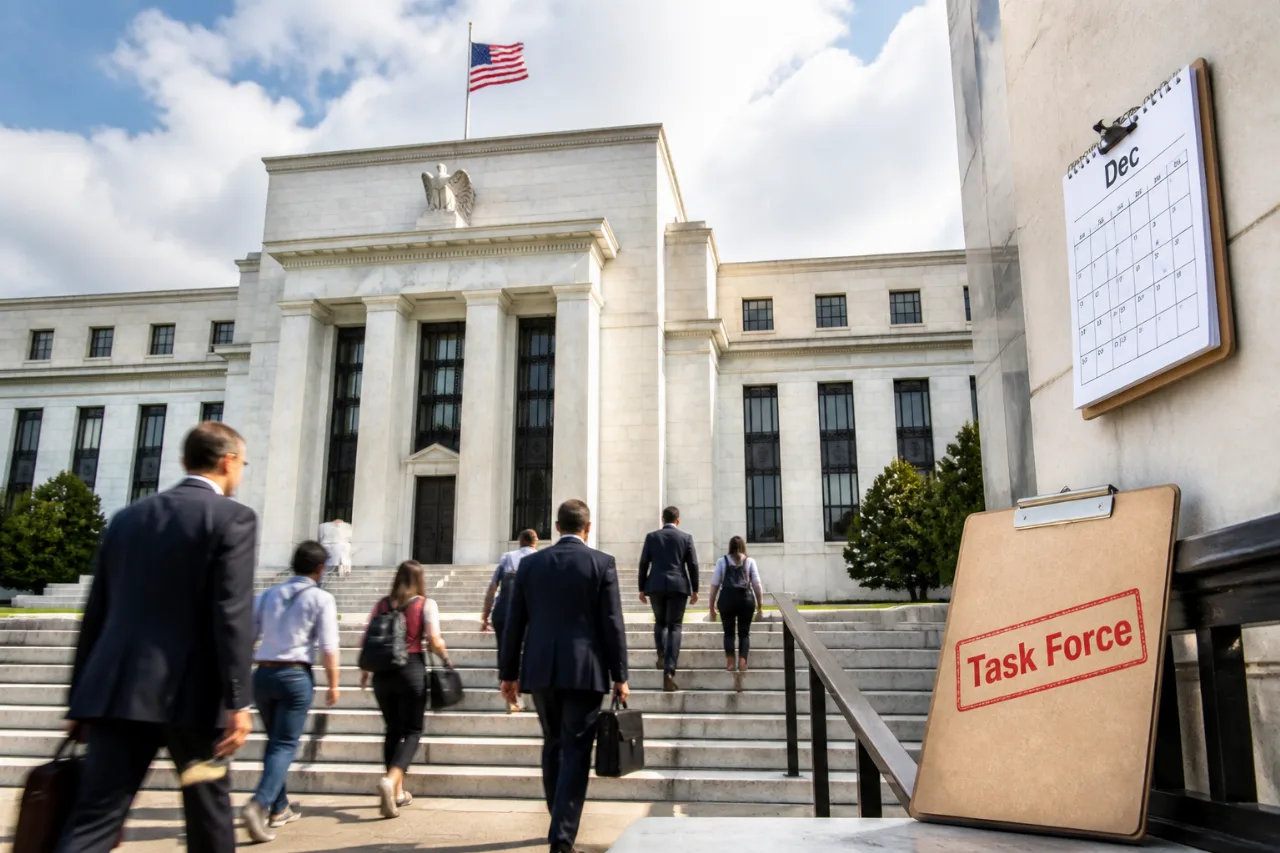
Federal Reserve Chair Kevin Warsh on Thursday appointed members to five outside task forces that will study how the central bank communicates, manages its balance sheet and approaches other core functions. The groups assemble a mix of former central bankers, academics and business and tech executives and are expected to deliver recommendations by the end of the year.
Who was named and why it matters
The task forces include prominent names from finance and technology. Among those highlighted are Raghuram Rajan, former governor of the Reserve Bank of India; Arminio Fraga, former president of Brazil’s central bank; Mervyn King, former governor of the Bank of England; and U.S. economists such as Jeremy Stein and Karen Dynan. The roster also brings in business and tech leaders — the coverage identified figures including Marc Andreessen and Asha Sharma as members of the broader slate of outside participants.
The new groups are designed to advise the Fed on targeted topics, including how the central bank talks to markets and the public and how it should manage its asset holdings. The appointments signal a concerted effort to draw on external perspectives as the Fed considers potential operational changes.
What each task force will examine
- Communications: Review of Fed messaging to markets and the public, including policy statements and broader outreach. Leaders named include Peter R. Fisher alongside former central bankers.
- Balance Sheet Policy: Evaluation of how the Fed should manage its balance sheet and asset holdings; leaders include Karen Dynan, Raghuram Rajan and Jeremy Stein.
| Task force | Notable leaders | Primary mission |
|---|---|---|
| Communications | Peter R. Fisher, Arminio Fraga, Mervyn King | Review public and market communication, policy statements |
| Balance Sheet Policy | Karen Dynan, Raghuram Rajan, Jeremy Stein | Assess balance-sheet management and asset holdings |
Potential impact on households and businesses
Changes recommended by these task forces could affect how markets interpret Fed intentions and how the central bank deploys its holdings — both of which have tangible consequences for borrowing costs, mortgage rates and business financing. For households, clearer or pared-back forward guidance could translate into faster shifts in mortgage pricing and consumer loan rates when policy changes. For firms, adjustments in balance-sheet strategy could influence liquidity conditions and the availability and cost of credit.
Chair Warsh has previously signaled he wants the Fed to speak less about its future rate intentions. If the Communications group endorses reduced forward guidance, markets may need to price policy moves more quickly based on incoming data rather than on central-bank signaling.
All five task forces are expected to produce recommendations by year-end, after which the Fed will consider whether to adopt operational changes. The composition — mixing former central bankers, academics and business leaders — reflects an institutional effort to combine technical expertise with real-world perspectives from markets and industry.
As the groups work toward their reports, households, lenders and businesses will be watching for proposals that could reshape how the central bank communicates risk and manages the tools it uses to stabilize the economy.