Disastrous flash flooding across southern Texas has left at least two people dead and forced hundreds from their homes after days of torrential rain, authorities said Thursday. The surge of water struck many of the same communities that suffered last July’s catastrophic floods.
Statewide response and mounting rescues
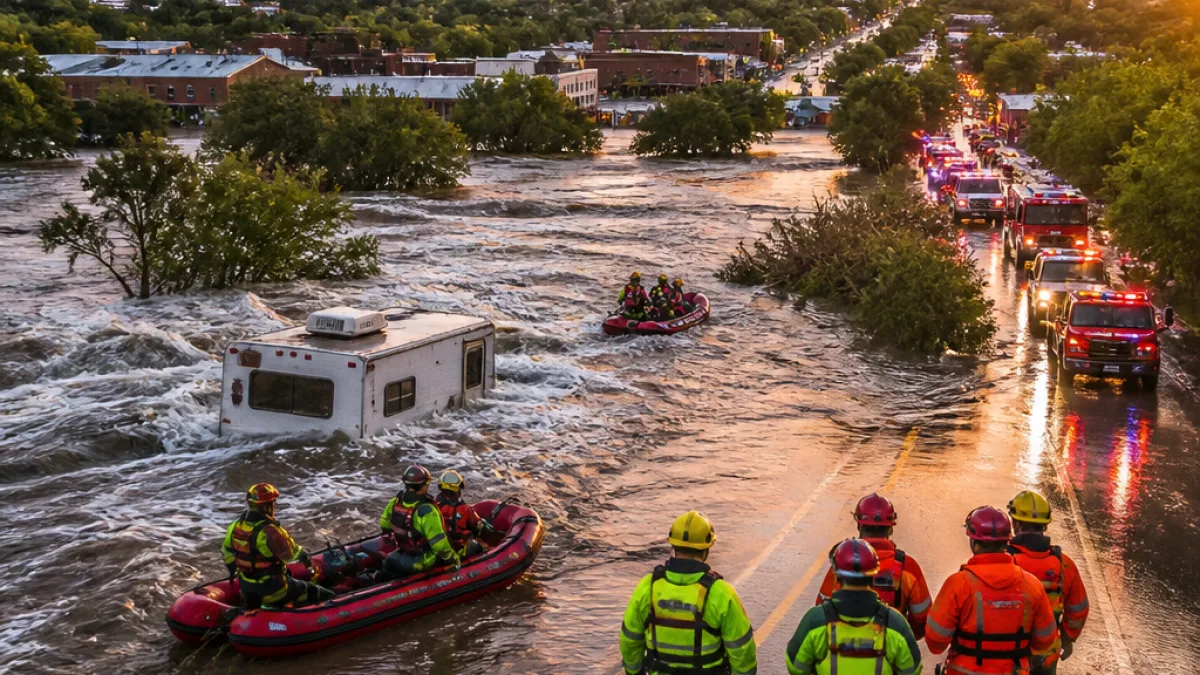
Texas Gov. Greg Abbott said more than 230 rescues had been completed by Thursday afternoon, with state and local teams deploying more than 85 boats, 20 aircraft and 200 high‑profile vehicles to aid the response. One person reported dead was identified by family as John Mark Steward, 65, who was carried off in his recreational vehicle in Kerrville; CNN reported his family’s account but said it had not yet independently confirmed the death with authorities. A second victim — a 74‑year‑old man — died when his vehicle was found bobbing in floodwater about four miles north of Uvalde, the Uvalde Police Department said.
“A large and deadly flood wave” was moving down the Guadalupe River, authorities warned as communities braced for rising water.
Rivers and gauges signal extreme rise
Rivers rose rapidly in parts of the Hill Country and surrounding areas. The Guadalupe River crested at 37.94 feet in Center Point on Thursday morning, a height slightly below last year’s flood level. In Comfort, a river gauge recorded a dramatic rise of 25 feet in a single hour. Authorities evacuated more than 80 people from riverside campgrounds before floodwaters reached dangerous levels.
- Deaths reported: at least 2 (Kerrville and near Uvalde)
- Rescues completed: more than 230
- Response assets: 85+ boats, 20 aircraft, 200 high‑profile vehicles
Forecast and shifting threat
Forecasters said about a year’s worth of rain fell in parts of southern Texas this week, but the outlook improved for the hardest‑hit areas by Thursday. Isolated showers remained possible, but the National Weather Service reported the immediate threat of additional significant rainfall had largely moved away from the worst-damaged communities.
However, flash‑flood warnings were still active in some locations Thursday morning, and forecasters said the focus for flash‑flood risk would shift west toward areas from San Angelo and Junction to El Paso — places that had seen far less rainfall earlier in the week.
Context and local stakes
Many of the towns hit by this week’s floods are still recovering from last July’s disaster, when severe flooding in the region killed at least 130 people, including 25 girls and two counselors at a riverside camp. The repetition of extreme flooding underscores ongoing vulnerability across the Hill Country and south Texas to intense rain events and fast‑moving river surges.
| Item | Figure |
|---|---|
| Rescues (reported) | More than 230 |
| Boats deployed | 85+ |
| Aircraft deployed | 20 |
| River crest (Center Point) | 37.94 ft |
Residents in affected counties were urged to follow local emergency‑management instructions, avoid flooded roadways and stay tuned to official updates as crews continued search and recovery efforts. State and local officials did not immediately provide a full accounting of property damages or a complete list of evacuated areas.
As the immediate danger eased for the worst‑hit communities, attention will turn to recovery and to assessing whether infrastructure and warning systems performed adequately in the face of rapidly rising waters. The repetition of deadly floods in the same region raises questions about preparedness and resilience across communities in the Hill Country and southern Texas.