Final arguments in a high-stakes statewide race
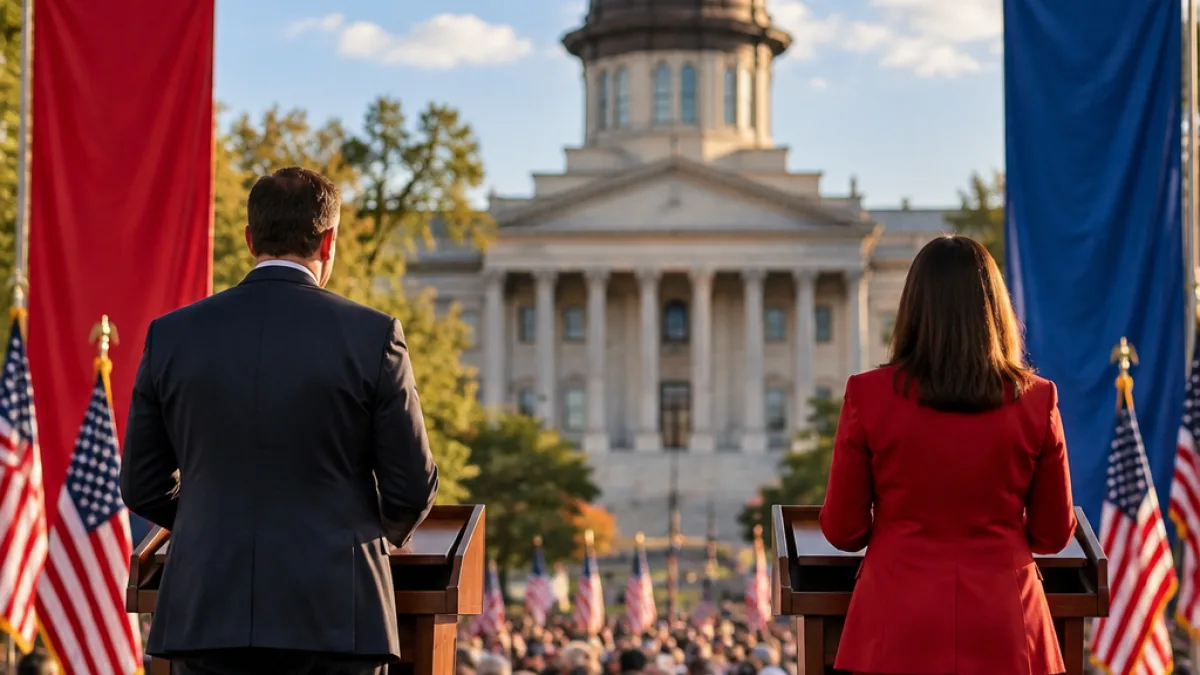
South Carolina voters are heading into Election Day with Republican nominee Alan Wilson and Democratic nominee Jermaine Johnson making their final appeals in the contest to become the state's next governor. The election will determine who succeeds Gov. Henry McMaster, who cannot seek another term after serving two terms.
Both candidates spent Monday trying to convert campaign support into turnout after months of campaigning. Their closing messages focused on contrasting experience and political identity as South Carolina faces concerns about affordability, education, population growth and infrastructure needs, according to the candidates' campaigns and statements reported Monday.
Wilson emphasizes experience and government oversight
Wilson, the Republican nominee, highlighted his background as a combat veteran, prosecutor and state attorney general. He argued that those roles have prepared him to manage the state's government and oversee its agencies.
“As a 30-year combat veteran, as a 25-year prosecutor and someone who’s run a complex organization like the attorney general’s office, I am uniquely fit and equipped to be the next governor of South Carolina,” Wilson said.
Wilson has campaigned on affordability, accountability in government and changes to the way state government is organized. He has repeatedly promoted proposals to audit agencies and increase scrutiny of taxpayer spending, saying his administration would seek to identify waste, fraud and abuse.
“We want to modernize government as much as we possibly can. We want to restructure it, transform it. We want to make it more accountable to the people,” Wilson said.
Johnson presents himself as an outsider
Johnson, the Democratic nominee, has framed his campaign around independence from the state's established political structure. He has argued that voters may be ready for an alternative after decades of Republican control of statewide offices.
“I believe that’s my biggest benefit, is the fact I’m not so entrenched in the political spectrum. I’m not entrenched with the establishment. I’m not connected with these big national people,” Johnson said.
The candidates' final-day messages gave voters a clear choice between Wilson's emphasis on executive experience and restructuring government and Johnson's argument for a change in political leadership. Their ability to motivate supporters to cast ballots was a central focus of the final hours of the campaign.
What is at stake for South Carolina
The next governor will take office as South Carolina continues to manage pressures tied to its growing population and demands on infrastructure, while voters and families confront affordability concerns. Education also remains among the issues identified as important to the state's future.
- Governor: The election will select McMaster's successor.
- Republican nominee: Alan Wilson, who emphasizes experience, audits and government accountability.
- Democratic nominee: Jermaine Johnson, who presents himself as an outsider seeking a different approach.
| Candidate | Party | Closing campaign focus |
|---|---|---|
| Alan Wilson | Republican | Experience, affordability and restructuring state government |
| Jermaine Johnson | Democratic | Political independence and change in statewide leadership |
With the campaign's public arguments complete, the decision now rests with South Carolina voters. The result will set the state's executive direction after McMaster's two terms and determine which candidate's approach will guide the government through the challenges outlined during the campaign.