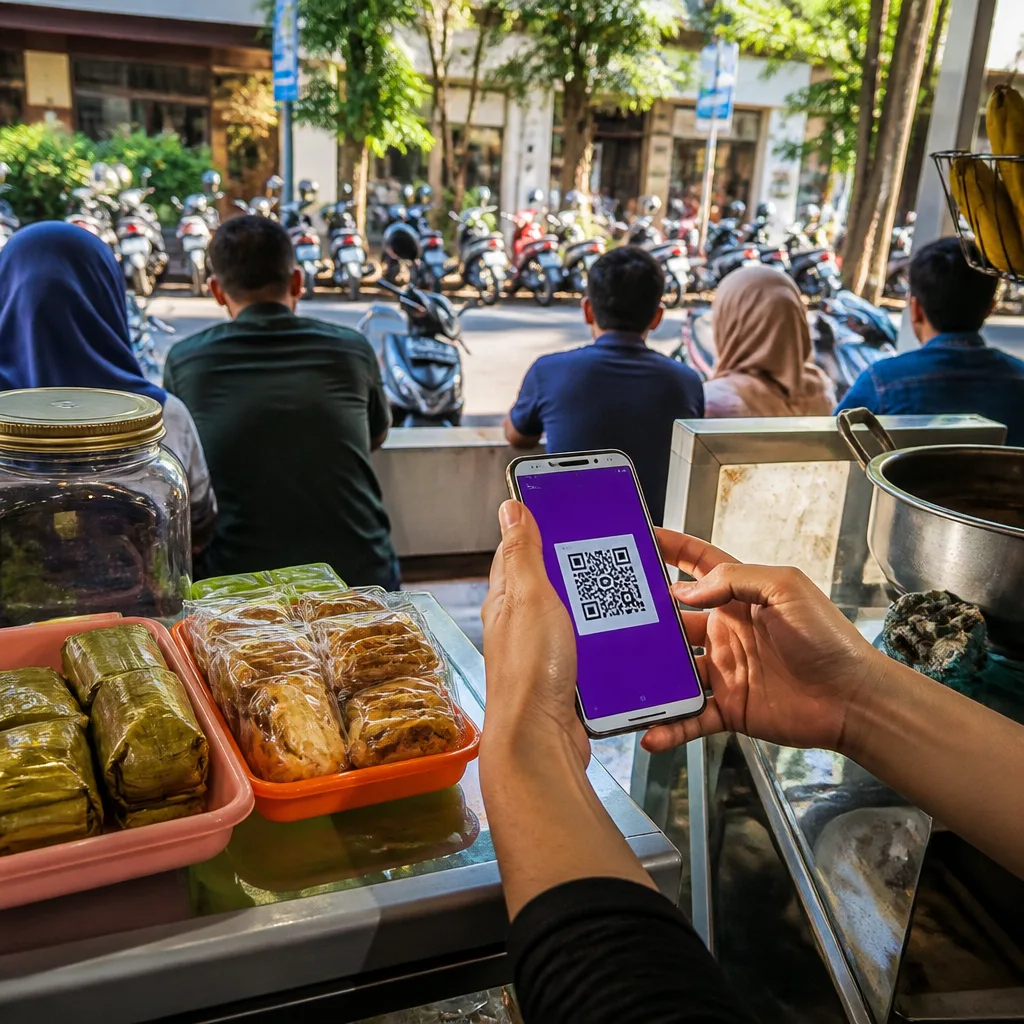
Indonesia’s push toward a cashless society is accelerating as digital payments powered by the national QR code standard, QRIS, become routine for small, everyday purchases. New data from payment platform OVO shows the technology is not just for large transactions anymore but is increasingly used for coffee, parking and quick meals.
Small purchases, big uptake
OVO reports that an overwhelming majority of offline merchant transactions on its platform are processed using QRIS. According to the company, 99% of in-person merchant transactions on its system now use the QR standard. The company also highlighted the concentration of very small-value payments: roughly 42% of food and beverage transactions on OVO QRIS have values below Rp25,000.
"QRIS is now not only used for large transactions, but is also getting closer to users' daily needs, including small value transactions such as buying food, drinks, to paying for parking," said Asep Haekal, Head of Strategy, Integrated Marketing Communication, Transport, OVO & Bank.
Why users are switching
The rise reflects several practical advantages that make cashless payments appealing for routine spending. QRIS removes the need to carry exact change, speeds transactions at busy counters, and automatically records purchases for easier budgeting and expense review.
- Convenience: No need to count bills or wait for change.
- Tracking: Every payment is stored in the app’s transaction history for review.
- Versatility: QRIS works across multiple merchants and small-value purchases.
Numbers at a glance
| Metric | Value |
|---|---|
| Offline merchant transactions via QRIS (OVO) | 99% |
| Food & beverage transactions under Rp25,000 (OVO QRIS) | 42% |
For readers wondering how this matters beyond Indonesia: the trend illustrates how national QR standards and widely adopted wallet platforms can push digital payments into everyday habits, from street food to transit. For consumers, that means simpler daily routines and more immediate visibility into spending; for merchants, it can mean faster turnover and fewer cash-handling costs.
As QRIS adoption deepens, observers will be watching whether the pattern of microtransactions recorded digitally leads to broader changes in budgeting, loyalty programs and how small businesses accept payments.