The Japanese government’s 2026 white paper on gender equality says women face substantially greater obstacles than men when seeking to return to education after entering the workforce, with household caregiving and financial barriers singled out as the largest gaps.
Key findings from the Cabinet Office survey
The white paper, adopted Friday, draws on a Cabinet Office survey of 20,000 people ages 20 to 69 conducted last December. It argues that as rapid technological change — including developments in artificial intelligence — reshapes job skills, opportunities for "recurrent education" (learning after entering the workforce) will become increasingly important for workers of all ages.
But the report highlights pronounced gender gaps in what people say prevents them from pursuing further education:
- Housework, child care and nursing care: cited by 14.6% of women vs. 7.2% of men.
- Unable to afford further study: 32.7% of women vs. 25.4% of men.
- Don’t know what to study: 19.1% of women vs. 13.9% of men.
- Too busy with work: more men reported this constraint — 20.5% of men vs. 17.2% of women.
| Barrier | Women | Men |
|---|---|---|
| Housework, child care, nursing care | 14.6% | 7.2% |
| Cannot afford | 32.7% | 25.4% |
| Don’t know what to study | 19.1% | 13.9% |
| Too busy with work | 17.2% | 20.5% |
Policy implications and proposed remedies
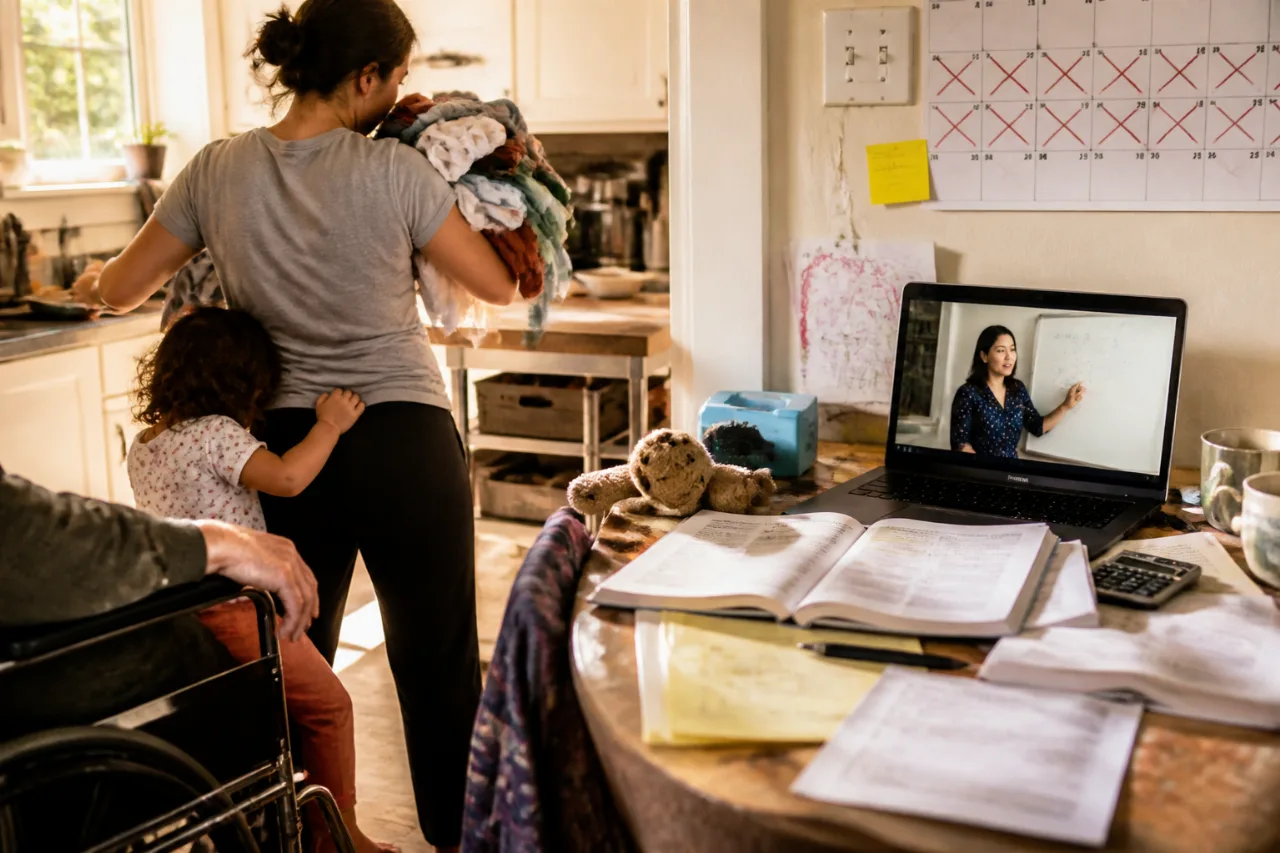
The white paper notes that women’s greater share of household and caregiving duties, along with persistent wage disparities, may be limiting their access to recurrent education opportunities. To address those impediments, the government recommends measures aimed at making learning more accessible and reducing caregiving burdens.
Among the proposals listed in the report are:
- Expanding online course offerings to allow more flexible study schedules;
- Increasing access to free child care services to ease caregiving constraints;
- Promoting work-style reforms so employees have more time and flexibility for education.
“help eliminate barriers.”
The white paper frames these steps as essential not only for gender equality but also for national competitiveness as employers and workers adapt to technological shifts. For parents and workers weighing a return to study, the report underscores two practical points: the availability of flexible, low-cost learning options will be decisive, and caregiving supports remain a major, addressable barrier.
Education officials, employers and advocacy groups will likely use the white paper’s data to press for concrete programs — such as subsidized childcare tied to training, expanded evening and online class schedules, and employer-supported learning leave. The report’s findings also point to a need for targeted outreach so potential learners know which programs match local labor market needs.
For families and adults planning to return to education, the white paper suggests checking for online and employer-sponsored options, inquiring about childcare supports at training sites, and seeking guidance on which courses align with in-demand skills as AI and other technologies change workplace requirements.