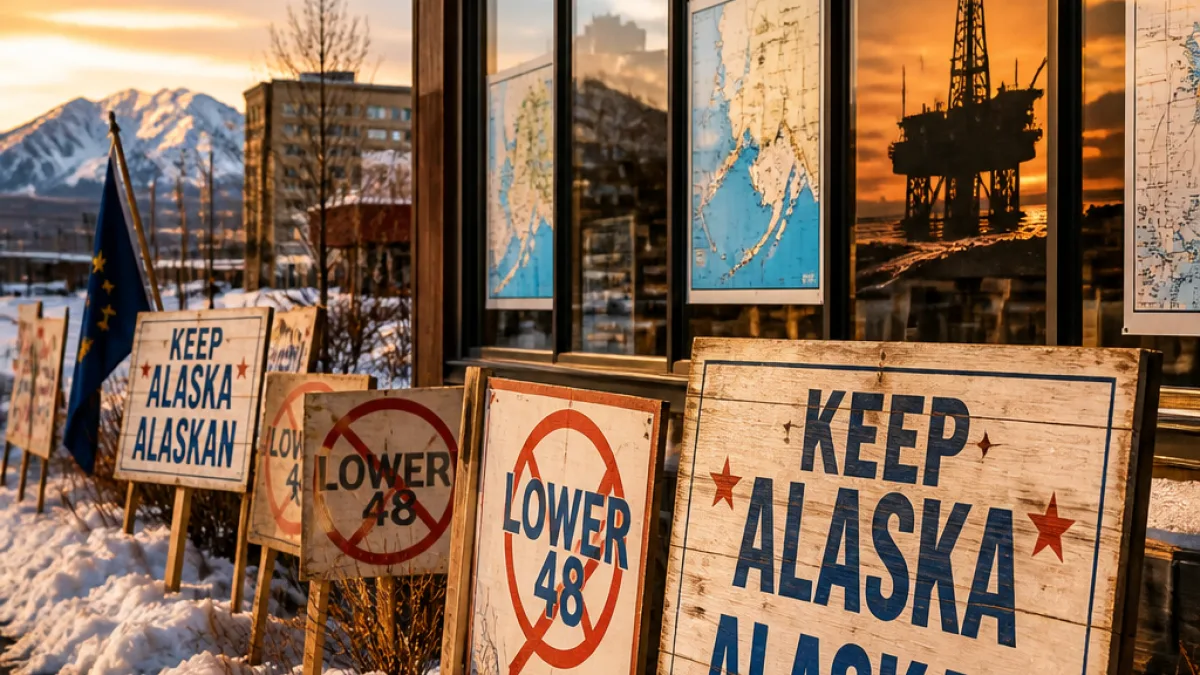
ANCHORAGE — Alaskan candidates vying for the U.S. Senate are leaning on a culturally loaded insult — “the Lower 48” — to draw a sharp contrast with opponents and to stoke local support, a strategy that underscores longstanding tensions between the state and mainland interests over federal policy and resource development.
Local identity as campaign weapon
The phrase, long used in casual conversation to refer to the contiguous United States, has been repurposed in this campaign season as a political cudgel. Incumbent Sen. Dan Sullivan, R-Alaska, has invoked it to tie Democrat Mary Peltola to mainland liberal priorities he says oppose expanded oil and gas drilling. Peltola, in turn, has pushed back by promising to challenge those who she says don’t grasp Alaska’s needs.
“I’ll take on anyone in the Lower 48 who doesn’t understand what Alaska needs.”
The exchange illustrates how appeals to Alaskan distinctiveness — and skepticism of outside influence — remain potent in statewide races. Campaigns are using the label to signal who will prioritize local control over natural resources and who might defer to policy preferences originating far from Alaska’s coasts and communities.
Why the phrase matters
Political operatives say the term carries more than geography: it implies a dismissive, even hostile, relationship between Alaska and the federal political mainstream. The label taps into a history of disputes over development, federal land management and local economic priorities. For voters, that has translated into a shorthand for candidates’ attitudes toward resource permitting, federal oversight and the role of outside environmental or political groups.
- Campaign messaging: Using the term frames opponents as influenced by mainland interests.
- Economic stakes: The rhetoric centers on oil, gas and other resource development that drive Alaska’s economy.
- Voter appeal: Emphasizing Alaskan identity can mobilize rural and resource-dependent communities.
Observers say the strategy is not new, but it is particularly relevant in a tight Senate contest where local trust and credibility on resource issues can sway undecided voters. The debate also reflects an underlying political calculation: to portray an opponent as out of step with the state’s economic priorities can be decisive in areas dependent on development and federal approvals.
Implications for the state
For Alaska, the rhetorical battle points to broader questions about how federal policy will affect development, jobs and local control. If campaigns continue to hinge on whether a candidate is aligned with the “Lower 48,” it signals voters are weighing not only partisan labels but perceived fidelity to Alaska’s distinct needs — from energy permitting to subsistence and infrastructure priorities.
How the messaging plays out could influence the tone of the general election and the kinds of coalitions each campaign builds across urban and rural Alaska. It also puts a premium on candidates’ records and statements on federal decisions that shape the state’s economy.
As the race proceeds, the use of identity-based language like “Lower 48” will be one measure of how campaigns translate statewide concerns into effective voter outreach — and of whether appeals to localism can outweigh broader national political trends.