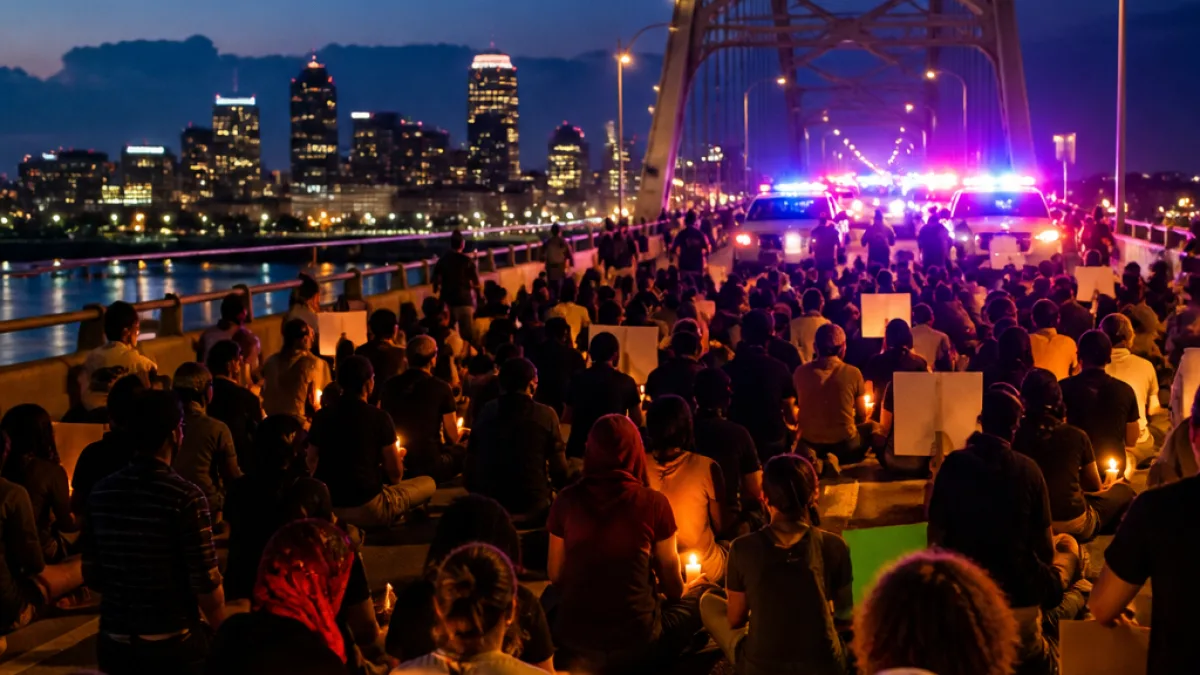
MEMPHIS — Ten years after hundreds of people marched from the National Civil Rights Museum onto the Hernando DeSoto Bridge, Memphians continue to reflect on a night that tested the city’s capacity for protest, policing and restraint. The demonstration on July 10, 2016, which lasted nearly eight hours, ended with no reported injuries and no arrests, a fact participants and officials say shaped how the city remembers the episode.
How the evening unfolded
The protest came amid national upheaval. Just days earlier, police shootings in Louisiana and Minnesota left Alton Sterling and Philando Castile dead, and a protest in Dallas had resulted in the deaths of five police officers. In Memphis, groups gathered to demand police accountability, racial justice and more attention to violence in neighborhoods.
The march began near the National Civil Rights Museum and grew as it moved toward the bridge. Organizers and participants say demonstrators walked onto the bridge and halted traffic, creating a tense standoff when police officers advanced and asked them to disperse.
- Date: July 10, 2016
- Location: Hernando DeSoto Bridge across the Mississippi River
- Duration: Nearly eight hours
- Outcome: No reported injuries, no arrests
Voices from the bridge
Participants recalled a charged atmosphere. Frank Gotti, who was among those on the bridge, described the emotion of the night:
“It was so many killings going on at the time. I just wanted to see Memphis get along just for once in my life. And this is what the Memphis, the whole Memphis thing, is: standing together for something positive.”
Gotti said both demonstrators and officers exchanged heated words and that at times the bridge seemed to shake from the crowd’s movement. Those on site feared the standoff could escalate, but it did not.
Police monitoring and leadership decisions
Inside the Memphis Police Department’s Real Time Crime Center, then-interim police director Michael Rallings watched the crowd through multiple camera angles. City leaders later credited communication, restraint and leadership with preventing the confrontation from turning violent — a conclusion that shaped local reflections on protest and public safety in the years that followed.
The bridge protest remains part of a broader national moment in 2016, when cities across the United States grappled with public demonstrations tied to police actions. For Memphis, the event tied together the city’s civil rights history — the march’s origin at a museum dedicated to that struggle — and current demands for accountability.
What the night meant for Memphis
For many who were there, the evening represented both grief and a desire for unity. Organizers emphasized their call for justice and attention to neighborhood violence; officers emphasized public safety. The fact that the protest ended without injuries or arrests is cited repeatedly by those who remember the night as evidence that communication and restraint can avert escalation.
| Element | Detail |
|---|---|
| Date | July 10, 2016 |
| Location | Hernando DeSoto Bridge (across the Mississippi River) |
| Duration | Nearly eight hours |
| Reported injuries/arrests | None |
As the city marks the 10th anniversary, conversations about policing, protest tactics and neighborhood safety remain active in Memphis. The bridge demonstration is part of the city’s living history — a moment when civic grief, local leadership and public protest converged on a structure that is both a transport artery and a symbolic crossing point for the community.
Memphians who carry memories of that night say it still informs how the city plans for and responds to large demonstrations, and how residents weigh their rights to protest with concerns about safety on public infrastructure.