The number of confirmed cyclospora infections in Michigan has risen sharply in recent weeks, with health officials reporting more than 1,250 cases between June 22 and July 9, and an acceleration in new diagnoses of about 20% to 30% per day, infectious-disease experts said Friday.
What public health officials know so far
Dr. Anurag Malani, an infectious disease specialist and health care epidemiologist at Trinity Health Ann Arbor, said the outbreak is growing quickly and that the confirmed total is likely an undercount. Not everyone with infections can get diagnostic testing, and some infected people may be asymptomatic and never know they have the parasite, he said.
"There's many more cases than what is actually reported," Malani said, noting that diagnostic access and asymptomatic infections contribute to underreporting.
Health officials have not yet identified a common food or other source tied to the outbreak. Without a known source, there is no clear sign that the number of new infections will slow in the near term, Malani said.
Symptoms, timing and where patients are showing up
Cyclosporiasis typically causes watery — sometimes forceful — diarrhea. The incubation period ranges from two days to two weeks after exposure, making it difficult to trace possible sources. Clinicians are seeing a spectrum of illness:
- Many patients seek care at urgent care clinics and primary care offices for persistent diarrhea.
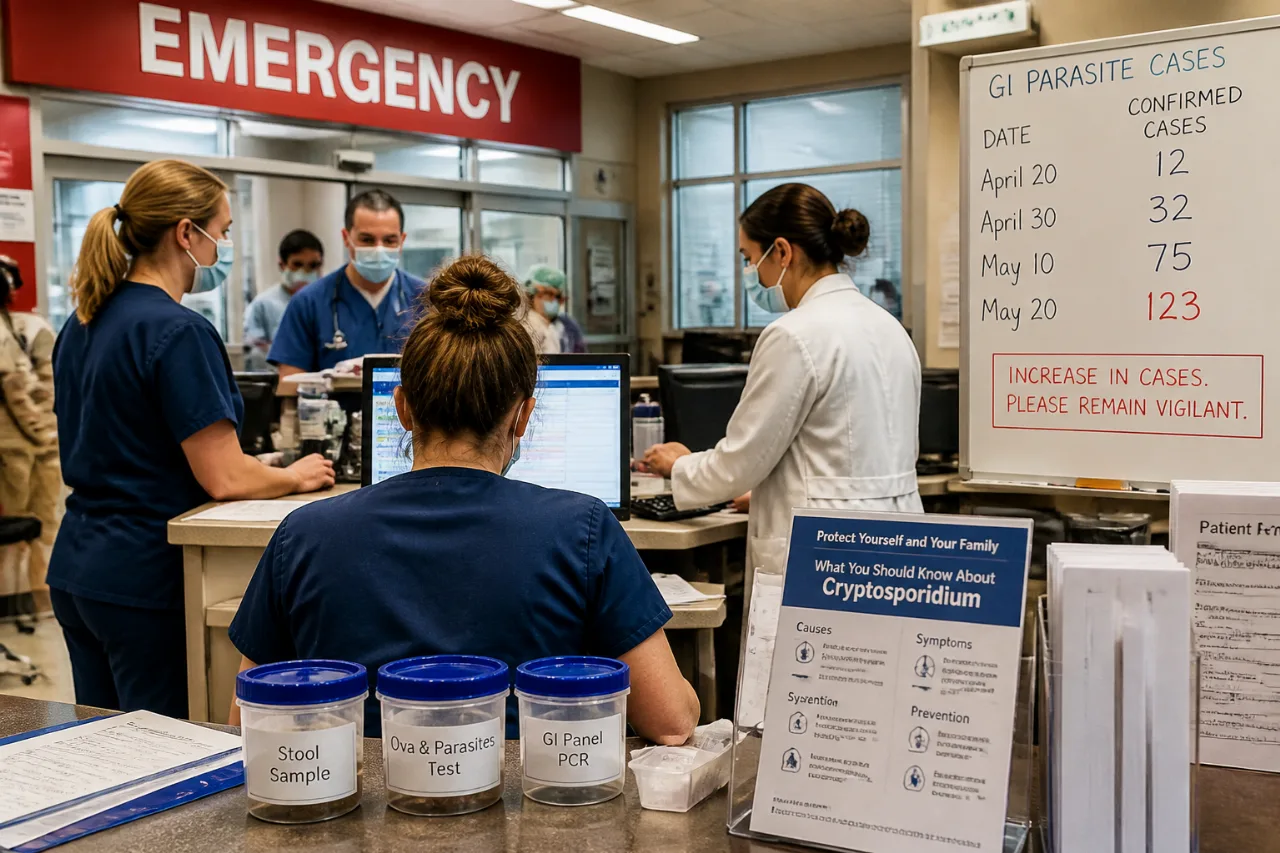
- Some of the sickest patients have required evaluation in emergency departments and hospital admission, often with abdominal pain, nausea and dehydration.
- Because of incubation variability, new cases may continue to appear for days to weeks after exposure.
Data snapshot
| Measure | Reported figure |
|---|---|
| Confirmed cases (June 22–July 9) | 1,250+ |
| Estimated daily growth | 20%–30% |
| Incubation period | 2 days to 2 weeks |
What residents should know and do
Health officials stress vigilance because the source of the outbreak remains unidentified and reported cases are rising rapidly. Practical steps based on infectious-disease guidance include:
- Seek medical care if you have persistent watery diarrhea, particularly if it lasts several days or is accompanied by abdominal pain, nausea or signs of dehydration.
- Ask your clinician about diagnostic testing for cyclospora if your symptoms match and you have a relevant exposure history.
- Follow standard measures to prevent foodborne illness: wash hands thoroughly, practice safe food handling, and avoid preparing food for others when ill.
Local hospitals and clinics across the state have reported increased visits for gastrointestinal illness in recent days. Public-health authorities continue case investigations and partner with clinicians to identify potential sources and limit spread.
As the situation develops, state and local health departments will provide updated guidance. Residents with questions about symptoms or testing should contact their primary care provider or local health department.
Malani emphasized the outbreak’s uncertain scope and the likelihood that the official tally underestimates the true number of infections, a finding that reflects both testing limitations and the potential for asymptomatic cases to go undetected.